

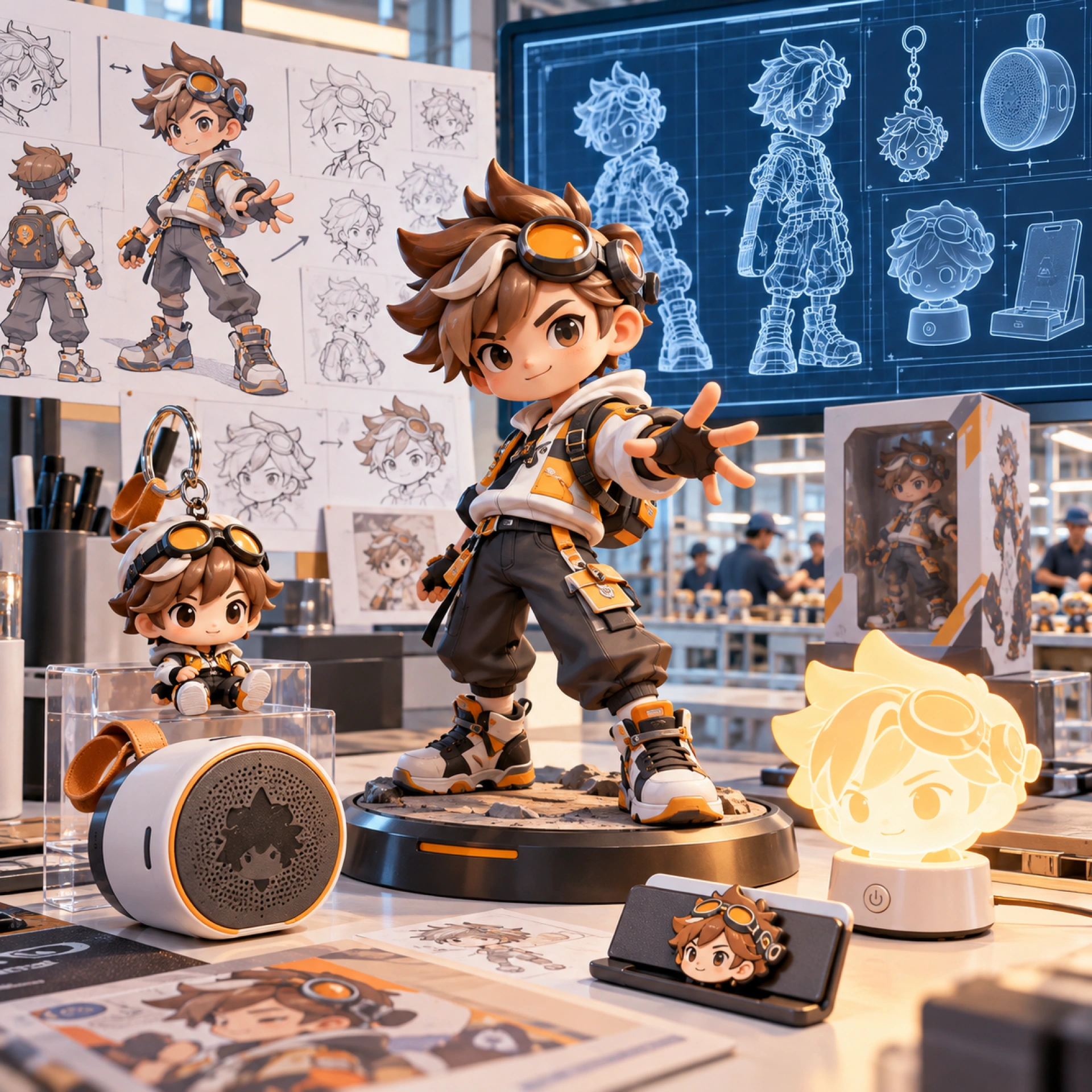
A Game Character Merchandise Manufacturer helps game studios, publishers, IP owners and licensed merchandise brands turn digital characters into physical products, including PVC collectible figures, blind boxes, bag charms, keychains, night lights, Bluetooth speakers and other character-themed electronics. The development process typically covers IP authorization, character artwork review, 3D modeling, engineering, prototyping, mold making, manufacturing, quality control and retail packaging.
The most important decision is choosing a manufacturer whose capabilities match the entire product line—not just the first character figure.
A game character can become a 12 cm PVC collectible, a 6 cm bag charm, a blind box series or a Bluetooth speaker. Although these products share the same character identity, they require different materials, structures, production processes, testing and packaging.
For brands planning multiple product categories, a suitable Game Character Merchandise Manufacturer should be able to maintain consistent character proportions, facial details, Pantone colors and branding while applying the correct manufacturing process to each product.
This guide explains how game companies can develop physical merchandise from character artwork, how figures differ from accessories and electronics, what affects manufacturing cost, and what buyers should confirm before placing an OEM/ODM order.
If your project is specifically focused on developing game characters into collectible figures, our article on custom toys for game companies explains the initial artwork-to-figure development process in greater detail.
What Products Can a Game Character Merchandise Manufacturer Develop?
A Game Character Merchandise Manufacturer may support several merchandise categories within the same licensed IP program.
| Product Category | Example Products | Main Manufacturing Requirements | Typical Application |
|---|---|---|---|
| Collectible Figures | PVC figures, character statues, mini figures | 3D sculpting, tooling, molding, painting | Premium merchandise, collector editions |
| Blind Box Toys | Multi-character series, secret versions | Series tooling, painting, assortment, packaging | Retail collections, character series |
| Portable Accessories | PVC keychains, bag charms, pendants | Lightweight structure, metal hardware, abrasion resistance | Event merchandise, everyday accessories |
| Character Lighting | Night lights, RGB character lamps | LEDs, PCBA, batteries, light diffusion | Gaming desks, gifts, home accessories |
| Audio Products | Bluetooth speakers, character audio devices | Speaker, acoustic chamber, Bluetooth, firmware | Gaming setups, premium gifts |
| Lifestyle Electronics | Alarm clocks, humidifiers, dispensers | Functional mechanisms, electronic integration | Home and desktop merchandise |
| Gift Sets | Figure and accessory bundles, electronic gift sets | Multi-product coordination, custom packaging | Launch campaigns, anniversaries |
| Limited Editions | Exclusive colors, seasonal figures, retailer variants | Tooling reuse, surface treatments, SKU control | Collaborations, fan events |
The best product mix depends on the game’s audience, character design, target retail price, licensing scope, production quantity and launch strategy.
A Game Character Merchandise Manufacturer should help buyers evaluate these factors before committing to expensive tooling.
1. Start With Game IP Authorization and Character Artwork
Before selecting materials or requesting a quotation, the buyer should confirm the rights available for physical merchandise production.
Game-related intellectual property can include character artwork, names, logos, costumes, weapons, symbols, designs and other protected elements.
The World Intellectual Property Organization explains how copyright, trademarks, designs and related rights contribute to intellectual property in video games and esports.
For physical merchandise, buyers should confirm that the relevant rights cover the intended products and sales markets.
What Should Be Confirmed Before Manufacturing?
The brand or licensee should identify:
- Authorized characters and artwork
- Approved merchandise categories
- Licensed territories
- Sales channels
- Product approval requirements
- Trademark and logo usage
- Packaging approval requirements
- Confidentiality obligations
- Licensing expiration dates, where relevant
A license for PVC collectible figures does not necessarily authorize Bluetooth speakers, night lights or other electronics.
This distinction becomes particularly important when one game franchise expands across multiple product categories.
For a more detailed approach to supplier selection and IP control, see our guide on how to choose a custom toy manufacturer for licensed IP products.
What Artwork Should Game Companies Provide?
A manufacturer can evaluate a project more accurately when the buyer provides:
- Front, side and back character views
- Approved character style guide
- Facial expression references
- Costume details
- Weapons and accessories
- Game logo and character names
- Pantone or other color references
- 3D files, if available
- Target size and preferred pose
- Packaging design direction
Some game companies already have detailed 3D assets, but game-ready models are not always manufacturing-ready.
A digital character may include floating effects, extremely thin weapons, complex armor, overlapping clothing and details that need adjustment for injection molding and physical assembly.
The manufacturer’s task is to preserve the approved character identity while making the design manufacturable.
2. Custom PVC Game Character Figures: Turning Digital Characters Into Collectibles
PVC collectible figures are one of the most practical starting points for game character merchandise.
They allow brands to reproduce recognizable character features such as facial expressions, costumes, hairstyles, armor, poses and signature accessories.
A custom PVC figure normally requires several production stages.
3D Modeling and Structural Engineering
The engineering team evaluates the original character model and determines:
- Part separation
- Mold direction
- Wall thickness
- Standing balance
- Support structure
- Accessory attachment
- Painting areas
- Assembly sequence
Consider a fantasy game character holding a long sword.
The digital model may show a thin weapon extending far from the body. In physical manufacturing, the weapon may require increased thickness, a different material, additional support or a revised connection point.
These adjustments should be reviewed with the brand before final approval.
Material Selection
Common material combinations include PVC for detailed character surfaces and ABS for rigid bases, supports or structural components.
Different product styles may require different material choices.
For example, PVC is often suitable for small detailed figures, while hollow soft-vinyl constructions may be considered for certain larger designer toys.
Our PVC vs Vinyl vs ABS Figures guide explains the differences between these materials and their manufacturing applications.
Molding and Painting
After 3D approval, the manufacturer develops tooling and produces trial samples.
Painting may involve:
- Spray painting
- Pad printing
- Hand painting
- Masking
- Metallic finishes
- Matte or gloss coatings
- Transparent effects
Character accuracy is particularly important for faces, eyes, logos and distinctive costume details.
A professional Game Character Merchandise Manufacturer should review paint boundaries and production feasibility rather than promising that every digital effect can be reproduced without adjustment.
For a step-by-step production breakdown, read how PVC toys are manufactured.
3. Blind Box Game Merchandise: Developing a Character Series
Blind boxes are useful when a game has several recognizable characters, costumes, expressions or alternate versions.
Instead of developing one standalone product, the brand creates a collectible series.
A game-themed blind box collection could include:
- Main playable characters
- Alternate costumes
- Seasonal skins
- Different expressions
- Character companions
- Secret versions
- Special effect variants
The manufacturing process becomes more complicated because multiple figures must be developed and managed together.
Series Planning Before Tooling
Before mold development, buyers should confirm:
- Number of regular designs
- Secret figure plan
- Approximate figure size
- Shared components
- Individual accessories
- Paint complexity
- Packaging format
- Assortment rules
- Production quantities
For example, eight designs do not automatically mean that only eight molds are needed.
Each design may contain separate parts requiring tooling. Some characters may share bodies, bases or accessories, but reuse must be evaluated from the actual engineering files.
The blind box figure manufacturing process explains how series design, sampling, mold making, painting, assembly and random packing affect production.
Packaging Is Part of the Game Experience
For a gaming IP, blind box packaging can reinforce the fictional world through:
- Character artwork
- Faction colors
- Game symbols
- Collector cards
- Series numbers
- Secret character information
- QR codes linking to approved digital content
The inner packaging should protect the figure while preserving the blind reveal.
Brands may also design packaging that supports short-form unboxing videos.
Our Blind Box Unboxing Experience guide explains how outer boxes, inner concealment, collector cards and reveal order influence the customer’s experience.
A Game Character Merchandise Manufacturer handling blind boxes should understand both collectible manufacturing and the special requirements of randomized packaging.
4. Portable Game Accessories: Keychains and Bag Charms
Not every game merchandise product needs to be a display figure.
For game conventions, promotional campaigns, gaming communities and retail accessories, smaller products may be more appropriate.
Common formats include PVC keychains, bag charms, character pendants and miniature accessories.
These products can feature:
- Character heads
- Mini character bodies
- Game weapons
- Faction symbols
- Mascot designs
- Iconic items from the game
However, portable merchandise requires different engineering from display collectibles.
Why a Bag Charm Is Not Simply a Smaller Figure
A display figure usually remains stationary.
A bag charm may be pulled, dropped, twisted and rubbed against fabric, keys and metal accessories.
Therefore, the manufacturing review should include:
| Inspection Area | What Buyers Should Confirm |
|---|---|
| Weight | Comfortable for portable use |
| PVC Structure | Adequate thickness around thin sections |
| Metal Attachment | Secure loop or insert |
| Pull Strength | Connection withstands the agreed test conditions |
| Paint Abrasion | Surface resists expected rubbing |
| Chain | Appropriate strength and construction |
| Plating | Suitable appearance and wear performance |
| Small Parts | Risks assessed according to intended users |
| Packaging | Hardware does not scratch the PVC surface |
A manufacturer should review the physical load path from the metal chain through the attachment point into the PVC body.
If the attachment is installed in a narrow hair strand or character ear, the surrounding material may tear during repeated use.
The correct solution may be to adjust the character pose, reinforce the attachment region or relocate the metal hardware.
This engineering step helps transform the original game design into a more durable everyday accessory.
5. Character Electronics: Night Lights, Bluetooth Speakers and Smart Merchandise
Electronics allow game characters to become functional merchandise rather than passive collectibles.
A character-themed night light can become part of a gaming desk setup. A Bluetooth speaker can combine character decoration with music playback. A rechargeable RGB figure can reproduce the character’s visual effects through lighting.
This is where the capabilities of a Game Character Merchandise Manufacturer become especially important.
A factory that produces PVC figures does not automatically have the electronic engineering, PCBA and functional testing capability needed for a connected product.
Character Night Lights
A game character night light may include:
- ABS or silicone housing
- LEDs
- Battery
- Charging circuit
- PCBA
- Touch or tap controls
- Timer
- RGB lighting
The manufacturer must coordinate character appearance with light diffusion, internal space, battery location, controls and assembly.
A game character with a large translucent crystal or magical object may be a natural candidate for an illuminated product, but the lighting effect must be engineered within the product’s electrical and structural limits.
Game Character Bluetooth Speakers
A custom Bluetooth speaker introduces additional requirements:
- Bluetooth module
- Speaker driver
- Acoustic chamber
- PCBA
- Firmware
- Rechargeable battery
- Antenna placement
- Buttons
- Charging port
- Functional testing
The character design must not compromise basic audio performance, wireless connectivity, charging or stability.
Our Custom Bluetooth Speaker Manufacturer guide explains how manufacturers coordinate audio design, PCBA, molded housings, batteries, surface decoration and packaging.
Bluetooth products also require attention to the applicable Bluetooth Qualification Process administered by Bluetooth SIG. Brands placing products on the market under their own name should confirm their qualification responsibilities before launch.
App-Controlled Merchandise
Some game-related products may add mobile control through Bluetooth or Wi-Fi.
For example, a character RGB figure could allow users to:
- Change LED colors
- Select lighting animations
- Control brightness
- Switch effect modes
- Configure timers
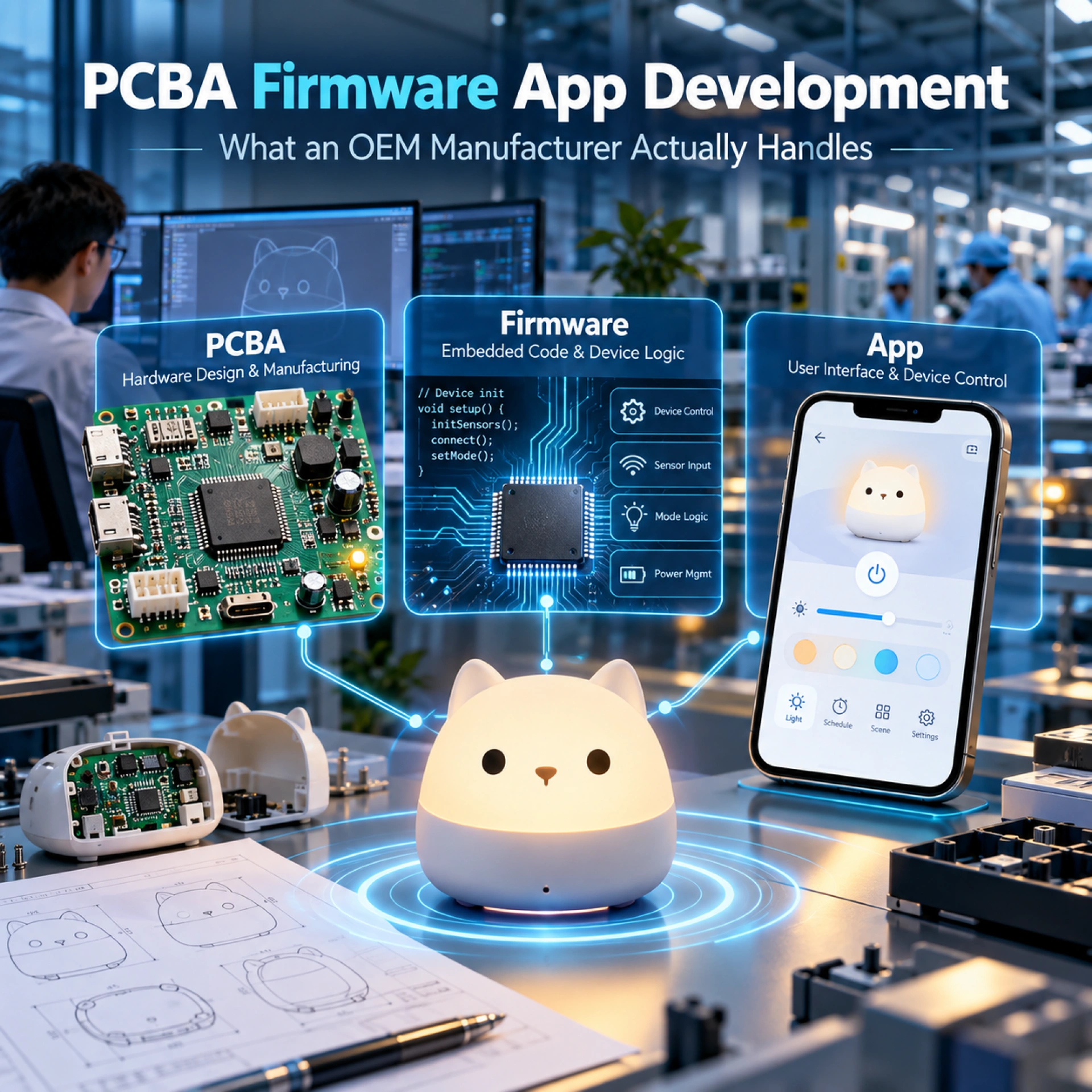
However, hardware, embedded firmware and mobile apps are separate development layers.
PCBA provides the electronics. Firmware controls the device. The app provides the mobile interface.
A Game Character Merchandise Manufacturer may handle hardware and embedded firmware while working with an external software developer for a complete iOS/Android application.
Our PCBA Firmware App Development article explains these responsibilities and why app development should not be assumed to be included in a PCBA quotation.
For brands, the practical priority is to define the product functions and software ownership before committing to electronic tooling.
6. How to Extend One Game Character Across Multiple Product Categories
One of the strongest advantages of a coordinated merchandise program is the ability to preserve a consistent character identity across different products.
Consider a fictional game character called Nova.
The merchandise line could include:
| Product | Character Application | Engineering Difference |
|---|---|---|
| 12 cm PVC Figure | Full character with detailed armor | Sculpting, painting, display stability |
| 6 cm Bag Charm | Simplified character form | Weight, pull strength, metal connection |
| Blind Box Variant | Nova in an alternate costume | Shared character assets, new paint and accessories |
| RGB Night Light | Nova holding a glowing crystal | Diffuser, LED, battery, PCBA |
| Bluetooth Speaker | Nova-themed desktop housing | Acoustic design, antenna, firmware |
| Collector Gift Set | Figure, charm and card | Multi-product packaging and assembly |
All these products can share visual information such as:
- Character face
- Logo
- Approved colors
- Costume motifs
- Artwork style
- Packaging identity
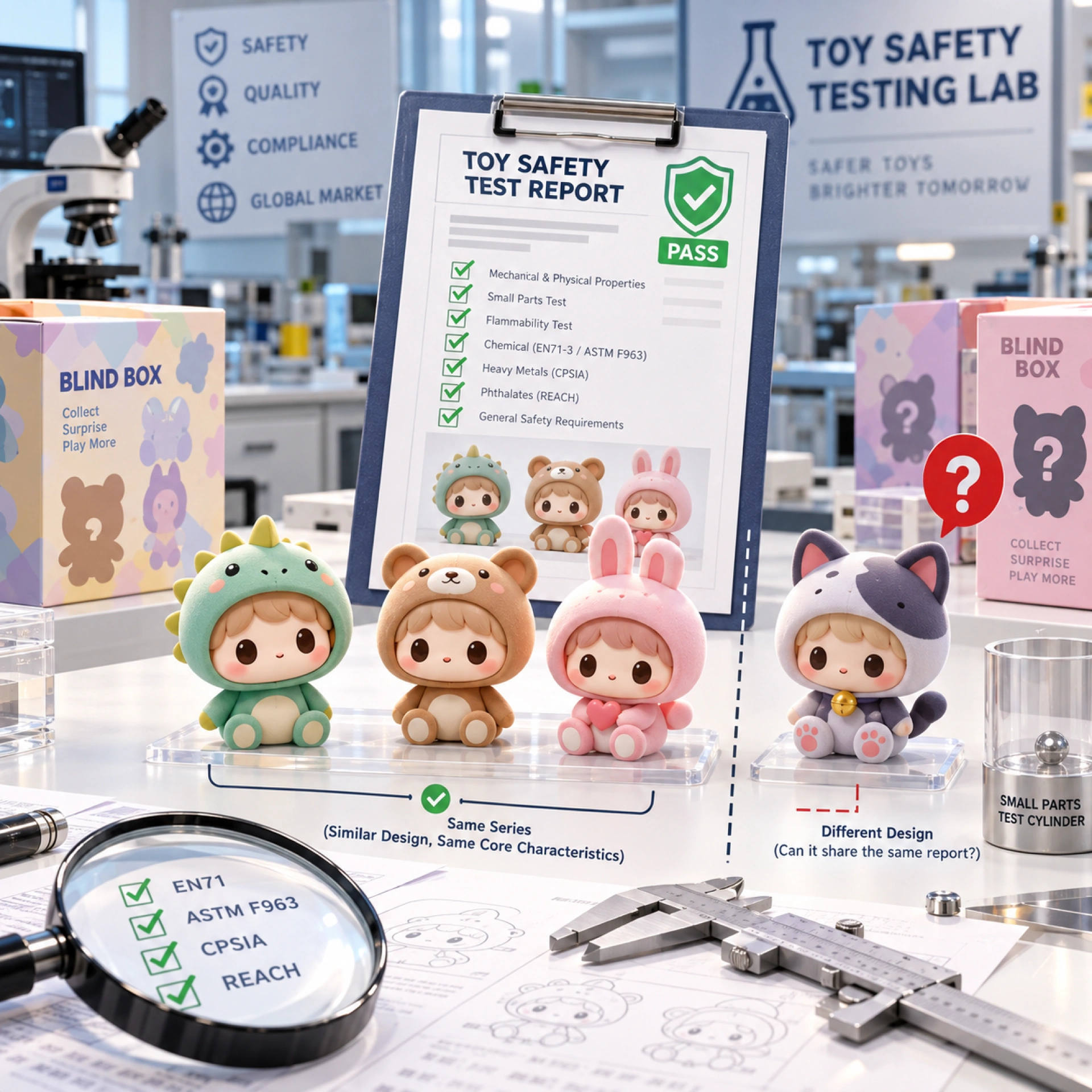
But they cannot necessarily share molds, internal structures or safety documentation.
The goal is to reuse the character identity—not to force one physical design into every category.
For brands expanding licensed IP beyond collectibles, our Character Figure vs Character Electronic Product guide explains the differences in engineering, product value and development complexity.
7. OEM vs ODM: Which Development Model Is Better for Game Merchandise?
Game companies may use OEM, ODM or a combination of both.
The choice depends on how original the product must be and whether a mature functional platform is available.
OEM Development
OEM development is commonly suitable when the buyer needs a specific character design, unique mold or custom structure.
Typical examples include:
- Original PVC character figure
- Exclusive blind box collection
- Custom game weapon accessory
- Unique illuminated character collectible
The buyer usually provides or approves the product requirements, while the manufacturer performs the agreed engineering and production work.
ODM Development
ODM is useful when a supplier has an existing functional platform that can be customized.
For example, a standard Bluetooth speaker architecture may be adapted with a character-themed housing, approved colors and retail packaging.
An existing night-light platform may also provide a starting point for a customized game character exterior.
This may reduce some engineering work, but buyers should still confirm:
- Whether the platform fits the design
- Which parts require new tooling
- Whether the product function can be modified
- Which components can be reused
- Ownership and exclusivity of new molds
- Firmware modification rights
- Compliance impact of customization
A Game Character Merchandise Manufacturer should recommend the suitable approach based on actual project requirements rather than describing every product as fully custom.
8. From Artwork to Mass Production: The Manufacturing Workflow
A successful game merchandise program needs a controlled development process.
| Stage | Manufacturing Work | Buyer Approval |
|---|---|---|
| 1. IP Review | Review artwork, rights and product categories | Confirm authorized scope |
| 2. Product Planning | Select figures, accessories and electronics | Approve product lineup |
| 3. 3D Development | Convert character design into production geometry | Approve shape and proportions |
| 4. Engineering Review | Evaluate materials, molds, assembly and functions | Approve structure |
| 5. Prototype | Produce physical or functional samples | Approve sample revisions |
| 6. Tooling | Develop production molds and fixtures | Approve mold trial samples |
| 7. Pre-Production | Confirm paints, electronics, packaging and testing | Approve final reference sample |
| 8. Mass Production | Molding, painting, PCBA and assembly as applicable | Monitor production standards |
| 9. Quality Control | Product, functional and packaging inspection | Approve shipment |
| 10. Delivery | Carton packing and shipment preparation | Verify documents and quantities |
The individual schedules may differ across categories.
For a PVC figure, mold development and painted sample approval may be the main technical milestones.
For a Bluetooth product, PCBA and firmware validation may become additional critical milestones.
A multi-product campaign should therefore be planned around the longest critical development path rather than assuming all products will finish simultaneously.
Why Sample Approval Matters
A game character can look impressive in a 3D render but reveal problems when physically manufactured.
Common issues include:
- Incorrect facial expression
- Color mismatch
- Visible mold seams
- Thin or fragile accessories
- Unstable standing
- Poor paint boundaries
- Loose assembly
- Incompatible packaging
- Electronic functions that do not perform as expected
The approved sample should establish clear acceptance standards for bulk manufacturing.
Buyers can use our Custom PVC Figure Sample Approval Checklist to review figure appearance, structure, color, assembly and packaging before production.
9. What Affects Game Character Merchandise Manufacturing Cost?
Manufacturing cost depends on much more than product size or raw material weight.
For a Game Character Merchandise Manufacturer, quotation accuracy depends on the product’s design, materials, production complexity and quantity.
Main Cost Factors
| Cost Factor | Why It Matters |
|---|---|
| 3D Design | Complex sculpting requires additional development work |
| Prototype | Physical and functional samples require materials and labor |
| Mold Making | Number of parts and mold complexity affect tooling investment |
| Material | PVC, ABS, silicone and other materials have different costs |
| Painting | Number of colors, masks and hand-painted details affect labor |
| Accessories | Separate parts may require additional molds and assembly |
| PCBA | Electronic components, PCB design and manufacturing |
| Firmware | Embedded software functions and debugging |
| Battery / Audio | Adds components, testing and assembly |
| Packaging | Box, tray, printing, collector card and carton |
| Testing | Depends on product classification and target market |
| Quantity | Affects allocation of setup and tooling costs |
Why Quantity Matters
Custom merchandise usually requires upfront development investment.
A fully customized PVC figure may require new molds even when the first order is relatively small.
If a brand orders several figures, each design may require its own tooling and production setup.
For Jiahong Creative, standard custom PVC/ABS figure projects are generally planned around 5,000 pieces per design, although feasibility and MOQ should be confirmed for each project. Electronics, special structures and different materials may have different commercial requirements.
Buyers should distinguish between:
- 3D design cost
- Prototype cost
- Tooling cost
- Unit manufacturing price
- Packaging cost
- Testing cost
- Shipping cost
These costs should not be combined into one unexplained figure.
A transparent quotation helps game companies compare suppliers and plan future product expansions.
10. Game Merchandise Packaging: Protecting the Product and the IP
Packaging is particularly important for licensed game merchandise because it represents the game’s visual identity and affects the retail experience.
A fantasy role-playing game, competitive shooter, mobile character game and casual mascot game may all require different packaging concepts.
Packaging Options by Product
| Product | Packaging Options | Key Considerations |
|---|---|---|
| PVC Figure | Window box, printed box | Figure protection, display visibility |
| Blind Box | Sealed box, opaque inner bag | Mystery, collector information |
| Bag Charm | Card, pouch, mini box | Metal hardware separation |
| Bluetooth Speaker | Color box, protective tray | Electronics, accessories and impact protection |
| Night Light | Printed box, molded insert | Product protection and charging accessories |
| Gift Set | Custom gift box | Multi-item placement and presentation |
For licensed game IP products, packaging artwork should use approved names, logos, artwork and brand colors.
The buyer should also confirm barcodes, warning labels, importer information, product identification and any market-specific requirements.
Our Custom Toy Packaging Manufacturer guide explains what brands should prepare for packaging design, inserts, labels and master carton planning.
Limited-Edition Packaging
Limited game merchandise may include:
- Anniversary artwork
- Exclusive collector card
- Numbered edition label
- Special outer sleeve
- Retailer collaboration logo
- Metallic printing
- Character backstory
- Event-specific packaging
These features can add perceived value without always requiring completely new product tooling.
However, the manufacturer must ensure that the final product and packaging match the approved IP artwork and edition specifications.
11. Product Safety and Compliance: Figures vs Electronics
A Game Character Merchandise Manufacturer should help buyers identify product-specific safety and compliance questions early in development.
A children’s toy and an adult collectible do not automatically follow the same requirements.
Similarly, a passive PVC figure and a rechargeable Bluetooth speaker have different technical characteristics.
PVC Figures and Blind Boxes
Potential considerations include:
- Intended age
- Small parts
- Material composition
- Paint and coating requirements
- Physical and mechanical hazards
- Product identification
- Warning labels
For the U.S. market, buyers can review official CPSC Toy Safety Guidance to understand relevant federal toy safety requirements.
Character Electronics
Electronic merchandise may introduce additional requirements related to:
- Battery safety
- Electrical design
- Wireless connectivity
- EMC
- Product materials
- Charging systems
- Software and cybersecurity, where applicable
The exact testing program depends on the product, intended use, age group and destination market.
Brands should not assume that a CE-marked component, previously tested module or supplier declaration automatically demonstrates compliance of the complete finished product.
Testing plans should be confirmed before production, with appropriate supporting documentation retained.
For buyers developing electronic character products, it is especially important to specify the target markets before the PCBA and wireless components are finalized.
12. How to Evaluate a Game Character Merchandise Manufacturer in China
When comparing factories, game companies should evaluate actual capabilities rather than judging only the appearance of a sample or the quoted unit price.
A strong Game Character Merchandise Manufacturer should be able to explain its production process and the scope of work handled internally or through partners.
Manufacturing Capability
Ask whether the supplier supports:
- 3D product development
- Structural engineering
- Mold making
- PVC injection molding
- ABS manufacturing
- Spray painting
- Pad printing
- Assembly
- Packaging
- Quality inspection
Electronic Product Capability
For electronic game merchandise, also ask about:
- PCBA engineering
- SMT
- Bluetooth/Wi-Fi module integration
- Battery systems
- Embedded firmware
- Functional testing
- Aging testing
- External software development coordination
IP Management
The supplier should have a process for managing:
- Confidential game artwork
- NDA requirements
- Approved 3D files
- Revision records
- Color approvals
- Sample approvals
- Packaging approvals
- Authorized production quantities
Quality Control
Buyers should confirm the inspection process at:
- Incoming material inspection
- Mold trial
- Painting and printing
- Assembly
- Functional testing
- Final packing
- Pre-shipment inspection
A Game Character Merchandise Manufacturer should be able to show how the approved sample is translated into repeatable mass-production standards.
For more detail on manufacturer evaluation, our licensed IP toy manufacturer selection guide covers confidentiality, tooling, materials, approvals and quality control.
13. Buyer RFQ Checklist for Game Character Merchandise
Before requesting a quotation, game companies should prepare a structured RFQ.
| Information | Details to Provide |
|---|---|
| Game / IP | Game name and authorized characters |
| Product Category | Figure, blind box, accessory, electronic product |
| Artwork | 2D references, 3D files, approved style guide |
| Size | Height, width, thickness |
| Material | Preferred PVC, ABS, silicone or other materials |
| Quantity | Estimated units per design or SKU |
| Character Variants | Number of characters, skins or editions |
| Surface Finish | Matte, gloss, metallic, transparent or other |
| Accessories | Fixed or detachable components |
| Electronics | LEDs, Bluetooth, audio, sensors, battery |
| App Requirements | Whether iOS/Android development is required |
| Packaging | Blind box, window box, pouch, gift box |
| Target Market | U.S., EU, UK, Japan or other |
| Intended Age | Target customer and product positioning |
| Testing | Applicable safety or technical requirements |
| Timeline | Target sample approval and launch date |
| Commercial Terms | Tooling ownership, MOQ and delivery terms |
This information allows the Game Character Merchandise Manufacturer to evaluate production feasibility and prepare a more accurate development plan.
For multi-product projects, buyers should also request quotations by SKU rather than assuming one price can apply to all merchandise categories.
14. How Jiahong Creative Supports Game Character Merchandise Development
Jiahong Creative is an OEM/ODM manufacturing partner in China specializing in custom PVC figures, character collectibles and character-themed electronic products.
Our manufacturing capabilities cover multiple stages of product development, including:
- Character artwork review
- 3D modeling and prototype development
- Mold making
- Plastic injection molding
- Silicone product manufacturing
- Painting and pad printing
- PCBA integration and assembly
- Embedded electronic functions
- Product assembly
- Quality inspection
- Retail packaging
As a Game Character Merchandise Manufacturer, Jiahong Creative can support brands developing multiple character merchandise categories rather than only one figure design.
Custom Figure Projects
We can support:
- PVC game figures
- Blind box collections
- Mascot collectibles
- Character accessories
- Limited-edition figure variants
Character Electronic Projects
We can also support suitable projects involving:
- Character night lights
- Bluetooth speakers
- Electronic desktop gifts
- Alarm clocks
- Humidifiers
- Other character-themed electronic products
For products requiring advanced app or cloud development, the software scope can be coordinated with external development partners as needed.
This distinction allows the project to define which work is handled by the factory, which work requires specialist partners and which responsibilities remain with the brand.
Maintaining IP Consistency Across Product Lines
A coordinated manufacturing workflow can help preserve:
- Character proportions
- Approved colors
- Facial expressions
- Surface finishing
- Logo placement
- Packaging identity
- Artwork version control
This becomes especially valuable when a game brand plans to expand from a PVC figure into blind boxes, keychains, speakers and other merchandise.
Instead of treating every product as an isolated project, the brand can establish a shared character standard while allowing each category to use its own suitable engineering process.
Planning a game character merchandise project?
Share your approved character artwork, target product categories, dimensions, quantity per design, preferred functions, packaging requirements, destination market and intended launch schedule.
Our team can review the manufacturing direction, sample development requirements, tooling considerations and production scope.
Contact Jiahong Creative for a Game Character Merchandise Manufacturing Inquiry.
Final Thoughts
Choosing the right Game Character Merchandise Manufacturer is about more than finding a factory that can reproduce a character model.
Game merchandise development involves translating digital artwork into physical products that must look accurate, function correctly, survive handling, meet applicable safety requirements and remain consistent throughout mass production.
PVC figures require sculpting, tooling, painting and assembly.
Blind boxes require series planning, assortment management and specialized packaging.
Bag charms require lightweight structures, secure attachments and abrasion resistance.
Character electronics require PCBA, batteries, functional engineering and potentially firmware or software support.
Although the manufacturing methods differ, all products should preserve the same recognizable game character identity.
For game studios, publishers, licensors and merchandise brands, the most effective strategy is to define the complete product roadmap before choosing the manufacturing partner.
A capable Game Character Merchandise Manufacturer should help turn one game IP into a coordinated product line—not simply produce one attractive sample.
When artwork approval, engineering, tooling, manufacturing, packaging and quality control are connected from the beginning, brands can develop collectible figures, accessories and electronic merchandise with greater consistency and clearer production responsibilities.
FAQ
1. What does a Game Character Merchandise Manufacturer do?
A Game Character Merchandise Manufacturer develops and produces physical products based on game characters, mascots and licensed game IP. Typical services include character artwork review, 3D modeling, prototype development, tooling, PVC manufacturing, painting, electronic integration, assembly, packaging and quality control.
2. What products can a game character merchandise factory manufacture?
Depending on its capabilities, a factory may produce PVC figures, blind boxes, keychains, bag charms, character night lights, Bluetooth speakers, electronic gifts, gift sets and limited-edition game merchandise.
3. Can a game company manufacture merchandise from existing 3D game models?
Yes, but the 3D models often need adjustment for physical manufacturing. Game models may contain thin details, complex poses, overlapping parts or shapes that require redesign for tooling, stability, painting and assembly.
4. What materials are commonly used for game character figures?
PVC is commonly used for detailed collectible figures and blind boxes. ABS may be used for bases or rigid structural components. Other materials, including silicone and soft vinyl, may be considered depending on product size, design, function and manufacturing method.
5. Can one manufacturer produce both PVC figures and Bluetooth speakers?
Yes, if the manufacturer has suitable tooling, molding, painting, PCBA, electronics assembly and functional testing capabilities. Buyers should verify the supplier’s actual engineering scope and any external development partners.
6. How many designs can be included in a game-themed blind box series?
A blind box collection can include several regular figures and optional secret editions. Common series may contain six, eight or twelve designs, but the final lineup depends on tooling budget, character variety, target price and production planning.
7. Can the same mold be used for multiple game character variants?
Sometimes. Shared bodies, bases or accessories can reduce tooling requirements, while new heads, poses, costume details or structures may require additional molds. Reuse must be evaluated from the actual 3D and tooling design.