

Introduction
For many studios, custom toys for game companies are no longer just simple promotional gifts. They are a powerful way to turn digital characters into physical products that players can collect, display, and share. A well-made figure can extend the life of a game character beyond the screen and create a stronger emotional connection between the game and its fans.
Game companies often invest heavily in character design, worldbuilding, skins, weapons, mascots, and visual identity. These assets are valuable, but they usually exist in a digital environment. When a game character becomes a PVC figure, blind box toy, mascot figure, or collectible gift, the brand experience becomes more tangible. Players can place the figure on a desk, collect a full series, display it at events, or receive it as part of a special campaign.
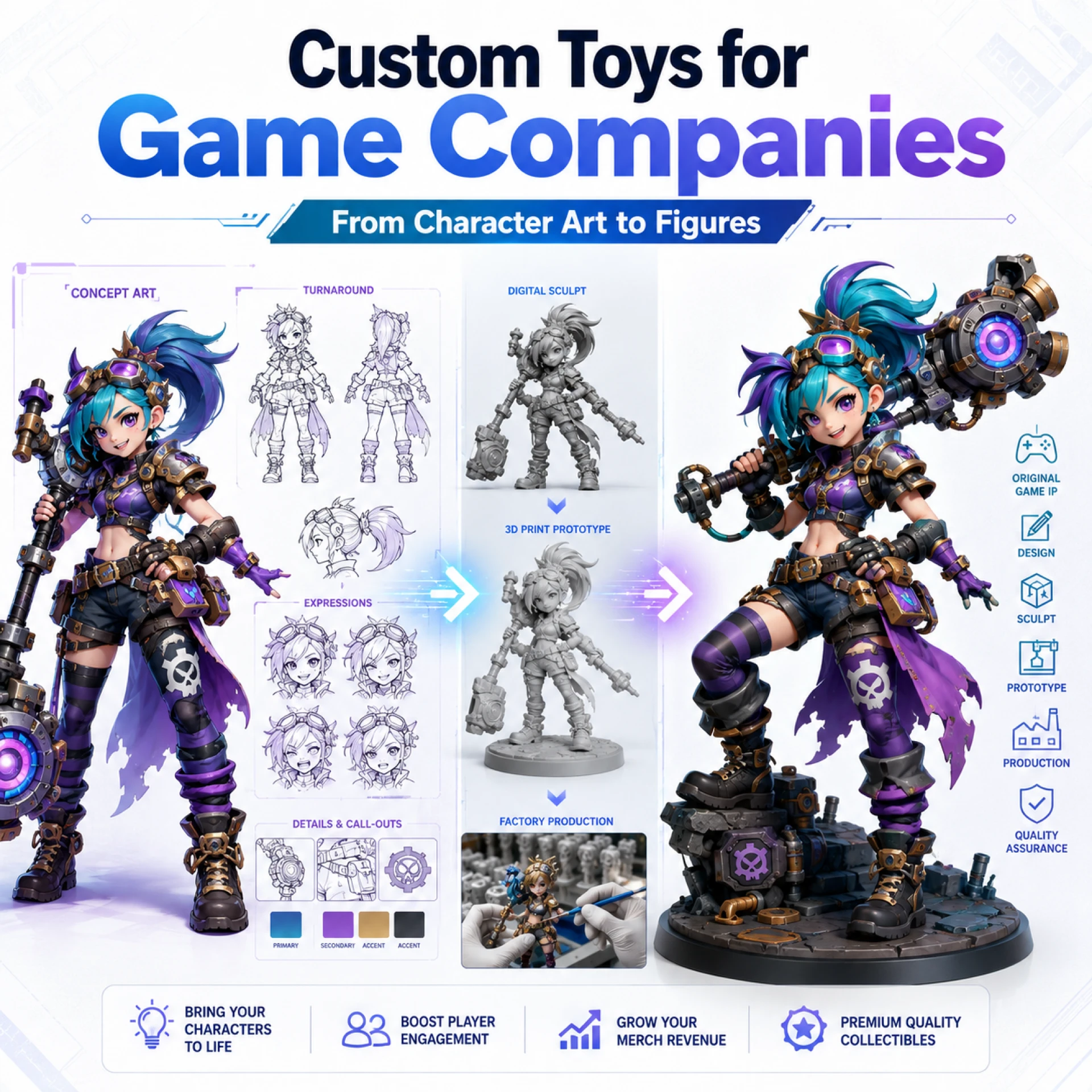
However, creating custom toys for game companies is not as simple as sending a character image to a factory. A game character may look great in 2D concept art or 3D game models, but toy production requires a different way of thinking. The design must be adjusted for structure, balance, mold making, painting, assembly, safety, packaging, and mass production.
This article explains what game companies should prepare before turning character art into physical figures, what affects cost and production quality, and how to work with a manufacturer to develop custom game character toys successfully.
If your team is new to toy production, you can also review how a custom PVC toy manufacturer supports design, prototyping, mold making, painting, assembly, and mass production.
Why Custom Toys Are Valuable for Game Companies
Custom toys for game companies can support different business goals. Some game studios use them as collector merchandise. Some use them as event giveaways. Some develop blind box series to increase fan engagement. Others create mascot figures for marketing campaigns, crowdfunding rewards, retail sales, influencer kits, or anniversary editions.
For game companies, the biggest advantage of custom toys is that they make a digital character feel real. Players may love a character’s design, personality, skills, or storyline. A physical figure gives them a way to keep that connection outside the game.
Custom toys can also help game companies strengthen brand visibility. A figure placed on a player’s desk, a streamer’s background, or a retail display can become a long-term brand reminder. Compared with a one-time ad, a collectible figure has a longer visual presence.
Another benefit is community engagement. Limited-edition game figures, blind boxes, and character merchandise can encourage sharing on social media. Fans may post unboxing videos, collection photos, desk setup images, or convention booth photos. This gives the game brand more user-generated content and wider exposure.
From a commercial perspective, custom toys for game companies can become part of a larger merchandise strategy. A studio can start with one mascot figure, then expand into a collectible series, blind box line, accessories, keychains, small homeware gifts, or character-themed electronic products.
From Character Art to Physical Figure: What Changes?
Game character art is usually created for digital display. It may be optimized for screen impact, animation, game engines, lighting, or stylized perspective. Physical toy production has different requirements.
A toy manufacturer needs to evaluate whether the character can stand, whether thin parts are strong enough, whether accessories can be molded, whether colors can be painted efficiently, and whether small details can survive mass production.
For example, a game character may have thin hair strands, sharp armor edges, floating weapons, transparent effects, or complex layered clothing. These details may look impressive in concept art, but they may need adjustment for injection molding, soft vinyl production, or hand assembly.
This does not mean the character design must be simplified too much. It means the manufacturer should translate the artwork into a manufacturable product while keeping the character’s core identity. The goal is to preserve the recognizable design, emotion, pose, color style, and brand feeling while making the figure stable and production-ready.
If you want to understand how toy production works after the design stage, our guide on how PVC toys are manufactured explains the main production steps from design review to final packing.
What Game Companies Should Prepare Before Production
Before asking for a quotation, game companies should prepare clear project information. The more complete the information, the faster a manufacturer can evaluate feasibility, cost, and timeline.
1. Character Artwork
The most important starting point is character artwork. This may include front view, side view, back view, facial expression, color reference, weapon details, accessories, logo placement, and pose ideas.
If the character already has official style guides, the game company should share them with the manufacturer. A clear style guide helps keep the toy consistent with the game’s visual identity.
For game IP, intellectual property control is very important. WIPO explains that video games can involve many types of intellectual property, including software, multimedia content, trademarks, designs, and character-related assets. Game companies should make sure they own or control the rights needed before producing physical merchandise. You can read more about intellectual property in video games.
2. 3D Files or Modeling Requirements
Some game companies already have 3D character files. However, game-ready 3D models are not always production-ready. A game model may need to be rebuilt or adjusted for toy manufacturing.
A production-ready 3D model must consider:
- part separation
- wall thickness
- mold direction
- undercuts
- assembly points
- balance
- surface details
- painting areas
- accessory connection
- packaging fit
If the game company only has 2D artwork, the manufacturer may need to create a 3D sculpt first. This is common for custom toys for game companies, especially when the project is based on concept art, mascot illustrations, or stylized characters.
3. Product Type
Game companies should decide what kind of toy they want to make. Different product types require different production methods and budgets.
Common options include:
- PVC figures
- blind box figures
- mascot figures
- mini collectible toys
- soft vinyl figures
- action-style figures
- keychain figures
- display statues
- character accessories
- promotional toys
- character-themed electronic gifts
For many game companies, PVC figures are a practical starting point because they can show good detail, stable color, and strong character expression. If you are comparing materials, our guide on PVC vs vinyl vs ABS figures can help your team choose the right material direction.
4. Target Size
The size of the toy affects cost, mold design, painting workload, packaging, shipping, and final display value. A 5 cm mini figure is very different from a 15 cm collectible figure.
For game companies, smaller figures may be better for blind boxes, campaign gifts, and large-volume promotion. Larger figures may be better for premium collectibles, limited editions, and fan merchandise.
5. Quantity
Quantity is one of the biggest factors in toy production cost. Custom toys require tooling, sampling, production setup, painting preparation, packaging preparation, and QC. A very low quantity can make the unit price much higher.
Before production, game companies should estimate whether the project is for a small campaign, a convention event, a crowdfunding reward, a retail merchandise line, or a long-term collection series.
For early cost planning, you can read our custom PVC figure quotation guide to understand what information affects quotation accuracy.
6. Packaging Requirements
Packaging is especially important for custom toys for game companies because the package should match the game’s visual world. A fantasy RPG figure, a sci-fi shooter figure, a cute mobile game mascot, and a horror game collectible should not use the same packaging style.
Game companies should prepare:
- logo files
- game title
- character name
- key visual artwork
- brand colors
- series name
- warning labels
- barcode requirements
- retail display requirements
- blind box mystery rules, if applicable
Good packaging makes the figure feel like part of the game universe, not just a separate toy product.
Choosing the Right Format for Game Character Toys
Different game companies may need different types of custom toys. The right choice depends on the character style, audience, budget, and campaign goal.
PVC Figures
PVC figures are suitable for detailed game characters, mascots, and collectible products. They are commonly used for stylized characters, anime-style game characters, chibi figures, and branded collectibles.
PVC figures can support strong shape control, stable production, and detailed painting. They are a good option when game companies want a balance between visual quality and mass production feasibility.
Blind Box Toys
Blind boxes are ideal for game companies with multiple characters, skins, classes, pets, weapons, or NPCs. A blind box series can encourage fans to collect the full lineup.
For example, a game company could develop a series with six main characters plus one secret figure. The packaging can include character silhouettes, series artwork, and mystery elements.
If your project is a collectible series, our article on the blind box figure manufacturing process explains how figure production and packaging planning work together.
Mascot Figures
Many game companies have a mascot character, logo character, pet, or iconic NPC. A mascot figure can be used for events, press kits, office display, retail gifts, and player rewards.
If your team is developing a mascot product, you may also find our guide on working with a custom mascot figure manufacturer useful.
Promotional Toys
Promotional toys are often used for game launches, esports events, conventions, influencer boxes, and brand collaborations. They may need to balance cost, speed, and brand recognition.
For promotional projects, the figure does not always need to be extremely complex. The key is to keep the character recognizable and make sure the product supports the campaign goal.
Design Consistency Matters
One of the most important points in custom toys for game companies is design consistency. The physical figure should match the character’s in-game identity.
This includes:
- facial expression
- body proportion
- costume color
- weapon shape
- logo placement
- character pose
- material finish
- packaging style
If the figure does not match the original character, fans may immediately notice. Game audiences are often very familiar with character details. Even small changes in eye shape, hair color, armor proportion, or accessory design can affect how fans respond to the product.
This is why approval stages are important. Game companies should review 3D modeling, prototype samples, color samples, packaging artwork, and pre-production samples carefully before mass production.
Painting and Surface Finish
Painting is a major part of figure quality. Game characters often have strong color identity, gradient effects, facial details, weapon details, armor panels, or costume patterns. These details must be translated into a real production process.
Common decoration methods may include spray painting, pad printing, silk-screen printing, hand painting, heat transfer, matte coating, gloss coating, or special surface effects.
Not every digital detail can be copied exactly in mass production. A professional manufacturer should help game companies decide which details should be molded, which should be painted, which can be printed, and which may need simplification.
For more detail, you can read our article about PVC figure painting methods and how different decoration methods affect final appearance.
Safety, Compliance, and Market Requirements
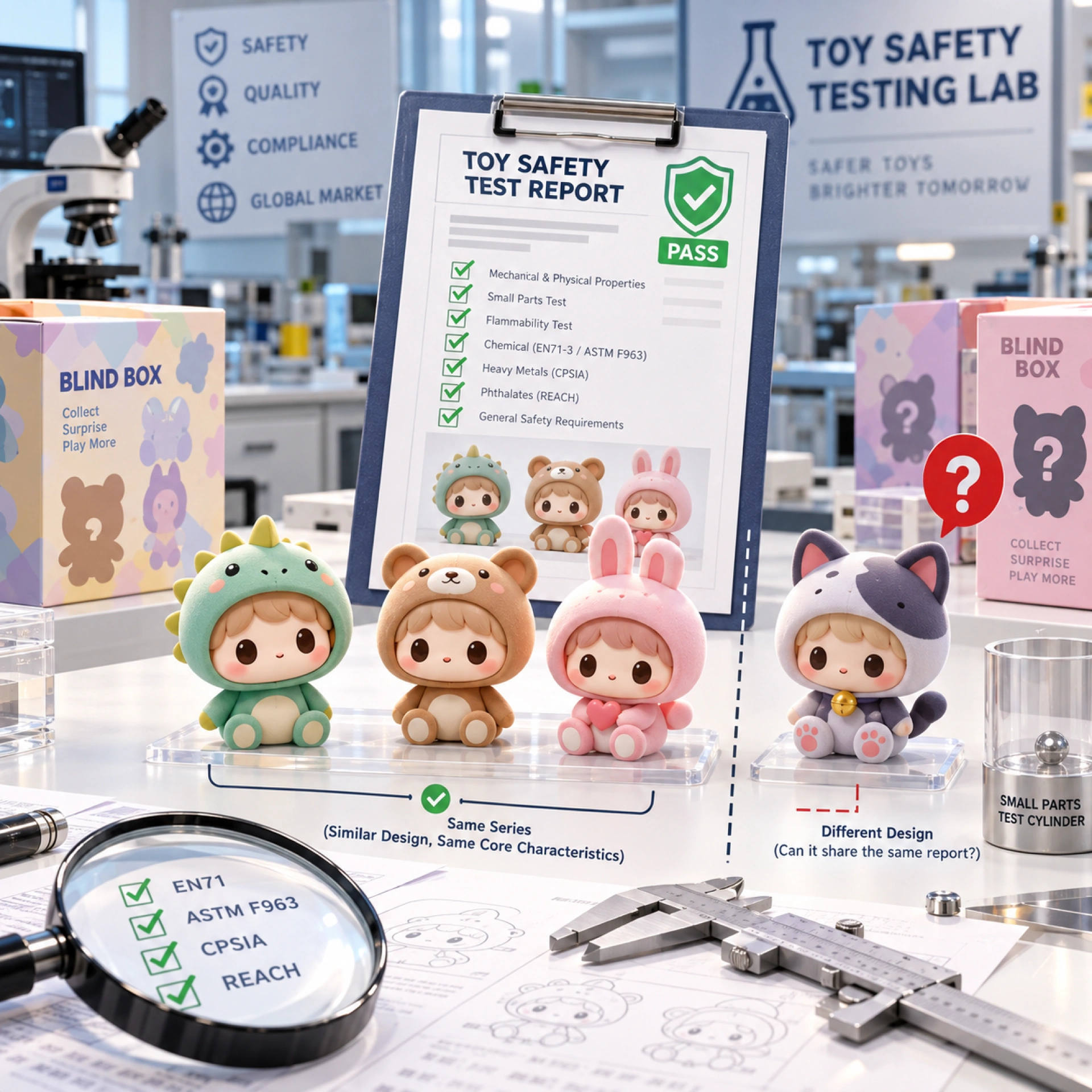
Game companies should also consider the target market. A collectible figure for adult fans may have different requirements from a toy intended for children. If the product may be sold as a children’s toy, additional safety testing, labeling, and compliance requirements may apply.
For the U.S. market, the CPSC provides guidance on toy safety and ASTM F963 requirements. It notes that ASTM F963 covers many toy safety requirements, but not every section applies to every product, so companies must identify the applicable requirements for their specific toy. You can review the official toy safety standards guidance for more details.
Game companies should also protect brand names, logos, and character marks when developing merchandise. The USPTO explains that trademarks can include words, slogans, designs, or combinations that identify the source of goods or services. You can review official trademark basics before launching physical merchandise.
Why Work With a Manufacturer Early?
Some game companies contact a manufacturer only after the character design is fully finished. This can work, but it may also create problems. If the design is too complex for production, the team may need to revise the character pose, part structure, or accessories later.
It is better to involve a manufacturer early, especially when the project has:
- complex characters
- multiple figures
- blind box series
- tight launch deadlines
- special packaging
- export requirements
- limited-edition merchandise
- strict brand style guides
Early manufacturing review can help game companies avoid design changes after tooling has started. It can also help control cost by simplifying unnecessary part separation, reducing difficult paint zones, and choosing practical packaging.
Custom toys for game companies should be developed as both a creative product and a manufacturable product. When the design team and factory team communicate early, the final result is usually more stable.
How Jiahong Creative Supports Custom Toys for Game Companies
Jiahong Creative supports custom PVC figures, blind box toys, mascot figures, and IP-related character products for brands that want to turn artwork into physical merchandise.
For game companies, the development process can include:
- Character artwork review
- Product structure discussion
- 3D modeling or 3D file optimization
- Prototype sample making
- Mold planning
- PVC injection or suitable production method
- Painting and decoration planning
- Assembly and quality checking
- Packaging coordination
- Mass production and shipment support
Because custom toys for game companies often require visual accuracy, communication is important at every stage. The manufacturer should understand which character details must be preserved and which details can be adjusted for production feasibility.
If your game studio is planning a figure, blind box, mascot toy, or promotional product, you can review our custom manufacturing services or contact us through our custom toy project inquiry page.
Final Thoughts
Custom toys for game companies can turn digital characters into physical brand assets. They help game studios create stronger fan engagement, new merchandise opportunities, event gifts, and collectible products.
However, successful toy development requires more than character art. Game companies need to prepare artwork, 3D files or modeling requirements, target size, quantity, packaging direction, safety requirements, and market goals. A strong manufacturer can help translate game characters into production-ready figures while keeping the original design identity.
Whether the project is a PVC figure, blind box series, mascot toy, or promotional giveaway, the key is to plan early. When character design, structure, painting, packaging, and QC are considered together, the final product is more likely to look professional, feel consistent with the game brand, and meet fan expectations.
For game companies, a custom toy is not just a product. It is a physical extension of the game world.
FAQ
1. What are custom toys for game companies?
Custom toys for game companies are physical products based on game characters, mascots, weapons, pets, skins, or brand visuals. They may include PVC figures, blind box toys, mascot figures, promotional toys, collectible figures, and character merchandise.
2. What should a game company prepare before making custom toys?
A game company should prepare character artwork, reference views, brand guidelines, 3D files if available, target size, estimated quantity, packaging ideas, target market, and expected launch timeline. Clear information helps the manufacturer evaluate cost and production feasibility faster.
3. Can game-ready 3D models be used directly for toy production?
Not always. Game-ready 3D models are designed for digital use, while production-ready 3D models must consider mold making, part separation, wall thickness, balance, painting, and assembly. Many game models need optimization before toy manufacturing.
4. What type of toy is best for game companies?
PVC figures are a popular option for detailed character toys. Blind box toys are suitable for games with multiple characters or skins. Mascot figures are useful for events and brand promotion. The best choice depends on the game style, budget, quantity, and marketing goal.
5. Are blind boxes suitable for game characters?
Yes. Blind boxes are suitable when a game has multiple characters, classes, pets, weapons, or skins. They can encourage collection behavior and increase fan engagement, especially when the packaging and series design match the game world.
6. How does packaging affect custom toys for game companies?
Packaging affects brand presentation, product protection, retail display, and fan experience. For game merchandise, packaging should match the visual style of the game and make the toy feel like part of the same character universe.
7. Do custom game character toys need safety testing?
It depends on the target market, product type, and intended age group. If the product is sold as a children’s toy, safety testing and labeling requirements may apply. Buyers should confirm market requirements before mass production.
8. How can game companies reduce custom toy production risk?
Game companies can reduce risk by involving the manufacturer early, confirming 3D models before sampling, reviewing prototypes carefully, approving color samples, checking packaging fit, and confirming quality standards before mass production.