

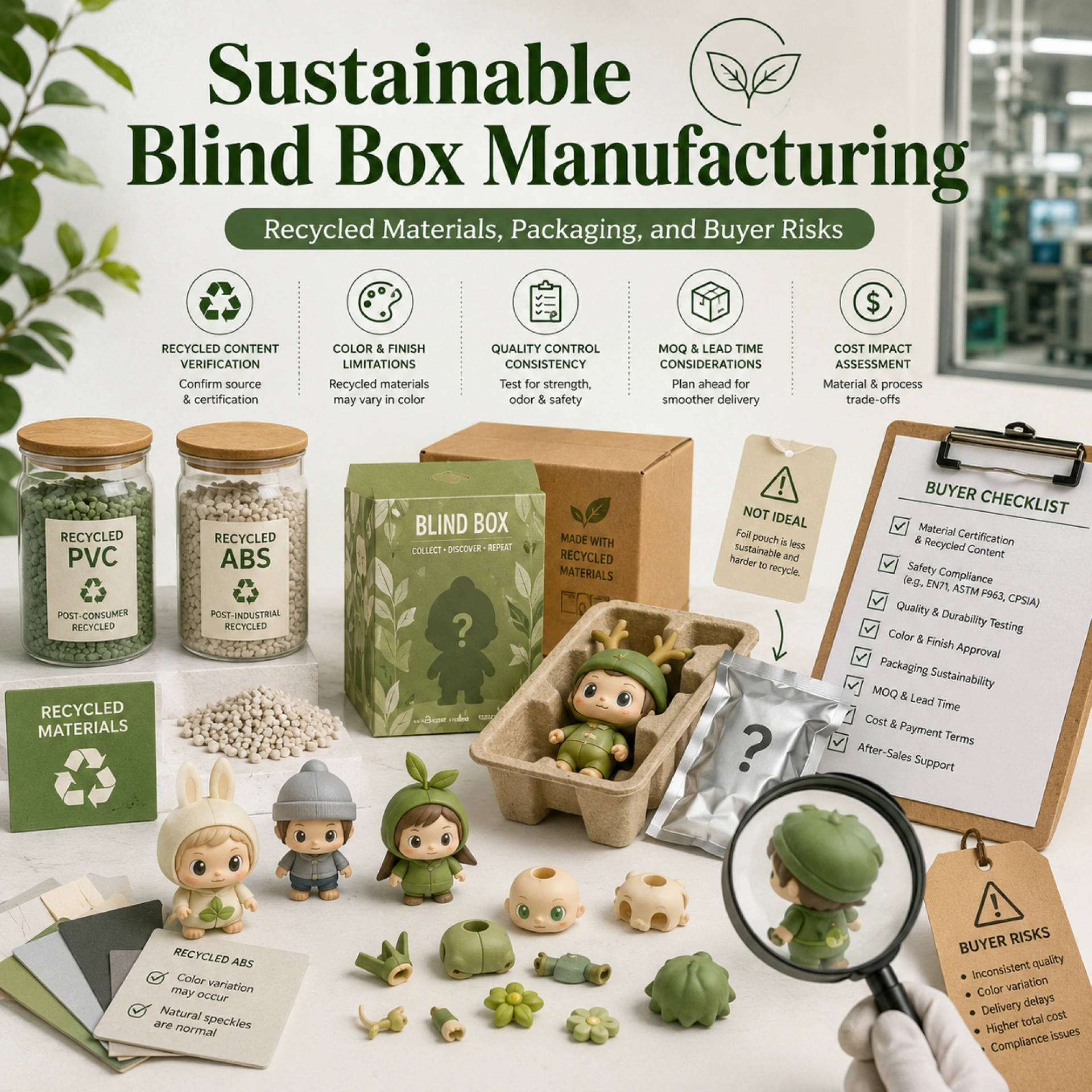
Sustainable Blind Box Manufacturing means developing blind box figures with more responsible material choices, lower-plastic packaging options, verified recycled content, and clear environmental claims. For buyers, the key question is not simply “Can we make blind boxes more eco-friendly?” The real question is: which sustainable choices can still meet figure quality, painting accuracy, packaging protection, cost targets, MOQ, compliance, and brand approval?
The direct answer is this: Sustainable Blind Box Manufacturing should balance material choices, packaging reduction, product quality, and verified environmental claims. Recycled PVC may work for some simple figure parts, but it should be tested carefully for fine details, spray painting, color matching, and surface consistency. Recycled ABS is often more practical for bases, stands, and rigid accessories. Paper packaging can reduce plastic trays, while foil bags may be reduced or replaced only if secrecy, scratch protection, and the blind box experience are still protected. Buyers should verify recycled content with clear documentation and avoid broad eco claims that cannot be proven.
For brands, IP owners, retailers, game companies, animation studios, and collectible toy buyers, Sustainable Blind Box Manufacturing is a procurement decision, not only a marketing idea. A blind box product must still look good, protect the figure, preserve the surprise experience, and pass quality control. If sustainability choices damage color stability, painting adhesion, surface finish, packaging protection, or compliance, the project may create more risk than value.
If you are still learning how blind box products are developed, our guide on the blind box figure manufacturing process explains how concept planning, figure design, prototyping, mold making, painting, packaging, QC, and mass production work together.
Why Sustainable Blind Box Manufacturing Is Different from Ordinary Toy Production
Sustainable Blind Box Manufacturing is more complex than simply changing one material. A blind box product includes the figure, accessories, inner protection, blind packaging, printed box, carton packing, inserts, barcodes, and sometimes collection cards. Each part may use different materials and different production methods.
For example, a blind box figure may include:
- PVC figure body
- ABS base or hard accessory
- Painted surface
- Pad-printed eyes and logos
- Matte or glossy coating
- Inner bag or foil bag
- Plastic tray or paper insert
- Outer printed blind box
- Instruction card or collection card
- Master carton
- Shipping labels
This means sustainability decisions affect both product quality and packaging design. A buyer may want recycled materials, but the factory still needs to check molding stability, surface finish, painting adhesion, color consistency, structural strength, and packaging protection.
Sustainable Blind Box Manufacturing should therefore be planned from the beginning of the project. If a buyer waits until after the sample is approved, material changes may affect tooling, painting, packaging fit, cost, lead time, and compliance documents.
Recycled PVC: Is It Suitable for Fine Custom Figures?
Recycled PVC may sound like the most direct solution for Sustainable Blind Box Manufacturing because many blind box figures are made with PVC. However, buyers should be careful. Recycled PVC may not always perform the same as virgin PVC, especially for fine collectible figures.
For custom blind box figures, PVC is often chosen because it supports sculpted detail, smooth surfaces, and painted decoration. If recycled PVC has inconsistent material quality, color contamination, impurities, unstable flow behavior, or surface variation, it may affect the final figure.
Buyers should evaluate recycled PVC based on:
- Detail reproduction
- Surface smoothness
- Base color consistency
- Paint adhesion
- Odor control
- Flexibility
- Deformation risk
- Batch consistency
- Chemical safety documentation
- Compatibility with required testing
The biggest risk is not whether recycled PVC can be molded. The bigger risk is whether it can support the same visual standard expected for collectible figures. Blind box customers often compare multiple figures in the same series. If one figure has uneven surface texture or inconsistent color, the whole collection may feel less premium.
For high-detail figures with facial features, small accessories, and fine painting, virgin PVC may still be more stable. For simpler shapes, larger parts, or lower-detail promotional blind box figures, recycled PVC may be easier to consider.
If you are comparing material behavior, our guide on PVC vs vinyl vs ABS figures explains how different plastics affect figure appearance, structure, cost, and production.
Recycled PVC and Fine Spray Painting
One of the most important buyer questions in Sustainable Blind Box Manufacturing is whether recycled PVC is suitable for fine spray painting. The answer depends on the material grade, surface quality, paint system, and approval standard.
Fine spray painting requires a stable surface. If the molded part has impurities, uneven texture, oil residue, unstable color base, or inconsistent hardness, paint defects may increase.
Possible risks include:
- Poor paint adhesion
- Uneven paint coverage
- Color shift
- More visible surface particles
- Higher defect rate
- More rejection during QC
- Difficulty matching approved samples
- Reduced consistency between batches
This does not mean recycled PVC cannot be used. It means buyers should test it before committing to mass production. For Sustainable Blind Box Manufacturing, the factory should make physical test samples using the actual material, actual paint, actual surface finish, and actual figure structure.
The buyer should not approve recycled PVC only based on a material claim. The buyer should check the painted sample, compare it with the approved artwork, inspect the surface under good lighting, and confirm whether the defect level is acceptable.
If your figure has complex color areas, facial details, or brand color requirements, review our guide on color matching custom PVC figures before choosing recycled PVC for mass production.
Recycled ABS: Better for Rigid Parts and Structural Components
Recycled ABS may be more practical than recycled PVC for certain blind box components. ABS is harder and more rigid, so it is often used for bases, stands, supports, internal structures, mechanical details, and hard accessories.
In Sustainable Blind Box Manufacturing, recycled ABS may be considered for:
- Figure bases
- Display stands
- Internal support parts
- Rigid accessories
- Hard decorative parts
- Structural connectors
- Packaging-related display supports
Recycled ABS can be useful when the part does not require the same soft sculpting feel as PVC. It may also be easier to control for parts that are molded in darker colors or painted over.
However, recycled ABS still has limitations. Buyers should check impact strength, surface finish, color consistency, molding stability, and odor. If the ABS part is visible and needs premium finishing, the same approval process should apply.
For many blind box projects, the most practical approach is not to make the whole figure from recycled material. A hybrid structure may work better. For example, the character body may use standard PVC for better detail and painting, while the base or internal support uses recycled ABS where quality risk is lower.
This approach makes Sustainable Blind Box Manufacturing more realistic because it balances environmental goals with product quality.
Paper Packaging: How to Reduce Plastic Inner Trays
Packaging is often the best starting point for Sustainable Blind Box Manufacturing because blind box packaging uses multiple layers. Many projects include an outer paper box, inner bag, plastic tray, insert card, and carton packing. Reducing plastic packaging may be easier than changing the figure material itself.
Buyers can consider:
- Paper pulp trays instead of plastic inner trays
- Folded paper inserts instead of PET trays
- Paper sleeves instead of plastic wraps
- Smaller box structure to reduce material use
- FSC-certified paper options
- Soy-based or low-VOC printing discussion with packaging suppliers
- Reduced packaging layers
- Better carton planning to reduce shipping volume
Paper packaging can help reduce plastic use, but it must still protect the figure. Blind box figures often have painted surfaces, small accessories, fragile parts, or matte coatings. If the paper insert rubs against the figure during transportation, scratches may appear.
For Sustainable Blind Box Manufacturing, paper packaging should be tested with the final figure. Buyers should check:
- Does the paper tray hold the figure securely?
- Does it scratch painted surfaces?
- Does it protect accessories?
- Does it survive vibration and shipping?
- Does it maintain the blind box unboxing experience?
- Does it fit the outer box properly?
- Does it increase or reduce packing labor?
- Does it affect carton quantity?
If your project needs packaging planning, read our guide on working with a custom toy packaging manufacturer. Packaging should be designed together with the figure, not treated as a final decoration step.
Can Foil Bags Be Replaced?
Foil bags are common in blind box products because they help preserve secrecy, protect the figure, and create a strong unboxing experience. However, buyers interested in Sustainable Blind Box Manufacturing often ask whether foil bags can be replaced.
The answer depends on the product and brand positioning. Foil bags may be replaced, reduced, or redesigned, but buyers must consider several risks.
Foil bag functions include:
- Hiding the figure identity
- Protecting painted surfaces
- Reducing dust exposure
- Separating accessories
- Improving perceived value
- Supporting retail blind box expectations
- Preventing easy identification before opening
Possible alternatives include:
- Paper blind bags
- Glassine-style paper bags
- Recyclable mono-material plastic bags
- Tissue wrapping
- Paper sleeves
- Direct paper insert protection
- Reduced-size inner bags
Each option has trade-offs. Paper bags may reduce plastic, but they may tear, allow more rubbing, or provide weaker moisture resistance. Clear recyclable plastic bags may be easier to recycle in some markets, but they may ruin the blind effect. No inner bag may reduce packaging, but it may increase scratches and returns.
For Sustainable Blind Box Manufacturing, buyers should test alternatives before deciding. The best solution may be different for premium collectibles, kids blind boxes, promotional blind boxes, or retail display products.
How to Verify Recycled Content
Recycled content claims must be verified. Buyers should not rely only on a supplier saying “eco-friendly material” or “recycled plastic.” For Sustainable Blind Box Manufacturing, recycled content verification should be part of procurement documentation.
Buyers can request:
- Material supplier declaration
- Recycled content percentage
- Pre-consumer or post-consumer recycled content explanation
- Batch number and traceability records
- Purchase records for recycled material
- Third-party certification, if available
- Test reports, if applicable
- Production records showing which batch used recycled material
- Packaging supplier documentation
- Chain-of-custody information for certified paper
For environmental claims, buyers should be careful with wording. Standards and guidelines such as ISO 14021 self-declared environmental claims and the FTC Green Guides are useful references for understanding why claims should be specific, substantiated, and not misleading.
For paper packaging, buyers may also consider FSC certification when they want to communicate responsible paper sourcing. However, if the buyer wants to use FSC claims or logos, the packaging supply chain and printing supplier must be checked carefully.
Sustainable Blind Box Manufacturing should not depend on vague claims. It should depend on documented material choices and clear approval records.
Cost, MOQ, and Color Limitations
Sustainable Blind Box Manufacturing can affect cost and MOQ. Buyers should plan this early because recycled materials, certified paper, alternative packaging structures, and special documentation may change the quotation.
Common cost factors include:
- Recycled material sourcing
- Material testing
- Minimum purchase quantity of recycled resin
- Higher defect rate during trials
- Extra sample rounds
- Packaging redesign
- New paper tray tooling
- Printing proof cost
- Supplier documentation
- Third-party verification
- QC and sorting time
- Packaging performance testing
MOQ may also increase. If recycled PVC or recycled ABS must be purchased from a specific supplier, the factory may need to meet that supplier’s minimum order quantity. If the buyer wants FSC paper or special paper packaging, the packaging supplier may also require a minimum paper or printing quantity.
Color limitations are another major issue. Recycled plastics may not always support very bright, clean, or light colors. Darker colors may be easier to control. White, pastel, skin tones, neon colors, and precise brand colors may be more difficult.
For Sustainable Blind Box Manufacturing, buyers should be realistic. If the brand requires strict Pantone matching, premium painting, and very clean surfaces, recycled materials may need careful testing before approval.
If cost is a major concern, our guide on how to reduce custom PVC figure cost can help buyers understand how material, size, paint complexity, packaging, and production planning affect final pricing.
How to Avoid Greenwashing in Blind Box Projects
Greenwashing happens when a brand makes environmental claims that are vague, exaggerated, or not properly supported. In Sustainable Blind Box Manufacturing, this is a serious risk because buyers may want to promote recycled materials or eco-friendly packaging before the evidence is complete.
Avoid claims like:
- “100% eco-friendly”
- “Fully sustainable”
- “Green blind box”
- “Plastic-free” if any plastic remains
- “Recyclable” without confirming local recycling reality
- “Made from recycled material” without percentage or documentation
- “Environmentally safe” without explanation
Better claims are more specific:
- “Outer box made with FSC-certified paper”
- “Paper insert reduces plastic inner tray use”
- “Base part made with recycled ABS, subject to batch documentation”
- “Packaging designed to reduce plastic components”
- “Contains recycled content in selected components”
- “Recycled content percentage verified by supplier declaration”
The European Commission’s green claims guidance area and the FTC Green Guides both show why environmental marketing claims need evidence and careful wording.
For Sustainable Blind Box Manufacturing, buyers should prepare a claim approval checklist before printing packaging or launching marketing content.
Sustainable Blind Box Manufacturing Procurement Checklist
Before starting a sustainable blind box project, buyers can use this checklist.
| Procurement Question | Why It Matters |
|---|---|
| Which parts must use recycled material? | Helps separate high-risk figure parts from lower-risk structural parts |
| Is recycled PVC suitable for the figure body? | Fine sculpting and painting may be affected |
| Can recycled ABS be used for bases or supports? | Rigid parts may be a better starting point |
| Does the material supplier provide recycled content documents? | Supports verification and claim approval |
| Will recycled material affect Pantone matching? | Color limitations may affect brand approval |
| Can paper packaging replace plastic trays? | Reduces plastic but must protect painted figures |
| Can foil bags be reduced or replaced? | Affects secrecy, protection, and unboxing experience |
| What is the MOQ for recycled material or certified paper? | Helps avoid unexpected cost increases |
| Are environmental claims specific and documented? | Reduces greenwashing risk |
| Has the final product passed QC with the new material or packaging? | Confirms the sustainable solution is production-ready |
This checklist helps Sustainable Blind Box Manufacturing stay practical. The goal is not to make claims first and solve production later. The goal is to choose realistic improvements that can survive sampling, approval, QC, and retail use.
Buyer Risk Matrix
Buyers can also evaluate sustainability decisions using a risk matrix.
| Sustainability Option | Potential Benefit | Main Risk | Best Use Case |
| Recycled PVC for figure body | Reduces virgin plastic use | Surface, color, odor, painting, and consistency risk | Simple shapes, darker colors, lower-detail figures after testing |
| Recycled ABS for base | Easier structural application | Strength and surface consistency must be checked | Bases, stands, supports, rigid accessories |
| Paper pulp tray | Reduces plastic tray use | May scratch paint or provide weaker support | Figures with simple shape and good surface protection |
| Paper blind bag | Reduces plastic inner bag use | Lower moisture and tear resistance, possible rubbing | Low-friction products or added internal protection |
| Reduced packaging layers | Less material and lower volume | May reduce perceived value or protection | Promotional or simplified blind box lines |
| FSC paper | Supports responsible sourcing claims | Requires correct supplier documentation and claim control | Retail packaging with verified paper supply chain |
| Recyclable mono-material bag | Easier material story | May not preserve blind effect or local recyclability | Projects where clear communication matters more than secrecy |
This is the practical way to approach Sustainable Blind Box Manufacturing. Each option has benefits and risks. Buyers should select solutions based on product category, quality standard, target market, and brand claim strategy.
Quality Control for Sustainable Blind Box Manufacturing
Sustainability changes must still pass quality control. If recycled material or new packaging increases defects, the project may lose customer trust.
QC should check:
- Figure surface quality
- Color consistency
- Painting adhesion
- Printing accuracy
- Odor
- Deformation
- Assembly strength
- Base stability
- Packaging fit
- Paper tray rubbing
- Foil bag or paper bag protection
- Carton packing
- Label accuracy
- Recycled content documentation
- Environmental claim consistency
Before shipment, buyers can use our custom PVC figure quality control checklist to inspect appearance, color, painting, assembly, packaging, safety, and final shipment quality.
For sustainable projects, QC should also compare the final goods with the approved sustainable sample. If the tested sample used one material but mass production used another, the buyer should review whether the claim and compliance documents still match the final product.
How Jiahong Creative Supports Sustainable Blind Box Manufacturing
Jiahong Creative supports blind box figure projects from artwork review, 3D modeling, prototype sampling, mold making, PVC injection molding, painting, printing, assembly, packaging, QC, and shipment preparation.
For Sustainable Blind Box Manufacturing, we can help buyers review whether recycled PVC, recycled ABS, paper packaging, reduced plastic inner trays, alternative bags, and claim documentation are practical for the project. We can also help evaluate how material choices may affect painting, color matching, MOQ, sample approval, packaging protection, and final QC.
If your brand wants to develop a blind box series with sustainability requirements, please share your artwork, target figure size, expected quantity, material preference, packaging idea, target market, claim requirements, and launch timeline. You can contact us through our custom blind box project inquiry page.
Final Thoughts
Sustainable Blind Box Manufacturing is not only about using recycled material or adding an eco-friendly message to the box. It is a complete procurement decision that affects figure quality, painting, color, packaging, cost, MOQ, documentation, and marketing claims.
Recycled PVC may be possible for some figure projects, but it needs testing before fine spray painting and strict color approval. Recycled ABS may be a more practical starting point for bases, rigid accessories, and structural parts. Paper packaging can reduce plastic trays, but it must still protect the figure and preserve the blind box experience. Foil bags may sometimes be replaced or reduced, but buyers should test secrecy, surface protection, and unboxing value.
The most important rule is simple: every sustainability claim should be specific, documented, and connected to the real product. Sustainable Blind Box Manufacturing works best when buyers combine realistic material choices, verified recycled content, responsible packaging design, clear QC standards, and careful marketing language.
FAQ
1.What is Sustainable Blind Box Manufacturing?
Sustainable Blind Box Manufacturing means developing blind box products with more responsible material choices, reduced plastic packaging, verified recycled content, and clear environmental claims while still controlling product quality, packaging protection, and buyer risk.
2.Is recycled PVC suitable for blind box figures?
Recycled PVC may be suitable for some simple blind box figures, but it should be tested before mass production. Fine details, clean surfaces, strict color matching, and high-quality spray painting may be harder to control with recycled PVC.
3.Is recycled ABS better than recycled PVC?
Recycled ABS may be more practical for rigid parts such as bases, stands, supports, internal structures, and hard accessories. It is not always a replacement for PVC figure bodies, but it can support Sustainable Blind Box Manufacturing in lower-risk components.
4.Can paper packaging replace plastic inner trays?
Yes, paper packaging can sometimes replace plastic inner trays, but it must be tested. Buyers should check whether the paper tray protects painted surfaces, holds accessories, prevents movement, and survives shipping.
5.Can foil bags be replaced in blind box packaging?
Foil bags can sometimes be replaced or reduced, but buyers must consider secrecy, scratch protection, moisture resistance, retail expectation, and unboxing experience. Paper bags or recyclable mono-material bags may work for some projects but not all.
6.How can buyers verify recycled content?
Buyers can request supplier declarations, recycled content percentage, batch records, purchase records, third-party certificates, test reports, and chain-of-custody documentation. Claims should be supported by clear evidence.