

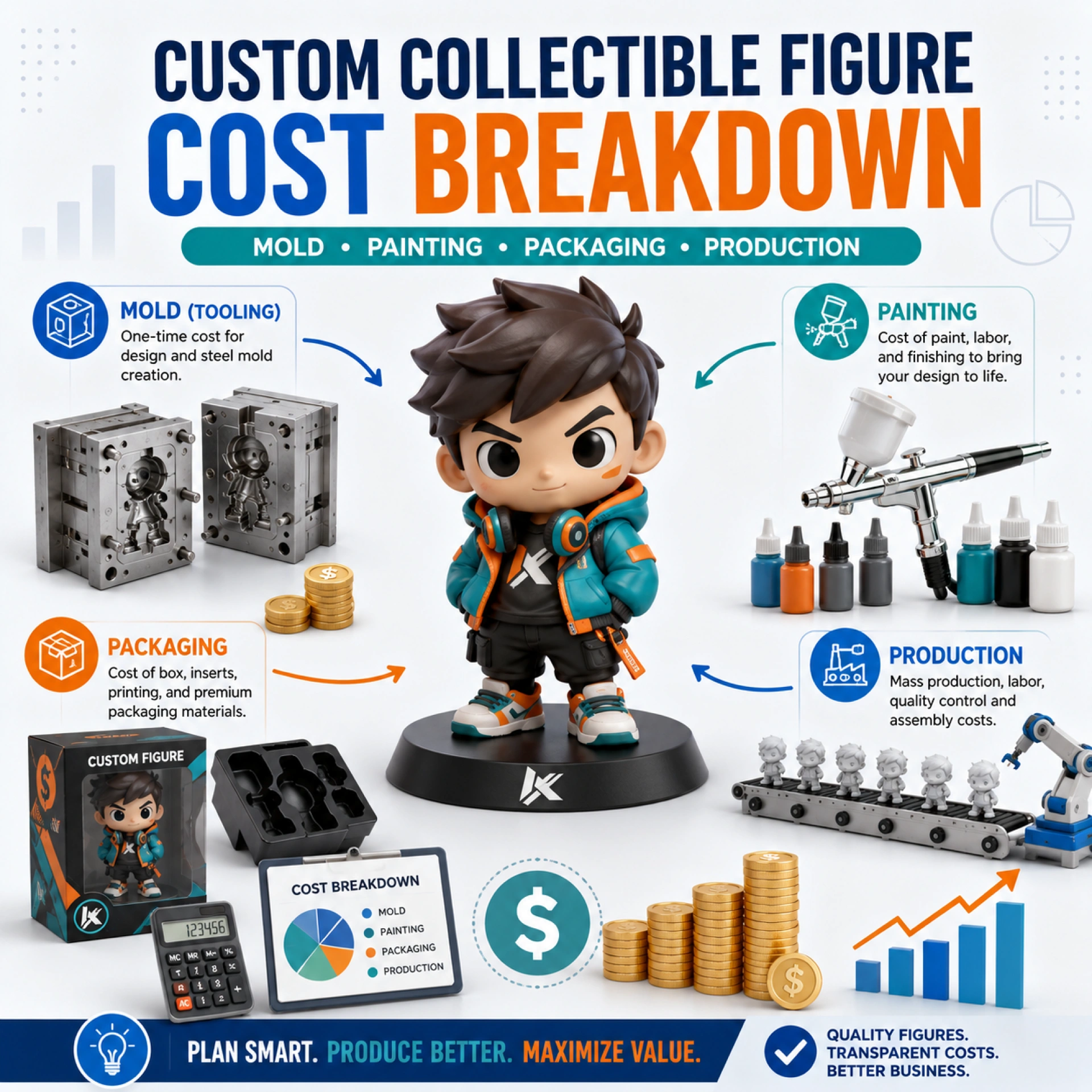
The biggest mistake buyers make when estimating collectible figure costs is looking only at the final unit price. A real Custom Collectible Figure Cost Breakdown includes many different stages: 3D modeling, prototype development, mold making, PVC material, painting, assembly, packaging, testing, and shipping.
The direct answer is this: the cost of a custom collectible figure is mainly determined by product complexity, number of parts, mold structure, painting difficulty, packaging requirements, order quantity, testing requirements, and shipping method. A simple PVC figure with one color and a basic box can have a completely different cost structure from a premium collectible figure with multiple parts, hand painting, special effects, custom packaging, and international compliance requirements.
For brands, understanding Custom Collectible Figure Cost Breakdown before starting production helps avoid unexpected expenses. Instead of asking only “How much is one figure?”, buyers should understand where the money goes and which decisions increase or reduce the budget.
A collectible figure project usually includes:
- Character artwork review
- 3D modeling
- Prototype sample
- Mold development
- Material selection
- Painting process
- Assembly
- Packaging development
- Safety testing
- Quality control
- Shipping preparation
Our guide on how PVC toys are manufactured explains how these production stages connect from design to mass production.
Custom Figure Cost Includes:
| Cost Category | What It Covers | Main Cost Factors |
|---|---|---|
| 3D Modeling Cost | Turning artwork into a production-ready 3D model | Character complexity, number of parts, accessories |
| Prototype Cost | Physical sample creation before mass production | Sample method, revisions, finishing level |
| Mold Cost | Creating production molds | Part count, mold structure, steel type |
| PVC Material Cost | Raw material for figure production | Figure size, weight, material requirements |
| Painting Cost | Surface finishing and decoration | Colors, gradients, hand painting, special effects |
| Assembly Cost | Putting all components together | Number of parts, fitting difficulty |
| Packaging Cost | Box, tray, cards, bags, cartons | Packaging style, printing, materials |
| Testing Cost | Safety and compliance testing | Target market, product category |
| Shipping Cost | Moving products globally | Quantity, weight, volume, shipping method |
A professional Custom Collectible Figure Cost Breakdown should separate these costs instead of combining everything into one number.
1. 3D Modeling Cost
3D modeling is the first major cost in custom collectible figure development.
Many buyers provide:
- 2D character artwork
- Concept sketches
- Game character designs
- Mascot designs
- Licensed IP artwork
- AI-generated concepts
However, 2D artwork cannot directly enter production. It must be converted into a 3D model that considers:
- Manufacturing feasibility
- Figure balance
- Mold separation
- Part structure
- Painting areas
- Assembly method
The more complex the character, the higher the 3D modeling cost.
Factors that increase 3D modeling cost:
- Complex hairstyles
- Layered clothing
- Multiple accessories
- Dynamic poses
- Weapons or props
- Detailed facial expression
- Mechanical elements
A simple chibi figure may require less modeling work, while a premium anime-style figure with detailed armor and accessories requires more engineering time.
If your project starts from flat artwork, our article on how to turn 2D character art into a custom toy figure explains the transition from artwork to production.
2. Prototype Cost
Prototype cost is often misunderstood. Some buyers think the sample is only a small version of production. In reality, the prototype stage is where many design problems are discovered.
A prototype helps confirm:
- Character accuracy
- Size proportion
- Pose stability
- Assembly structure
- Painting direction
- Packaging fit
Prototype costs depend on:
- Prototype method
- Figure size
- Surface details
- Number of revisions
- Painting requirements
A cheap prototype may save money early but create bigger problems during mold development. A proper prototype helps reduce production risk.
Our article on custom PVC figure sample cost explains why sample development is an important investment before tooling.
3. Mold Cost
Mold cost is usually one of the largest parts of Custom Collectible Figure Cost Breakdown.
A collectible figure mold is not priced only by character count. It depends on:
- Number of mold parts
- Figure size
- Structure complexity
- Undercuts
- Separate accessories
- Material selection
- Production quantity
For example:
A simple standing figure:
- One body
- Simple arms
- Simple accessories
may require fewer molds.
A complex collectible figure:
- Multiple body parts
- Separate weapons
- Hair pieces
- Clothing layers
- Display base
requires more mold development.
One important point:
More designs do not always mean proportionally higher mold costs.
A blind box series with 10 characters may reduce cost if:
- Bodies are shared
- Bases are shared
- Accessories are reused
But 3 characters with completely different structures may require more tooling.
Our article on reduce custom PVC figure cost explains how buyers can control tooling, parts, painting, and production complexity.
4. PVC Material Cost
PVC material cost depends mainly on figure size and weight.
A larger figure uses:
- More PVC material
- Larger molds
- Longer molding time
- More packaging protection
Material cost is also affected by:
- Soft PVC or hard PVC
- PVC density
- Color requirements
- Special materials
- Mixed materials
For example:
A 5cm blind box figure and a 20cm premium collectible figure may both be PVC, but their material cost structure is completely different.
Material choice also affects:
- Surface feeling
- Detail reproduction
- Durability
- Painting performance
Buyers comparing materials can read our guide on PVC vs vinyl vs ABS figures to understand how material decisions affect cost.
5. Painting Cost
Painting is one of the biggest variables in Custom Collectible Figure Cost Breakdown.
Two figures with the same mold can have very different costs because of painting.
A basic figure may include:
- One base color
- Simple spray painting
- Basic printing
A premium figure may include:
- Multiple color layers
- Gradient painting
- Hand painting
- Metallic effects
- Pearl effects
- Matte coating
- Gloss coating
- Small detail printing
Painting cost depends on:
- Number of colors
- Painting areas
- Masking difficulty
- Manual labor
- Quality standard
Color accuracy is also important for licensed IP products.
Buyers should prepare:
- Pantone references
- Approved color samples
- Painting standards
- Acceptable color tolerance
For more details, see our article on color matching custom PVC figures.
6. Assembly Cost
Assembly cost depends on how many parts a figure contains.
A simple figure:
- One body
- One base
has lower assembly cost.
A premium collectible:
- Body
- Head
- Hair
- Hands
- Accessories
- Weapons
- Base
- Decorative parts
requires more assembly work.
Assembly cost includes:
- Component fitting
- Glue application
- Alignment checking
- Visual inspection
- Repair handling
A design that looks impressive may become expensive if it requires too many manual assembly steps.
During design review, manufacturers should evaluate whether the figure can be assembled efficiently.
7. Packaging Cost
Packaging is another important part of Custom Collectible Figure Cost Breakdown.
Packaging may include:
- Window box
- Color box
- Gift box
- Blind box
- Inner tray
- Protective bag
- Collection card
- Instruction sheet
- Export carton
Packaging cost depends on:
- Material
- Printing method
- Box size
- Surface finishing
- Quantity
- Special effects
Premium packaging may include:
- Embossing
- Foil stamping
- UV coating
- Magnetic box
- Special inserts
Packaging should be planned together with the figure because:
- Figure size affects box size
- Base shape affects tray design
- Accessories affect inner space
- Shipping affects carton structure
Our guide on custom toy packaging manufacturer explains what buyers should prepare before packaging development.
8. Testing Cost
Testing cost depends on the target market and product classification.
For children’s toys, buyers may need to consider:
- Safety standards
- Material testing
- Mechanical testing
- Chemical testing
- Documentation
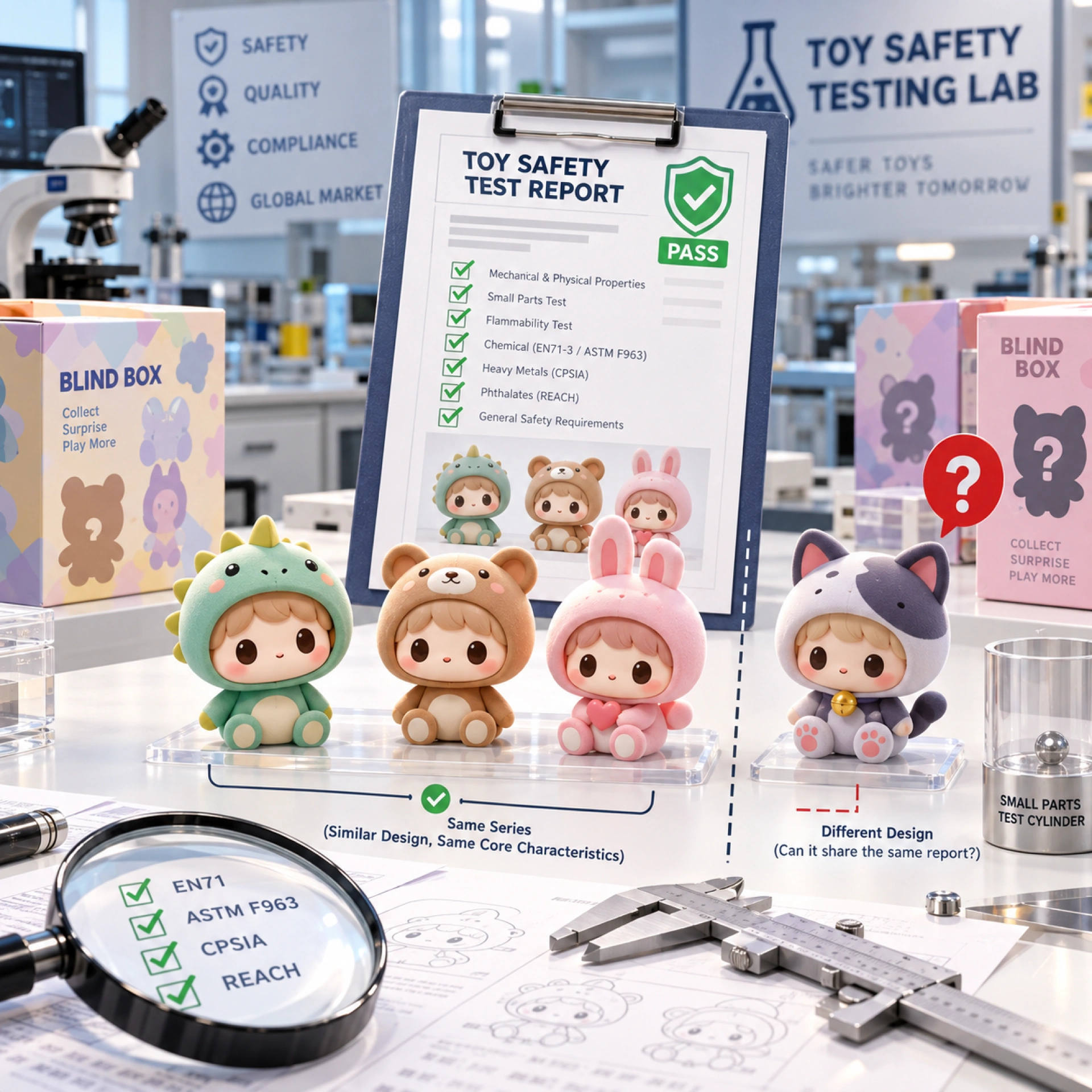
For the U.S. market, buyers can review CPSC Toy Safety requirements and Children’s Product Certificate information.
For European markets, buyers can review EU toy safety requirements.
Testing cost depends on:
- Number of variants
- Materials
- Age grading
- Product category
- Required standards
Testing should be planned before production, not after mass production begins.
9. Shipping Cost
Shipping is the final part of Custom Collectible Figure Cost Breakdown.
Shipping cost depends on:
- Product weight
- Packaging volume
- Carton size
- Quantity
- Destination
- Shipping method
A lightweight figure with large packaging may cost more to ship because volume affects freight calculation.
Buyers should calculate:
- Product weight
- Packaging weight
- Carton quantity
- CBM
- Shipping method
For blind box and collectible projects, packaging optimization can significantly affect total landed cost.
Example Custom Collectible Figure Cost Structure
A typical project may look like:
| Item | Cost Impact |
| 3D modeling | Medium |
| Prototype | Medium |
| Mold | High |
| PVC material | Medium |
| Painting | Medium to High |
| Assembly | Medium |
| Packaging | Medium |
| Testing | Depends on market |
| Shipping | Depends on volume |
The final product cost is the result of all these factors combined.
How To Reduce Custom Collectible Figure Cost Without Hurting Quality
Buyers can reduce cost by:
Reduce unnecessary parts
Fewer parts mean:
- Lower mold cost
- Lower assembly cost
- Lower defect risk
Optimize accessories
Use:
- Shared accessories
- Integrated structures
- Simplified parts
Control painting complexity
Reduce:
- Excessive colors
- Difficult gradients
- Too many manual details
Choose suitable packaging
Avoid unnecessary premium packaging unless it improves retail value.
Plan quantity correctly
Higher quantity can spread:
- Mold cost
- Setup cost
- Engineering cost
Approve samples carefully
Late changes after mold development can increase cost significantly.
Our custom PVC figure sample approval checklist helps buyers review shape, size, color, painting, assembly, packaging, and production readiness before mass production.
How Jiahong Creative Helps Control Figure Development Cost
Jiahong Creative supports collectible figure projects from:
- Artwork review
- 3D modeling
- Prototype development
- Mold making
- PVC production
- Painting
- Assembly
- Packaging
- QC
- Shipment preparation
For buyers preparing a Custom Collectible Figure Cost Breakdown, we help evaluate:
- Product structure
- Mold complexity
- Material choice
- Painting process
- Packaging direction
- Testing requirements
- Production quantity
The goal is not simply to make the cheapest figure. The goal is to create a product that achieves the required quality while controlling unnecessary production costs.
FAQ
1. What is included in Custom Collectible Figure Cost Breakdown?
Custom Collectible Figure Cost Breakdown includes 3D modeling, prototype, mold, PVC material, painting, assembly, packaging, testing, and shipping costs.
2. What is usually the biggest cost in collectible figure production?
Mold cost and painting cost are usually two of the biggest factors because they require engineering and labor resources.
3. Does a bigger figure always cost more?
Usually yes, because bigger figures require more material, larger molds, longer production time, and stronger packaging.
4. Why are some figures with the same size priced differently?
Because complexity is different. One figure may have simple painting and few parts, while another may require multiple accessories, hand painting, and complex assembly.
5. Can buyers reduce mold cost?
Yes. Buyers can reduce mold cost by sharing components, simplifying parts, optimizing accessories, and designing products with manufacturing feasibility in mind.