
If you work in toys, collectibles, licensed merchandise, or product development, you have probably asked the question: what is an action figure?
At first glance, the answer seems simple. An action figure is a character-based toy, often human, humanoid, or creature-like, designed with sculpted features and sometimes movable joints. But in real manufacturing and product development, the answer is much deeper than that.
For brands, retailers, and IP owners, understanding what is an action figure matters because it affects product category positioning, material selection, tooling complexity, articulation design, paint planning, packaging strategy, and manufacturing cost. An action figure is not just a toy. It is a structured product category with specific engineering and commercial expectations.
This article explains what is an action figure, how action figures are different from other collectible toys, how they are manufactured, what materials are used, and what B2B buyers should evaluate when developing action figure products with a manufacturing partner.
What Is an Action Figure?
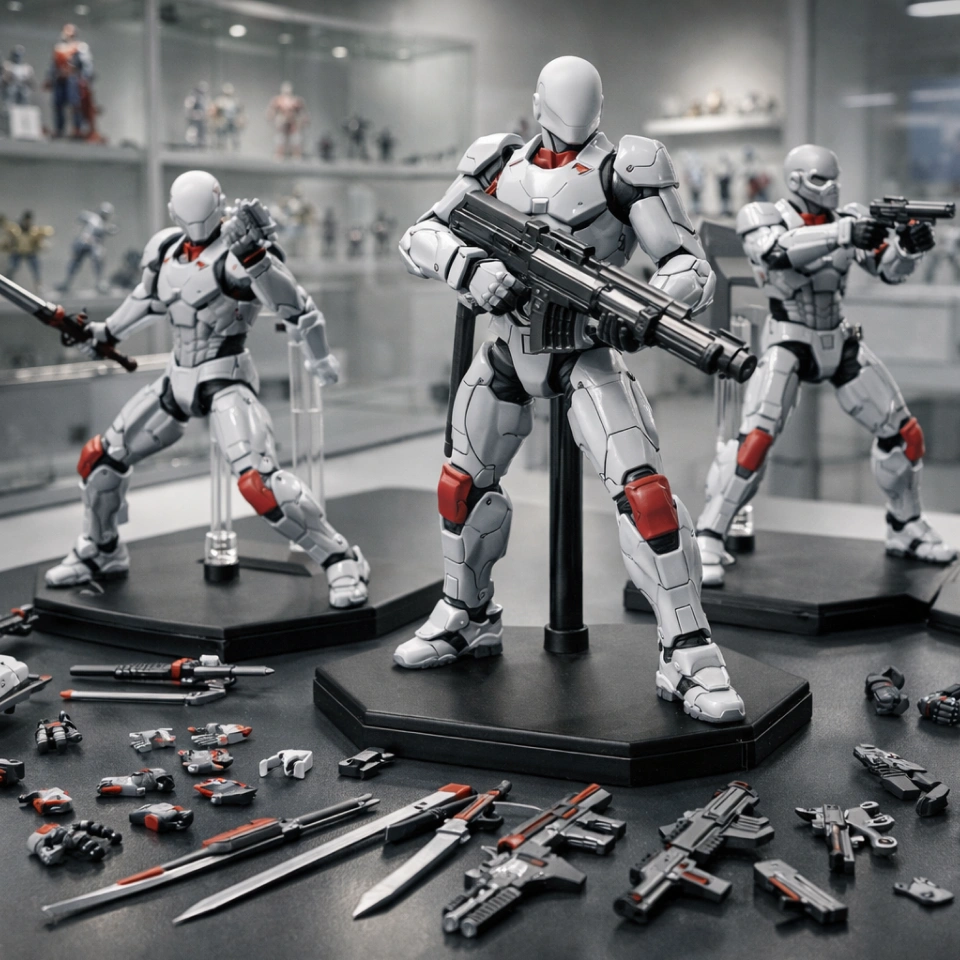
An action figure is a character-based figure product that usually represents a person, hero, villain, fictional character, robot, monster, or stylized persona, and is designed for display, play, or collecting.
In commercial terms, the answer to what is an action figure usually includes several common features:
- A character-based design
- Sculpted body and facial details
- Molded accessories or costume parts
- Articulation points in some or all joints
- Packaging designed for retail display or collecting
- Materials chosen for both structure and visual finish
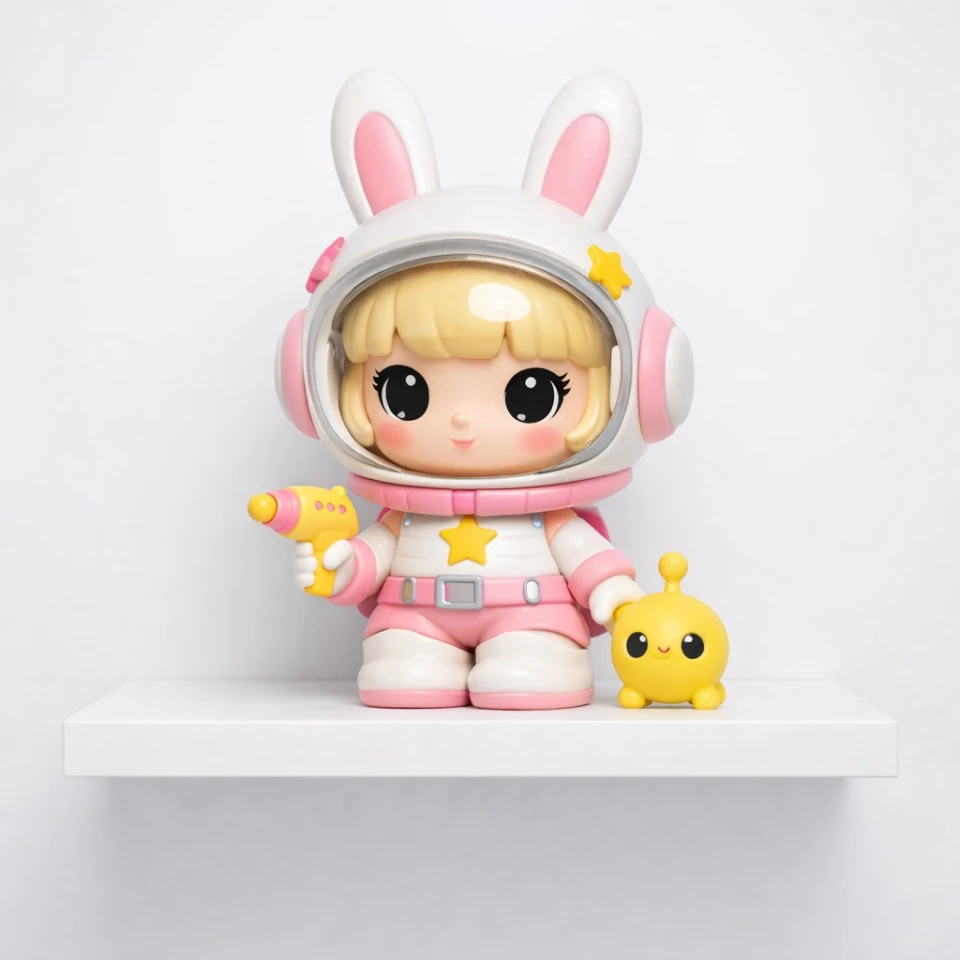
Not every figure is an action figure. Some figures are static collectibles, blind box toys, vinyl designer toys, or decorative figurines. What often separates an action figure from those other categories is poseability, articulation, and character-driven structure.
That is why buyers asking what is an action figure are often also trying to understand where it fits within the broader market for collectible toys and licensed merchandise.
How Action Figures Differ from Other Figure Types
A complete explanation of what is an action figure should compare it with related product categories.
Action Figures vs Static Collectible Figures
Static collectible figures are primarily made for display. They may have highly detailed sculpts, but they usually do not include movable joints or interchangeable parts.
Action figures, by contrast, often include:
- Arm, leg, head, or waist articulation
- Swappable accessories
- Poseable structure
- Play-focused or display-focused mobility
Action Figures vs Blind Box Figures
Blind box figures are usually small-format collectibles packaged in mystery boxes. They are often simplified, stylized, and less dependent on articulation.
If you want to guide readers deeper into that category, a natural internal link here is:
Action Figures vs Vinyl or Art Toys
Designer vinyl toys often focus on form, art style, and collectible identity rather than articulation. They may be soft, hollow, and less mechanically structured than action figures.
This helps readers understand why action figures often rely on a different material strategy than art toys.
What Materials Are Used in Action Figures?
When people ask what is an action figure, they are often really asking how action figures are made and what materials give them their look and function.
Most action figures use a combination of materials rather than a single plastic.
PVC
PVC is commonly used for outer body parts, armor pieces, costume details, and visually important sculpted surfaces.
PVC is chosen because it offers:
- Good detail reproduction
- Smooth paintable surfaces
- Flexible or semi-rigid behavior
- Efficient mass production through injection molding
ABS
ABS is often used in action figures for internal or structural elements, including:
- Joint systems
- Pegs and connection parts
- Bases and stands
- Structural load-bearing components
ABS is harder and more rigid than PVC, making it more suitable for mechanical stability.
TPR or Other Flexible Materials
Some action figures also use softer materials for capes, accessories, hair parts, or flexible overlays depending on the design.
This is one reason action figures are more engineering-intensive than simple collectible figures.
A useful internal link here is:
What Is Vinyl Material for Toys?
That helps readers distinguish vinyl toys from articulated action figures.
How Action Figures Are Manufactured
To properly answer what is an action figure, it is important to explain the real production process.
Action figure manufacturing is not just a sculpting exercise. It is a combination of industrial design, structural engineering, mold development, material planning, decoration, and assembly.
Concept Design and Character Breakdown
The process begins with concept art, style guides, or licensed reference materials.
At this stage, manufacturers evaluate:
- Character proportions
- Costume complexity
- Accessory count
- Number of articulation points
- Display or play function
- Size targets
- Packaging concept
Action figures require more planning than simple statues because the product must move without breaking visual continuity.
H3: Why Joint Planning Matters Early
A factory cannot simply add joints at the end of the process. Joint placement affects the entire figure structure, including sculpt splits, mold planning, and paint masking zones.
For B2B buyers, this is one of the first signs of whether a supplier truly understands action figure development.
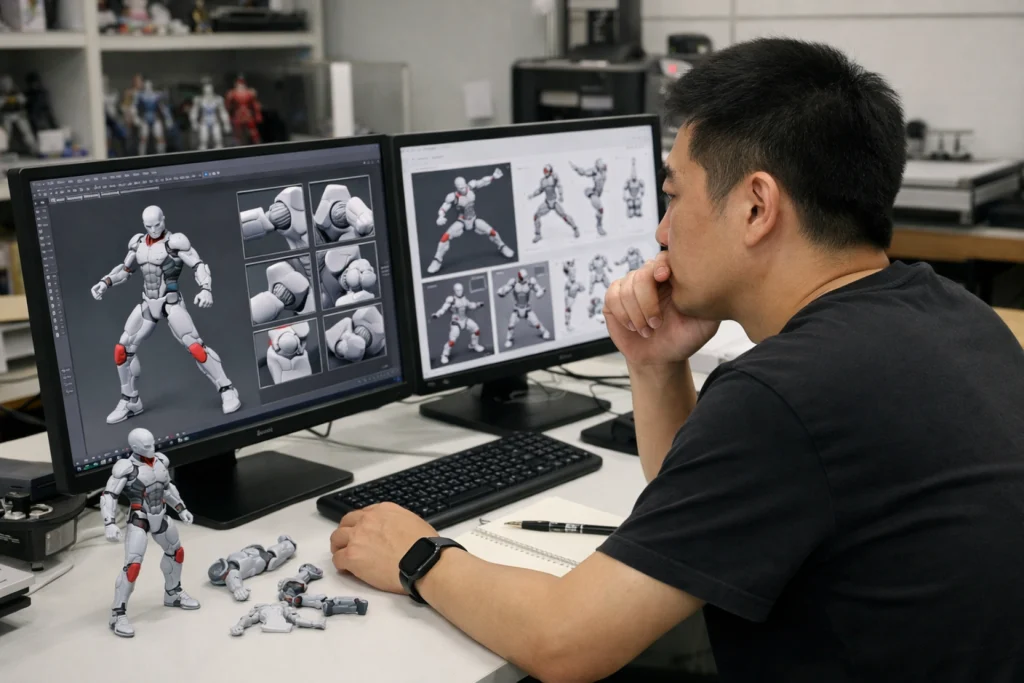
3D Modeling and Structural Engineering
After concept approval, the figure enters 3D engineering.
This stage defines:
- Articulation point design
- Internal socket and peg structure
- Accessory fit
- Balance and center of gravity
- Wall thickness
- Material zoning
- Part split for mold creation
A professional factory will create a full product architecture, not just an exterior model.
This is where brands should evaluate whether a manufacturer can support OEM or ODM development, especially if the figure includes multiple accessories or poseable systems.
Prototype Development and Pose Testing
Before production molds are made, prototypes are developed and tested.
Prototype review for action figures usually includes:
- Sculpt accuracy
- Joint function
- Accessory compatibility
- Standing stability
- Paint zoning review
- Assembly logic
This is one of the most important stages because poor articulation design can lead to weak joints, loose movement, or unstable figures during mass production.
For licensed products, prototypes may also go through brand approval before tooling begins:
IP licensed product manufacturer
That link fits especially well if your action figure article also targets licensors and brand owners.
Mold Development for Action Figures
Mold development is one of the biggest cost and complexity drivers in action figure production.
Because action figures often include:
- Multiple body parts
- Separate hands or heads
- Articulated joints
- Accessories
- Display stands
they usually require multiple molds or multi-part tooling strategies.
Factories with stronger tooling capability are better able to manage:
- Tight tolerance fit
- Joint precision
- Surface detail
- Mold life
- Production repeatability
If you want to direct readers toward your tooling strength, a natural internal link here is:
OEM homeware molding factory with in-house tooling
Even though that page is homeware-focused, the tooling argument is still relevant when discussing mold control and in-house manufacturing capability.
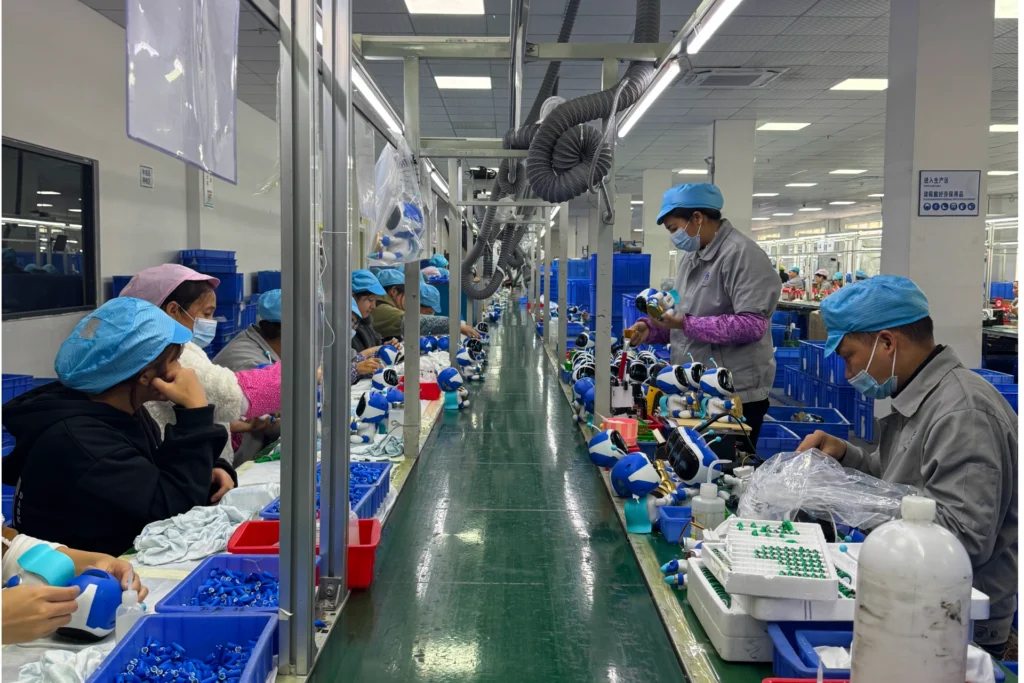
Painting, Assembly, and Quality Control
Action figures often require more finishing steps than simpler products.
Common finishing processes include:
- Spray painting
- Pad printing
- Hand-detail touch-up
- Assembly line fitting
- Joint function inspection
- Cosmetic QC
Because figures include multiple parts, assembly consistency matters just as much as paint quality.
A factory producing action figures should inspect:
- Joint tightness
- Color consistency
- Accessory fit
- Surface scratches
- Paint misalignment
- Packaging completeness
For B2B buyers, this is one of the clearest differences between a factory that can make promotional toys and one that can make proper action figures.
What B2B Buyers Should Look for in an Action Figure Manufacturer
If your real question is not just what is an action figure, but also how to manufacture one successfully, then these are the most important evaluation points.
1. Character Product Experience
Has the manufacturer made articulated figures, accessories, and display-ready products before?
2. Engineering Capability
Can the factory discuss joints, balance, fit, tolerances, and material combinations clearly?
3. Mold and Tooling Control
Can it manage precision tooling for complex multi-part figures?
4. Paint and Decoration Quality
Can it consistently execute face printing, costume details, and small paint zones?
5. Licensed Project Readiness
Can it handle approval cycles, confidentiality, and character accuracy if the project is IP-based?
A natural internal link here is:
character merchandise manufacturer
That article aligns well with the licensed and branded product side of action figure development.
Why Action Figures Remain a Strong Product Category
Action figures continue to perform well because they combine several forms of value:
- Recognizable characters
- Interactive poseability
- Display appeal
- Accessory-based upsell potential
- Collectibility across multiple SKUs
For licensors, brands, and retailers, action figures can support both core retail lines and higher-margin collector programs.
They are especially effective when integrated into broader character merchandise strategies alongside blind box products, static collectible figures, and themed accessories.
External Authority Link Suggestion
If you want one outbound authority link in this article, the most natural place is in a paragraph discussing toy safety and compliance for children’s products.
You can add this sentence in the QC section:
For action figures intended for children’s markets, buyers should also consider toy safety and regulatory requirements outlined by the U.S. Consumer Product Safety Commission.
That gives the article more trust and helps support the technical manufacturing angle.
FAQ About Action Figures
What is an action figure?
An action figure is a character-based toy or collectible figure that usually includes sculpted features, accessories, and articulated joints for posing or play.
What materials are used in action figures?
Most action figures use PVC for body surfaces and ABS for joints, structural parts, or accessories that require rigidity.
What is the difference between an action figure and a collectible figure?
An action figure usually includes articulation and accessory interaction, while a collectible figure is often static and designed mainly for display.
Are action figures made with injection molding?
Yes. Most action figures are made through injection molding, followed by painting, assembly, and quality control.
Can action figures be used for licensed merchandise?
Yes. Action figures are one of the most common forms of licensed merchandise, especially for entertainment, gaming, and character-based brands.
Conclusion
So, what is an action figure? It is more than a toy with joints. It is a carefully engineered character product that combines design accuracy, material selection, articulation planning, mold precision, decoration quality, and assembly control.
For B2B buyers, understanding what is an action figure helps clarify not only the product category itself, but also the manufacturing complexity behind it. That understanding is essential when evaluating suppliers, planning budgets, and building successful character merchandise programs.
When designed and manufactured correctly, action figures can become strong commercial products for retail, collectibles, and licensed brand expansion.