

An OEM homeware manufacturer helps brands turn creative product ideas, character artwork, licensed IP designs, and lifestyle product concepts into functional homeware products. For modern brands, homeware is no longer limited to ordinary household items. It can include character night lights, Bluetooth speakers, aroma diffusers, humidifiers, sleep training alarm clocks, automatic soap dispensers, water dispenser pumps, portable fans, and other IP-themed electronic gifts.
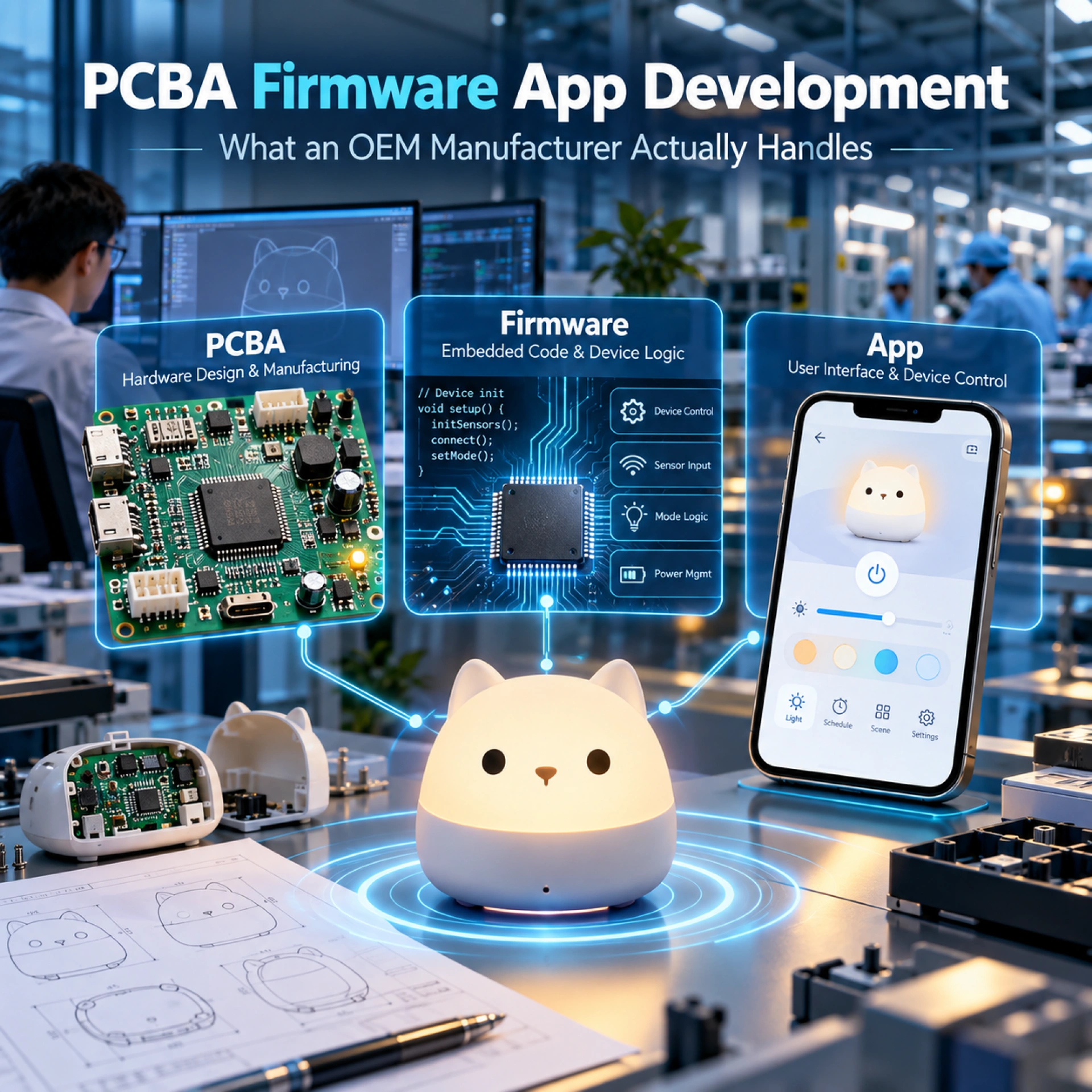
For brand owners, retailers, gift companies, IP owners, animation studios, game companies, and promotional product buyers, choosing the right OEM homeware manufacturer is important because these products require more than plastic molding. A successful character homeware product needs product design, structure engineering, tooling, injection molding, silicone processing, PCBA coordination, electronics assembly, surface finishing, packaging, quality inspection, and shipment support.
Compared with a simple molded plastic product, character electronic homeware products usually combine appearance and function. A cute character night light must look attractive and provide stable lighting. A Bluetooth speaker must match the IP design while also delivering reliable audio performance. A sleep training alarm clock must be child-friendly, easy to use, and suitable for family routines. This means the manufacturer must understand both product aesthetics and functional production.
If your brand wants to develop IP-themed functional products, working with an experienced OEM homeware manufacturer can make the process more efficient. The manufacturer can help review your artwork, evaluate the product structure, suggest materials, develop molds, coordinate electronics, prepare samples, and support mass production.
For brands exploring character-based electronic gifts, our guide on working with a character electronic gift manufacturer explains how OEM product development works for night lights, speakers, aroma diffusers, humidifiers, alarm clocks, and other functional character products.
What Products Can an OEM Homeware Manufacturer Develop?
An OEM homeware manufacturer can support many product categories depending on the brand’s target market, function requirements, and customization level. For character and IP projects, the most valuable products are usually not generic homeware items, but functional products with strong visual identity and daily-use value.
| Product Category | Typical Use | Brand Value | Related Guide |
|---|---|---|---|
| Character night lights | Kids rooms, bedrooms, gifts, IP merchandise | Combines soft lighting with cute character design | Learn more from our <a href=”https://jiahongcreative.com/custom-night-light-manufacturer/”>custom night light manufacturer</a> guide. |
| Bluetooth speakers | Game IP, animation IP, lifestyle gifts, desktop products | Turns a character into a useful audio product | Read our <a href=”https://jiahongcreative.com/custom-bluetooth-speaker-manufacturer/”>custom Bluetooth speaker manufacturer</a> guide. |
| Sleep training alarm clocks | Kids product brands, family products, bedtime routines | Combines clock, night light, sound, and child-friendly design | See our <a href=”https://jiahongcreative.com/sleep-training-alarm-clock-manufacturer/”>sleep training alarm clock manufacturer</a> guide. |
| Aroma diffusers and humidifiers | Desk products, lifestyle gifts, IP homeware | Adds function, atmosphere, and daily-use value to character products | Suitable for brands developing IP-themed home products. |
| Soap dispensers and water pumps | Bathroom, kitchen, family-use products | Makes daily homeware more playful and brandable | Suitable for promotional gifts and retail homeware lines. |
| Character electronic gifts | Retail gifts, licensed IP products, brand campaigns | Combines product function with character recognition | Read our <a href=”https://jiahongcreative.com/character-themed-electronic-products/”>character themed electronic products</a> guide. |
The main advantage of working with an OEM homeware manufacturer is that product appearance, structure, electronics, packaging, and quality control can be planned together. This is especially important for character electronic products because the product must look good, work properly, and stay consistent with the brand identity.
What Is an OEM homeware manufacturer?
An OEM homeware manufacturer is a manufacturer that produces customized homeware products or components based on a buyer’s design, product requirements, material specifications, and branding needs.
In practical production, an OEM homeware manufacturer may support:
- Plastic injection molding
- Silicone molding
- Mould design and development
- Product structure optimization
- Prototype and trial sample production
- Surface finishing and decoration
- Assembly and packaging
- Quality inspection before shipment
Unlike a basic supplier that only produces standard items, a professional OEM homeware manufacturer helps brands develop products with customized appearance, function, material, and structure.
This is especially important for brands that want to move beyond generic homeware products and create exclusive product lines with stronger market differentiation.
Why Molding Capability Matters in OEM Homeware Production
Molding is not just one step in production. It directly affects the final product’s quality, cost, and scalability.
For OEM homeware products, molding capability influences:
- Product shape and dimensional accuracy
- Surface texture and visual quality
- Part strength and durability
- Assembly fit
- Production efficiency
- Defect rate
- Long-term repeat order stability
If the mould is poorly designed or the molding process is unstable, problems can appear during mass production. These may include warping, deformation, flash, poor part fit, visible surface defects, unstable dimensions, or higher rejection rates.
For brands, these problems can lead to delayed launches, unstable quality, higher costs, and customer complaints. That is why experienced buyers evaluate the molding and tooling capability of a factory before confirming mass production.
If you are planning a custom homeware project, understanding OEM homeware manufacturing mould capability can help you judge whether a factory has enough technical depth to support your product properly.
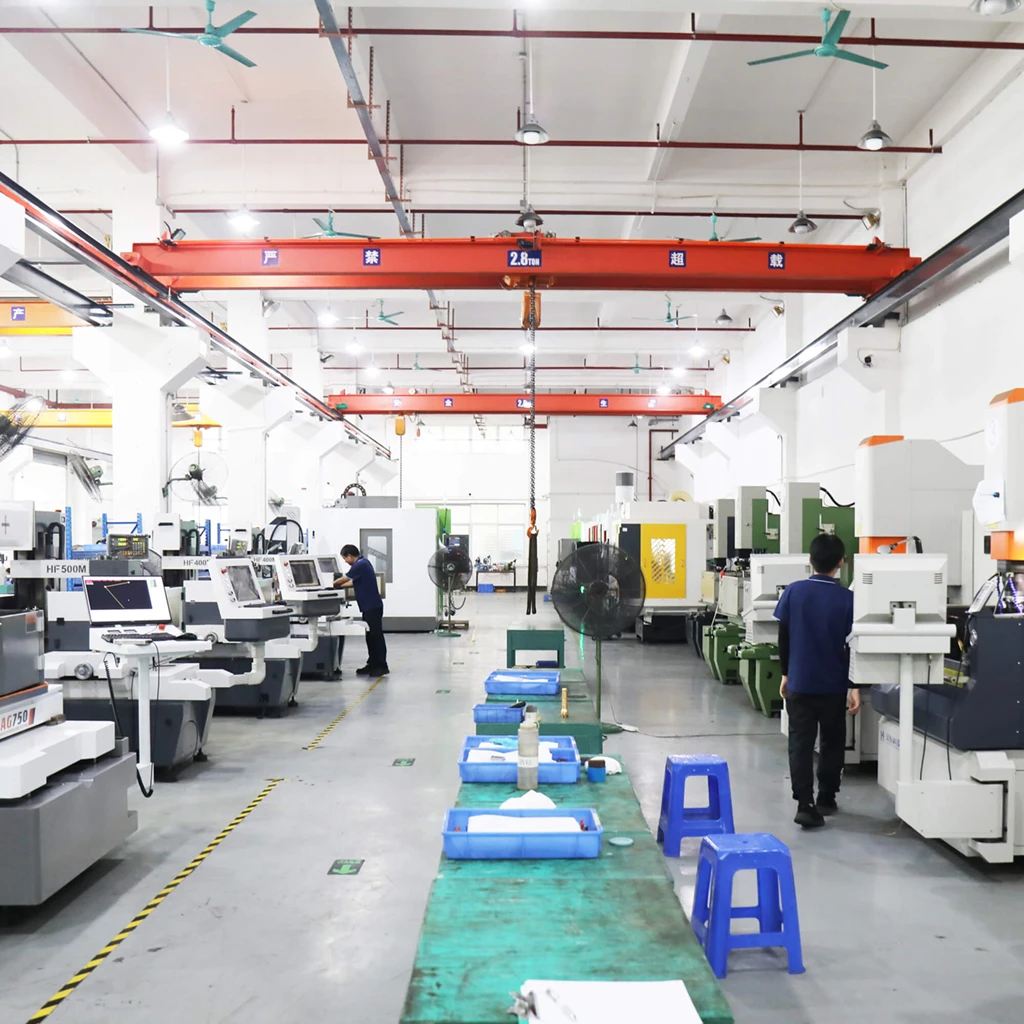
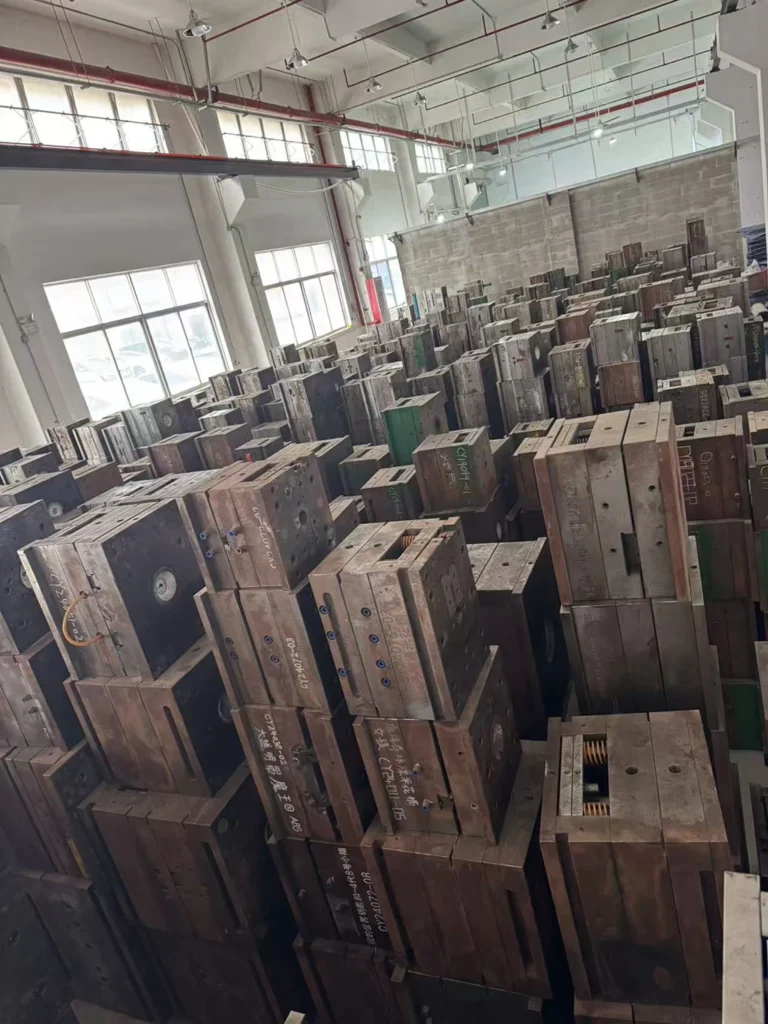
In-House Mould Making Gives Buyers More Control
One of the biggest advantages of working with an OEM homeware manufacturer is in-house mould capability.
When mould making is outsourced, the buyer may face several risks:
- Longer development lead time
- Slower mould modification
- Communication gaps between design and tooling teams
- Less control over mould precision
- Higher risk of design information exposure
- More difficulty solving trial production issues
An in-house mould workshop gives buyers stronger control over the full development process. Instead of separating product design, mould making, trial sampling, and production into different suppliers, an integrated factory can review manufacturability earlier, modify moulds faster, and protect project confidentiality more effectively.
If you are comparing suppliers for custom homeware projects, understanding OEM homeware manufacturing mould capability can help you evaluate whether a factory is only offering basic production or can truly support long-term product development.
How an OEM homeware manufacturer Supports Customization
Customization is one of the main reasons buyers choose OEM manufacturing.
Through custom moulding, brands can create:
- Exclusive product shapes
- Functional product structures
- Brand-specific exterior designs
- Customized buttons, lids, tanks, covers, or housings
- Silicone parts with special texture or flexibility
- Character-themed product shells
- Unique retail-ready product designs
For homeware products, customization is not only about appearance. It can also affect usability, durability, packaging, and customer experience.
For example, a customized soap dispenser may need a specific tank structure, pump position, sensor window, battery compartment, and exterior shape. A character-themed humidifier may need a special shell design, water tank structure, light window, mist outlet, and internal component layout.
This is why mould planning must connect with product engineering from the beginning. If your product requires a unique shape, functional structure, button position, water tank design, silicone component, or branded exterior, buyers should evaluate OEM homeware manufacturing mould capability before confirming tooling investment and mass production.
For broader product development support, you can also learn more about our OEM and ODM manufacturing service.
Product Development Workflow in an OEM homeware manufacturer
A professional OEM homeware molding project usually follows a structured process. This helps reduce mistakes before mass production begins.
1. Product Requirement Review
The factory first reviews the buyer’s product idea, drawings, samples, 3D files, or functional requirements.
At this stage, the team checks:
- Product size
- Material requirement
- Function and structure
- Appearance expectations
- Assembly method
- Packaging needs
- Target quantity
- Budget direction
- Market requirements
A strong factory will not simply accept the design without review. It should identify possible production risks and suggest practical improvements.
2. Design and Engineering Support
After the product direction is clear, the design and engineering team reviews whether the product can be manufactured efficiently.
This may include:
- Wall thickness review
- Part separation planning
- Draft angle adjustment
- Screw position or snap-fit design
- Button and component layout
- Silicone or plastic material selection
- Internal structure optimization
- Assembly feasibility review
This step is especially important for customized homeware products because the product must be attractive, functional, and manufacturable at the same time.
For buyers developing more creative homeware products, our guide on creative homeware manufacturing explains how product ideas, structure, materials, and production planning connect together.
3. Mould Design and Manufacturing
Once the product structure is confirmed, mould development begins.
A professional OEM homeware manufacturer should be able to plan:
- Mould structure
- Cavity design
- Mould steel selection
- Cooling system
- Parting line position
- Gate position
- Ejection method
- Expected mould life
- Trial sampling process
Mould design directly affects whether the product can be produced efficiently and consistently.
Poor mould planning may create problems such as visible marks, weak areas, difficult demoulding, unstable dimensions, or high defect rates. A well-designed mould helps improve production consistency and reduce long-term manufacturing risk.
4. Trial Sampling and Product Validation
Before mass production, the factory usually performs mould trial and sample validation.
This stage checks:
- Product dimensions
- Surface quality
- Part fit
- Assembly performance
- Function stability
- Material performance
- Appearance details
- Packaging compatibility
If problems appear during trial sampling, the mould or product structure may need adjustment.
This is another advantage of in-house mould capability. When the mould workshop, engineering team, and production team work together, modifications can usually be handled faster and more accurately.
5. Mass Production and Quality Control
After samples are approved, the project moves into mass production.
An OEM homeware manufacturer should control:
- Material preparation
- Injection or silicone molding parameters
- Production cycle stability
- Surface quality
- Assembly accuracy
- Functional testing
- Packaging inspection
- Final shipment audit
Quality control should not only happen at the end. It should be built into each production stage.
For customized homeware products, stable quality is especially important because buyers often plan repeat orders, retail launches, or product line expansion.
Materials Used in OEM Homeware Molding
Different homeware products require different materials depending on function, cost, appearance, and durability.
Common materials include:
ABS
ABS is often used for rigid plastic housings, covers, buttons, and structural parts. It offers good strength and surface quality for many homeware and small appliance products.
PP
PP is commonly used for lightweight homeware items, containers, lids, and functional plastic parts. It has good chemical resistance and is widely used in household products.
PVC
PVC may be used for specific flexible or decorative components depending on the product structure and application.
Silicone
Silicone is suitable for flexible, soft-touch, heat-resistant, or water-resistant parts. It is often used in kitchenware, bathroom products, seals, protective components, and baby-related homeware products.
For buyers who want to understand the basic manufacturing principle behind molded plastic parts, Britannica’s overview of injection molding explains how plastic materials are formed inside a mold and then released after cooling. This helps explain why mould design, material choice, and process control are so important in OEM homeware production.
A capable OEM homeware manufacturer should recommend materials based on the product’s real use case, not only based on price.
Production Scalability and Long-Term Cooperation
For OEM homeware projects, buyers should not only ask whether the factory can make one sample. They should ask whether the factory can support stable production over time.
Scalability matters when a brand plans to:
- Launch multiple product models
- Expand from one SKU to a product line
- Reorder after market testing
- Support seasonal retail demand
- Develop updated versions of the same product
- Maintain stable quality across repeated batches
Stable mould capability also supports production scalability. When a product moves from sampling to mass production, the mould must maintain dimensional consistency, surface quality, and reliable cycle performance across repeated production runs. Our article on OEM homeware manufacturing mould explains why mould design, testing, maintenance, and lifecycle management directly affect long-term product success.
A factory with in-house mould making and production capability can usually support repeat orders more smoothly because it can maintain, repair, and modify moulds when needed.
OEM Homeware Molding for Character-Themed Products
Many brands now combine homeware products with characters, mascots, cartoons, or licensed IP. These products require both functional structure and strong visual identity.
Examples include:
- Character-shaped humidifiers
- Themed soap dispensers
- Cartoon night lights
- Character desk accessories
- IP-based bathroom products
- Small household appliances with branded shells
For these products, moulding is especially important because the outer shell must look attractive while also supporting internal function.
A character-themed homeware product may need:
- Accurate exterior shape
- Internal space for components
- Stable assembly structure
- Smooth surface for painting or printing
- Consistent colour and finish
- Strong packaging protection
If your project involves electronic functions, lighting, Bluetooth, sensors, pumps, or other components, our guide on character-themed electronic products explains how character design and functional product engineering connect in real manufacturing.
For projects that combine character appearance with electronic functions, buyers also need to consider internal structure, PCBA placement, wiring, button layout, lighting zones, airflow, mist output, battery space, and functional testing. Our guide on character-themed electronic products explains how these products are developed from concept design to tooling, electronics assembly, testing, and mass production.
Why Buyers Should Choose an Integrated OEM homeware manufacturer
An integrated OEM homeware manufacturer can reduce many common risks in custom product development.
Compared with fragmented sourcing, an integrated factory can offer:
- Faster communication between teams
- Better mould and production coordination
- Stronger IP protection
- Shorter modification cycles
- More stable mass production control
- Better support for repeat orders
- Clearer responsibility during development
For B2B buyers, this matters because custom homeware development involves many connected steps. If design, tooling, moulding, assembly, and packaging are not coordinated well, small problems can become expensive delays.
A good manufacturing partner should help buyers understand what is realistic, what needs adjustment, and how to move from product concept to scalable production.
What Buyers Should Ask Before Starting an OEM Homeware Project
Before working with an OEM homeware manufacturer, buyers should prepare and ask the right questions.
Useful project information includes:
- Product concept or reference sample
- 2D drawings or 3D files
- Target size
- Material preference
- Product function
- Surface finish requirements
- Expected quantity
- Packaging requirements
- Target market
- Budget range
- Launch timeline
Important questions to ask the factory include:
- Can you support in-house mould making?
- What materials do you recommend for this product?
- How long does mould development usually take?
- Can the mould be modified after trial sampling?
- How do you control surface quality?
- What inspection steps are used during production?
- Can you support assembly and packaging?
- Can you support repeat orders or product line expansion?
The more complete the information, the easier it is for the factory to provide accurate suggestions, tooling planning, sampling timelines, and production solutions.
Related Guides for Character Homeware Product Development
If you are planning to develop functional IP homeware products, the following guides can help you understand different product directions and manufacturing requirements:
Character Electronic Gift Manufacturer— Learn how brands develop OEM character electronic gifts such as night lights, speakers, aroma diffusers, humidifiers, and alarm clocks.
Custom Night Light Manufacturer— Understand how OEM and ODM night lights are developed for brands, IP owners, gift companies, and retailers.
Custom Bluetooth Speaker Manufacturer — See how character artwork, Bluetooth electronics, speaker structure, packaging, and testing work together.
Sleep Training Alarm Clock Manufacturer — Learn how kids product brands develop alarm clocks with night light, sound machine, sleep trainer, and custom branding.
Character Themed Electronic Products — Explore how IP characters can be turned into functional homeware and electronic gift products.
These guides can help buyers move from a general OEM homeware idea to a more specific product direction. Before requesting a quotation, it is helpful to confirm the product type, target size, function requirements, material preference, packaging style, target market, and estimated quantity.
FAQ
Q: What is an OEM homeware manufacturer?
An OEM homeware manufacturer produces custom homeware products based on client designs, covering mold making, injection molding, assembly, and quality control.
Q: Do you have an in-house mold factory?
Yes. We operate a dedicated in-house tooling workshop, allowing full control over mold design, fabrication, and long-term production quality.
Q: How many molds can you produce per month?
Our tooling workshop produces over 40 complete mold sets per month, supporting both internal production and external OEM mold orders.
Q: Do you accept external homeware mold orders?
Yes. In addition to our own OEM homeware production, we also manufacture molds for external clients and overseas factories.
Q: What homeware products do you support with OEM molding?
We support decorative homeware, functional plastic and silicone products, and structurally complex designs requiring precision tooling.
Q: How do you protect client IP during mold production?
All projects follow NDA procedures. In-house mold production minimizes third-party exposure and protects client intellectual property.
Final Thoughts
Choosing the right OEM homeware manufacturer is an important decision for brands that want to develop custom homeware products with stable quality and long-term scalability.
Moulding capability affects far more than product shape. It influences surface quality, structural strength, assembly fit, production efficiency, cost control, and repeat order stability. That is why buyers should evaluate mould capability, engineering support, material knowledge, and production control before committing to mass production.
At Jiahong Creative, we support OEM homeware projects with integrated mould making, plastic injection molding, silicone processing, assembly, and quality control. Our goal is to help brands turn creative product ideas into manufacturable, scalable, and market-ready homeware products.
If you want to better understand the role of tooling before starting your project, you can first read our guide on OEM homeware manufacturing mould. It explains how mould quality influences product appearance, structure, cost control, production efficiency, and repeat order stability.
You can also contact Jiahong Creative to discuss your product design, mould requirements, material options, sample plan, MOQ, and mass production timeline.