

Blind box toys are different from standard collectible figures because they are usually developed as a full series rather than a single product. A successful blind box project depends not only on character design and figure quality, but also on assortment planning, packaging structure, production consistency, and retail presentation.
For brands, choosing the right blind box toy manufacturer is important because blind box products require stable quality across multiple variants, clear paint control, and reliable packaging systems that support fair random distribution. In this guide, we explain how blind box toys are developed and what buyers should pay attention to when planning a collectible toy series.
What Is a Blind Box Toy Manufacturer?
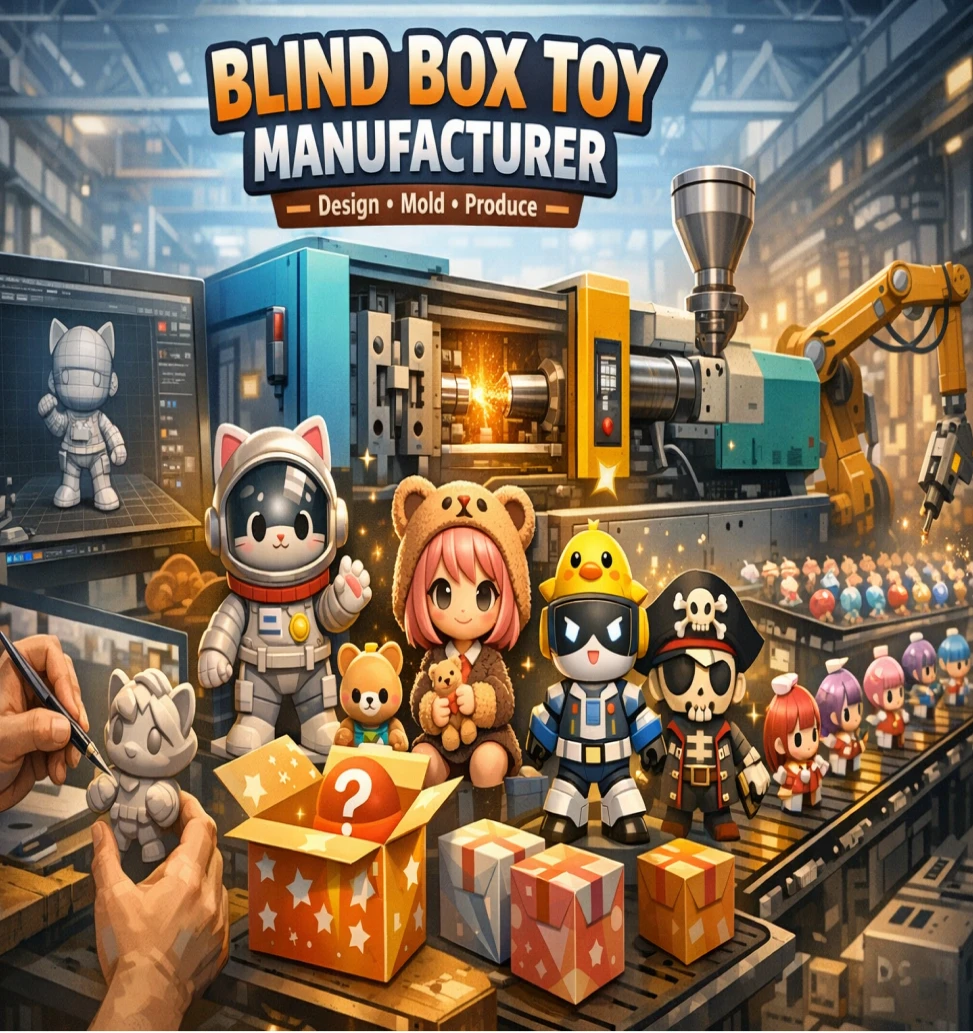
A blind box toy manufacturer is a factory specializing in the design, prototyping, mold making, and mass production of collectible toy figures that are sold in mystery packaging.Unlike standard single-item toy manufacturing, blind box projects usually involve a coordinated series of character variants, packaging consistency, and assortment control across the full production run.
Blind box toys are typically small collectible figures packaged in sealed boxes so buyers do not know which design they will receive. This surprise element encourages repeat purchases and creates strong community engagement among collectors.
Professional blind box toy manufacturers usually provide:
- Custom figure design support
- 3D modeling and prototyping
- Mold development and injection molding
- Painting and surface finishing
- Assembly and packaging
These capabilities allow brands to move from concept sketches to retail-ready blind box products.
Why the Right Blind Box Toy Manufacturer Matters
Working with a qualified blind box toy manufacturer is critical because collectible toys require a balance of artistic design and precise manufacturing.
Blind box toys typically include multiple character variants within one series. Maintaining consistent quality across all variants requires precise molds, accurate painting processes, and strong quality control.
Blind box projects are more demanding than ordinary figure production because every character in the series must feel visually consistent while still keeping its own sculpt and color identity. Even small differences in paint tone, gloss level, or assembly fit can make a series look unbalanced on retail shelves.
In addition, blind box toys often depend on customer excitement around collection, duplication rates, and hidden figure appeal. That means the manufacturer must support not only physical production, but also packaging logic, assortment execution, and stable mass production control.
An experienced blind box toy manufacturer can ensure:
- High-detail figure reproduction
- Accurate paint application across thousands of units
- Stable production timelines
- Efficient packaging for retail distribution
Without proper manufacturing control, blind box toys can suffer from paint defects, color inconsistencies, or structural problems that damage brand reputation.
Materials Used by Blind Box Toy Manufacturers
Most blind box figures are produced mainly in PVC, with ABS sometimes used for bases, pegs, or structural parts. PVC remains the most common choice because it supports detailed sculpting, stable mass production, and flexible paint finishing across collectible figure series.
For a detailed material comparison, see our guide to PVC vs Vinyl vs ABS Figures.
PVC figures are widely used in blind box toy production because they offer:
- Excellent detail reproduction
- Flexible structure for complex shapes
- Compatibility with detailed paint finishing
- Reliable mass production capability
Manufacturing Process for Blind Box Toy Series
1. Series Planning and Character Lineup
Blind box development usually begins with series planning rather than a single figure concept. At this stage, brands define how many regular characters will be included, whether there will be hidden editions, and how the full lineup should look when displayed together.
A strong lineup should balance collectibility, visual diversity, and production feasibility. Characters that are too similar may weaken retail appeal, while characters with overly complex shapes or paint layouts may increase tooling and production cost.
2. Character Design and 3D Development
Once the lineup is confirmed, each character is developed into production-ready artwork and 3D data. During this stage, the factory reviews proportions, sculpt detail, part breakdown, and standing balance to make sure the full series can be manufactured efficiently.
For blind box projects, engineering review should also consider consistency across the whole series, including base size, display scale, paint zone complexity, and packaging fit.
3. Prototype Review and Series Approval
Prototype making allows the brand to check whether the figures look balanced as a complete collection. This stage is especially important for blind box toys because individual characters may look acceptable on their own, but still feel inconsistent when displayed together.
Typical review points include sculpt quality, paint layout, color harmony across the lineup, and packaging size compatibility. Revising prototypes before tooling is usually much more efficient than changing molds after production begins.
4. Mold Development and Mass Production Preparation
After prototypes are approved, molds are developed for each figure or shared component. In blind box projects, mold planning must consider not only detail reproduction, but also output efficiency across multiple variants in one series.
Factories with in-house tooling capability can usually respond faster to engineering revisions, trial feedback, and production adjustment. This is especially useful for blind box programs with multiple characters and tighter launch schedules.
5. Injection Molding, Painting, and Assembly
Once tooling is completed, figure parts move into injection molding, painting, and assembly. For blind box toys, paint consistency is one of the most important production challenges because the figures are often compared side by side by collectors.
Common quality risks include color deviation, blurred paint edges, gloss inconsistency, unstable assembly fit, and visible parting lines. These issues should be controlled through clear standards, approved samples, and in-process inspection.
6. Packaging, Assortment, and Retail Packing
Packaging is a defining part of blind box product development. In addition to protecting the figure, the packaging system must support randomized distribution, retail presentation, and a satisfying unboxing experience.
At this stage, the factory usually confirms blind box size, inner protection method, carton assortment, display box quantity, labeling, and hidden figure insertion rules where required. For retail programs, correct assortment execution is just as important as figure quality.
Packaging and Distribution for Blind Box Toys
Packaging is one of the most important parts of a blind box toy project because it directly affects both the buying experience and retail execution. Unlike standard figure packaging, blind box packaging must support mystery presentation, efficient shipping, and fair assortment across the series.
A professional blind box toy manufacturer should be able to support:
- blind box structure design
- inner protection for figure safety
- retail display box planning
- assortment ratio setup
- hidden figure packing control
- export carton arrangement and labeling
For brands, packaging is not only a visual element. It is also part of the product system that connects manufacturing, logistics, and retail presentation.
Blind Box Toys and Licensed IP Projects
Many blind box toy series are developed from licensed characters in animation, gaming, film, or creator-led brands. In these projects, the manufacturer must follow not only production requirements, but also formal approval procedures for artwork, prototype, paint finish, packaging, and mass production samples.
This makes licensed blind box projects more demanding than ordinary OEM figure production. The factory must be able to manage revisions clearly, protect visual consistency, and maintain approval records throughout development.
For more details, see our guide to IP licensed product manufacturing.
How to Choose a Blind Box Toy Manufacturer
When choosing a blind box toy manufacturer, brands should look beyond general production capacity. Important evaluation points include:
- experience with multi-character collectible series
- ability to maintain paint consistency across variants
- in-house mold development and engineering support
- packaging and assortment control capability
- quality control standards for collectible products
- experience with licensed IP or retail-ready projects
A strong blind box toy manufacturer should be able to support both figure production and the series-level execution that blind box retail requires.
Global Growth of the Blind Box Toy Industry
The blind box toy segment continues to grow as collectible culture expands across Asia, North America, and Europe. For brands, this creates opportunities to launch character-driven series that combine strong retail presentation with repeat purchase appeal.
According to market insights from
Statista, the global collectible toy market continues to grow as consumers increasingly seek unique character-driven products.
👉 https://www.statista.com
How Blind Box Series Are Usually Planned
A blind box series is usually developed as a collection rather than a one-off product. Many projects include 6 to 12 regular designs, with one or more hidden editions added to increase collector interest.
When planning a series, brands should consider:
- how many regular characters to include
- whether to create hidden or secret editions
- how different each figure should look within the same lineup
- whether accessories or bases should be shared for cost efficiency
- how the figures will appear together in retail display packaging
A well-planned lineup helps improve both production control and consumer appeal.
What Buyers Should Prepare Before Contacting a Blind Box Toy Manufacturer
To get a faster and more accurate quotation, buyers should prepare:
- character sketches or 3D files
- expected number of characters in the series
- target size of each figure
- estimated order quantity
- whether hidden figures are planned
- packaging requirements
- target market and delivery timeline
The clearer the project structure is, the easier it is for the manufacturer to evaluate tooling, unit cost, packaging method, and production lead time.
Final Thoughts
Blind box toy development is not only about making attractive figures. It is about building a complete collectible series with the right balance of character design, production consistency, packaging structure, and retail execution.
For brands entering the collectible toy market, working with the right blind box toy manufacturer can reduce development risk, improve production efficiency, and create a stronger product experience for collectors.
Blind Box Toy Manufacturing Support from Jiahong Creative
At Jiahong Creative, we support custom blind box toy projects from character development to mass production. Our team can assist with 3D review, prototype making, in-house tooling, PVC figure production, painting, assembly, and retail-ready packaging.
For brands developing collectible series, we focus not only on figure quality, but also on lineup consistency, production control, and packaging execution across the full blind box program.
If you are planning a new blind box toy series, contact us for project evaluation, tooling review, and production support.
👉 Contact us today to start your blind box toy project.
FAQ
What is the difference between a blind box toy and a regular collectible figure?
A blind box toy is usually developed as part of a randomized collectible series, while a regular figure may be sold as a single identified design. Blind box products rely more heavily on lineup planning, packaging logic, and assortment control.
How many designs are usually included in a blind box series?
Many blind box series include 6 to 12 regular designs, sometimes with one or more hidden figures depending on the retail strategy.
Are blind box toys usually made with PVC?
Yes. PVC is the most common material used by a blind box toy manufacturer because it allows detailed sculpting and efficient mass production.
How many figures are typically included in a blind box toy series?
A typical blind box toy series includes 6 to 12 character variants, sometimes with rare hidden figures.
What material is most commonly used for blind box figures?
PVC is the most common material for blind box figures because it supports detailed sculpting, stable mass production, and high-quality paint finishing.
What should brands prepare before developing a blind box toy series?
Brands should prepare character artwork, target size, number of variants, packaging ideas, estimated quantity, and launch timeline before requesting quotation or engineering review.