
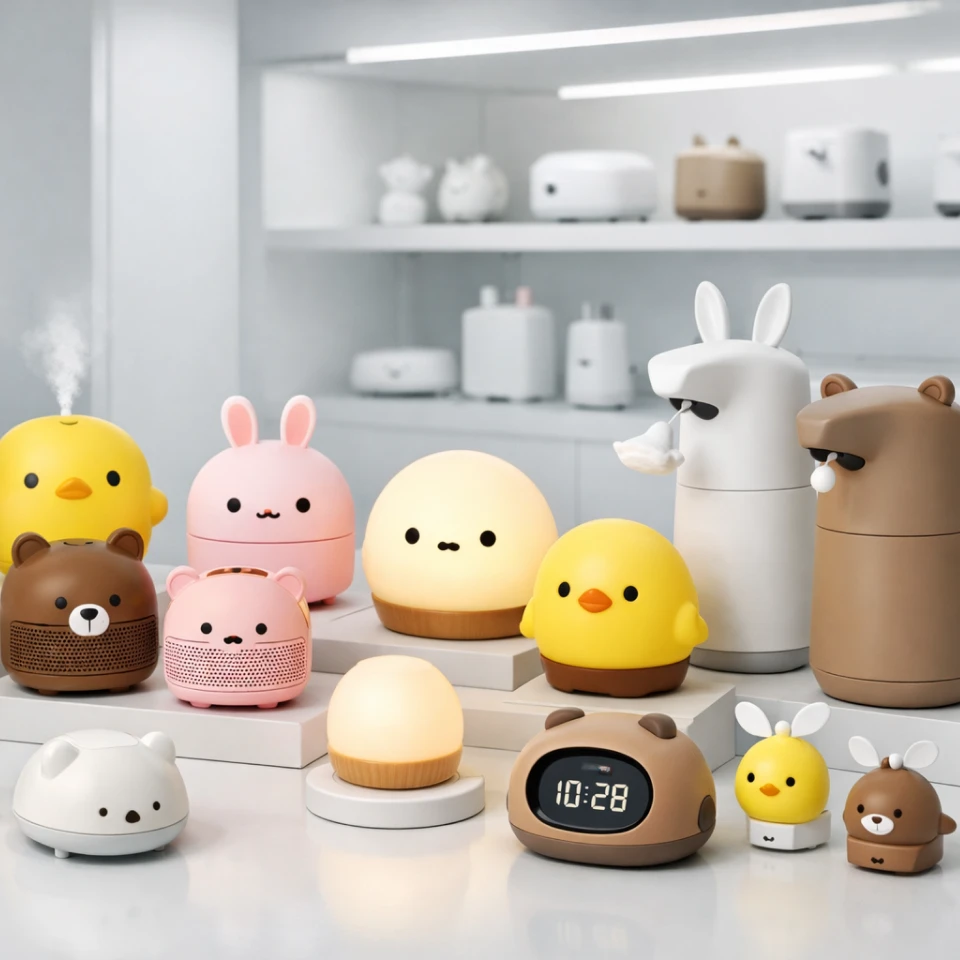
The market for character themed electronic products has grown far beyond simple novelty items. Today, brands, licensors, retailers, and e-commerce sellers are increasingly combining IP design with practical electronic functions to create products that are visually distinctive and commercially scalable.
From character-shaped humidifiers and night lights to themed Bluetooth speakers, soap dispensers, mini fans, and desk accessories, these products sit at the intersection of merchandise, consumer electronics, and lifestyle design. For B2B buyers, that creates both opportunity and complexity. A product may look playful on the outside, but the manufacturing process behind it is highly technical.
That is why choosing the right manufacturing partner is critical. A factory producing character themed electronic products must not only understand appearance development and IP-sensitive visual execution, but also electronics engineering, tooling, assembly, product testing, and quality control. Unlike generic plastics or standard promotional merchandise, these products require coordination between industrial design, structural engineering, PCBA development, and production workflow.
This guide explains how character themed electronic products are actually developed and manufactured, what OEM and ODM buyers should evaluate, and how brands can reduce development risk when sourcing these products at scale.
What Are Character Themed Electronic Products?
Character themed electronic products are functional consumer items that integrate branded, cartoon, mascot, or licensed character elements into an electronic product form factor.
Common product categories include:
- Character-shaped humidifiers
- Branded night lights and ambient lamps
- Character Bluetooth speakers
- Themed automatic soap dispensers
- Portable fans and mini appliances
- Alarm clocks and desktop electronics
- Character-themed aroma diffusers
- Small electronic gifts and promotional gadgets
What makes character themed electronic products different from ordinary electronics is that the product must satisfy two standards at once:
- It must work reliably as an electronic device
- It must maintain the visual appeal and identity of the character or brand
That combination is what makes manufacturing more specialized.
Why Brands Are Investing in Character Themed Electronic Products
For B2B buyers, character themed electronic products offer a strong commercial advantage because they move beyond low-margin generic merchandise.
Higher Product Differentiation
Generic electronics are easy to compare on price. Character-driven products create visual exclusivity and brand recognition.
Stronger Emotional Value
Consumers often connect more strongly with products that combine utility with recognizable characters, especially in gift, lifestyle, and collectible-adjacent categories.
Broader Category Expansion
Brands that already license toys, homeware, or accessories can extend their portfolio into functional electronics without leaving the broader merchandise ecosystem.
Better Retail Storytelling
Character themed electronic products work well in seasonal promotions, cross-category displays, online product bundles, and IP retail programs.
For this reason, many licensors and retailers now treat character themed electronic products as a strategic category rather than a novelty experiment.
How Character Themed Electronic Products Are Developed
A professional manufacturer does not begin with production. The process starts with development planning.
Concept Development and Product Positioning
At the earliest stage, the brand and manufacturer define:
- Product category and use case
- Target retail price
- Character style requirements
- Function requirements
- Market compliance expectations
- Packaging concept
- Estimated order volume
For example, a character-shaped humidifier and a character Bluetooth speaker may both fall under character themed electronic products, but their internal structure, safety requirements, and tooling strategy are very different.
A strong manufacturer will evaluate whether the chosen character form is compatible with airflow, button location, speaker acoustics, battery placement, lighting zones, or water tank access.
Why Feasibility Review Matters
This is where many projects succeed or fail. If a supplier only focuses on appearance and ignores internal engineering constraints, the final product may be unstable, hard to assemble, or too costly to produce.
Industrial Design and Structural Engineering
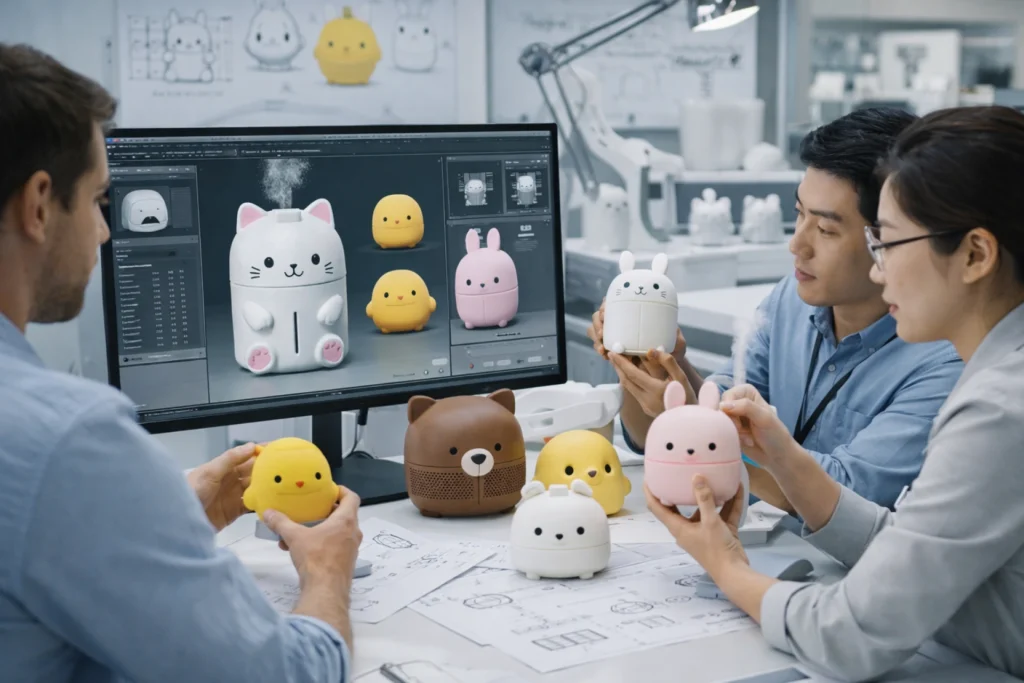
Once the concept direction is approved, industrial designers and structural engineers translate the idea into a production-ready format.
This stage defines:
- Product size and proportions
- Shell construction
- Internal space for PCBA and wiring
- Battery compartment or power structure
- Light path and diffusion design
- Water tank or moving-part integration if needed
- Screw positions, snap fits, or glue points
For character themed electronic products, the outer shell is rarely just decorative. It must also support internal hardware, airflow, heat management, or liquid containment depending on the product type.
This is why an experienced OEM or ODM manufacturer adds value far beyond simple cosmetic customization.
Prototype Development and Functional Verification
After structural design, the product enters prototype development.
A prototype for character themed electronic products is not only for appearance review. It is also used to test practical issues such as:
- Assembly logic
- Shell fit
- Button response
- Lighting effect
- PCB placement
- Charging interface access
- Airflow or mist output
- Product stability on a desk or shelf
Prototypes may be produced using 3D printing, CNC sampling, hand-finished shells, and trial electronic setups.
At this stage, brands should review both aesthetics and functionality. It is common for shape adjustments to be made so the product remains faithful to the character while improving manufacturability.
PCBA Development for Character Themed Electronic Products
One major difference between ordinary themed merchandise and character themed electronic products is the need for internal electronics development.
A capable manufacturer should support PCBA-related work such as:
- Control board design
- Function logic development
- LED and lighting control
- Sensor integration
- Charging and battery management
- Switch and button response logic
- Audio module integration for speakers
- Motor or pump control for dispensers and humidifiers
This is where buyers should distinguish between a real manufacturer and a trading company. A factory with in-house electronics capability can solve technical problems faster and maintain tighter control over quality.
If you want to naturally insert an internal link here, use this anchor text:
China ODM electronic gift supplier
That link fits naturally in a paragraph discussing smart features, lighting systems, and electronic customization.
Tooling and Mold Development
Once the structure and electronics are validated, mold development begins.
For character themed electronic products, tooling is especially important because these products often include:
- Decorative outer shells
- Light windows or translucent areas
- Multi-part assembly
- Water tanks or moving mechanisms
- Tight internal component fit
A well-managed mold program affects:
- Product surface detail
- Shell alignment
- Assembly consistency
- Cosmetic quality
- Production efficiency
- Long-term repeat order stability
Factories with in-house tooling usually respond faster to engineering changes and maintain better confidentiality.
OEM homeware molding factory with in-house tooling
This works well because many character themed electronic products are effectively a hybrid between electronics and themed homeware.
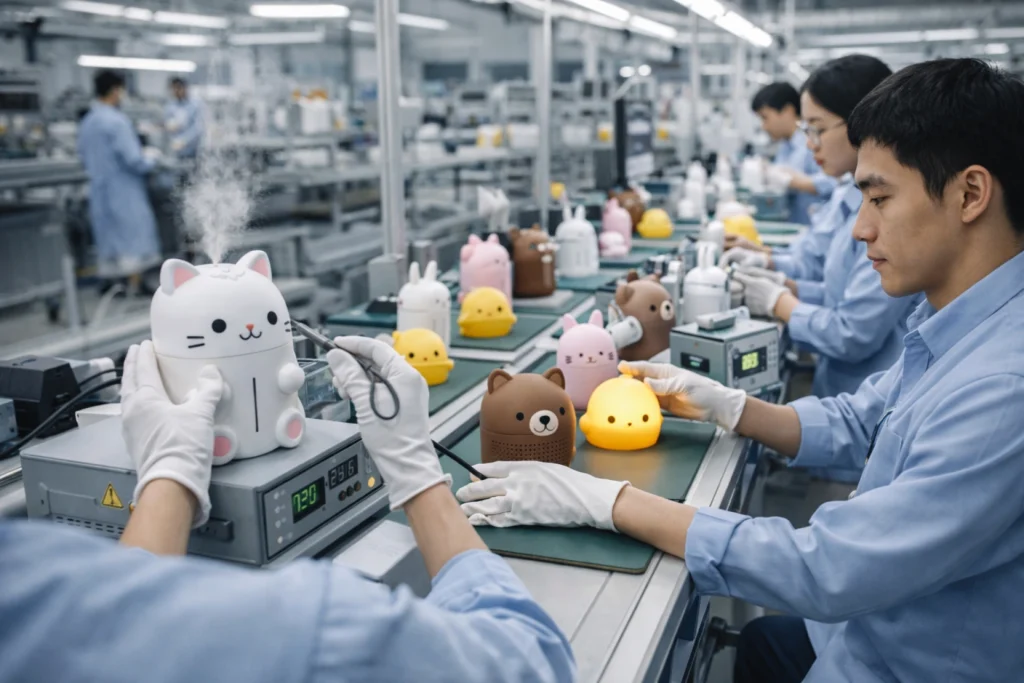
Mass Production Process in a Character Themed Electronics Factory
After molds are approved, production moves into batch manufacturing. A professional factory producing character themed electronic products usually follows this sequence:
Plastic Injection Molding
Shells, covers, buttons, and structural components are molded using ABS, PVC, or other engineering plastics depending on the application.
Surface Finishing
This may include spray painting, silk-screen printing, pad printing, UV printing, or texture coating.
PCBA Assembly
Electronic boards are processed through SMT, soldering, inspection, and functional verification.
Final Assembly
Workers install the PCB, wiring, batteries, LED parts, water modules, speaker units, or other functional components.
Functional Testing
Every finished unit should be tested for its intended function, such as:
- Light response
- Audio output
- Mist generation
- Pump action
- Charging behavior
- Sensor reaction
Packaging
Products are packed according to retail requirements, often with inserts, manuals, charging cables, and accessory trays.
Quality Control and Compliance Considerations
For B2B buyers, quality control is one of the most important evaluation points when sourcing character themed electronic products.
These products combine cosmetic expectations with electrical performance, so QC must cover both.
A strong manufacturer should implement:
- Incoming material inspection
- PCBA quality verification
- Cosmetic inspection of molded and painted parts
- Functional testing during assembly
- Final sampling and packaging audits
If the products are being sold in regulated markets, buyers also need to consider compliance requirements related to electronics, EMC, and product safety.
A useful external authority reference is the U.S. Federal Communications Commission equipment authorization information page for radio frequency devices and regulated electronics:
FCC equipment authorization guidance
Not every product will require the same certification path, but B2B buyers should always clarify market requirements before mass production.
What B2B Buyers Should Look for in a Manufacturing Partner
When sourcing character themed electronic products, buyers should evaluate more than price.
1. Cross-Functional Engineering
Can the factory handle industrial design, structural development, and electronics together?
2. Tooling Control
Does the supplier manage mold accuracy and revision speed properly?
3. Electronics Capability
Can it support PCB customization, lighting logic, and function testing in-house?
4. Product Category Experience
Has it produced humidifiers, night lights, speakers, dispensers, or similar themed electronics before?
5. Scalable Production
Can it move from prototype to repeat batch production without losing consistency?
A trustworthy partner is one that understands both brand presentation and manufacturing reality.
Internal Link Suggestions to Your Website
You asked for natural internal links, so these fit well inside the article:
- China ODM electronic gift supplier
Best placement: PCBA or smart-feature development section - OEM homeware molding factory with in-house tooling
Best placement: tooling and mold section - custom homeware manufacturing for brands
Best placement: when discussing product category expansion into homeware - IP licensed product manufacturer
Best placement: when discussing character brands, licensors, and approval workflows
FAQ Section
What are character themed electronic products?
Character themed electronic products are functional consumer electronics that incorporate branded, cartoon, mascot, or licensed character designs into the product’s appearance and structure.
What products are included in character themed electronic products?
Common categories include humidifiers, night lights, Bluetooth speakers, automatic soap dispensers, desk gadgets, mini fans, and themed electronic gifts.
Why do brands choose character themed electronic products?
Brands use character themed electronic products to create differentiated merchandise, extend IP into functional product categories, and improve retail storytelling.
What manufacturing capabilities are needed for character themed electronic products?
A manufacturer should support industrial design, structural engineering, mold development, PCBA assembly, functional testing, and final packaging.
Are character themed electronic products suitable for OEM and ODM?
Yes. These products are commonly developed through OEM and ODM projects depending on whether the buyer provides complete designs or needs engineering support.
Conclusion
The market for character themed electronic products is growing because it combines strong visual identity with real consumer utility. For brands, licensors, and retailers, these products can open new revenue channels beyond standard toys or generic merchandise.
But successful development requires more than attractive styling. It depends on engineering depth, PCBA capability, mold accuracy, production planning, and quality control. That is why selecting the right manufacturing partner is so important.
For B2B buyers, the best factory is not simply the one with the lowest quote. It is the one that understands how to turn a branded character concept into a functional, scalable, and commercially reliable electronic product.