

From Character Figure to Lifestyle Product: How Brands Extend Licensed IP
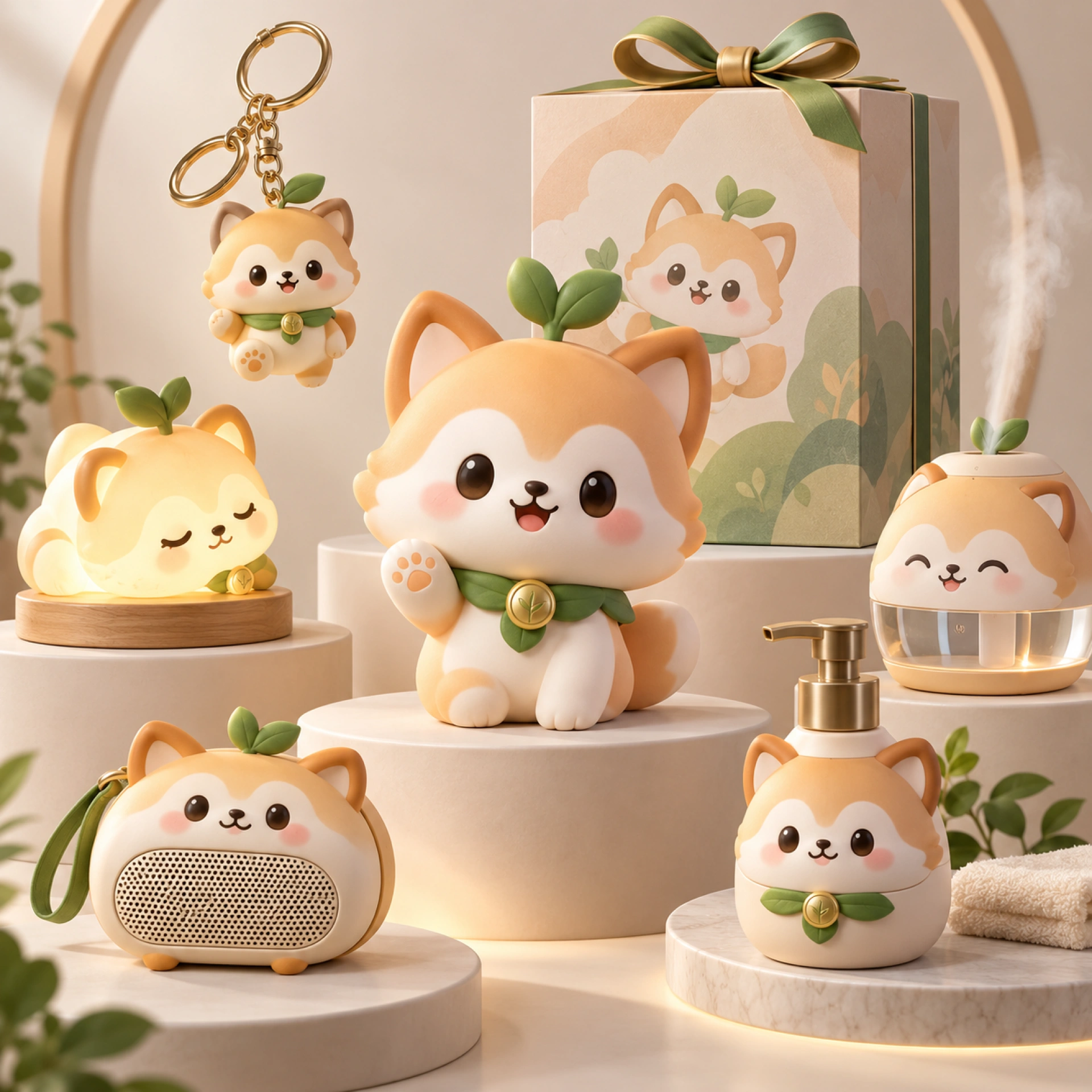
Moving from Character Figure to Lifestyle Product means taking one licensed character beyond a static collectible and developing it into products customers can collect, carry, use at home, listen to, gift, and interact with in daily life. A practical expansion path is often:
PVC Figure / Blind Box → Bag Charm / Keychain → Night Light / Humidifier → Bluetooth Speaker → Daily-Use Product → Gift Set → Limited-Edition Retail Collaboration
The key is not to copy the same PVC figure into every category. Brands should preserve the character identity—face, proportions, colors, logo, personality, and approved design language—but re-engineer the structure for each product’s actual function.
That is the core of Character Figure to Lifestyle Product development.
A collectible figure is designed around visual accuracy and display value. A bag charm must survive pulling and abrasion. A night light needs space for LEDs, batteries, controls, and light diffusion. A humidifier needs a water tank and atomization system. A Bluetooth speaker requires acoustic engineering, PCBA, antenna, battery, and controls. A soap dispenser needs a pump, sensor, reservoir, and liquid-path design.
The IP can stay recognizable while the product architecture changes completely.
This is why Character Figure to Lifestyle Product should be treated as an IP manufacturing strategy rather than simply a merchandise list.
For brands still deciding whether their character should remain a static collectible or move into functional merchandise, our Character Figure vs Character Electronic Product guide explains the difference between collectible value and daily-use functionality.
Character Figure to Lifestyle Product: Expansion Map
| Category | Example Products | Customer Role | Main Manufacturing Focus |
|---|---|---|---|
| Collectibles | PVC figure / blind box | Collect | 3D sculpt, mold, paint, QC |
| Portable Accessories | Bag charm / keychain | Carry | Weight, hardware, pull strength, abrasion |
| Home | Night light / humidifier | Live with | Structure, LED, water system, electronics |
| Audio | Bluetooth speaker | Interact | Speaker, PCBA, Bluetooth, battery |
| Daily-Use Products | Soap dispenser / water pump | Use daily | Mechanism, sealing, motor, sensors |
| Seasonal Gifts | Gift set | Gift | Product coordination, packaging |
| Retail Collaborations | Limited edition merchandise | Discover exclusives | Variant control, licensing, packaging |
The strongest Character Figure to Lifestyle Product programs do not necessarily launch every category at once. They build outward from the character, using the right product format for each stage.
1. Collectibles: PVC Figures and Blind Boxes Establish the Character
For many brands, Character Figure to Lifestyle Product development begins with a collectible.
PVC figures and blind boxes are useful starting points because almost all product value is concentrated on the character itself.
They force the brand and manufacturer to define:
- Character proportions
- Face shape
- Eye position
- Expression
- Hair structure
- Signature colors
- Accessories
- Pose
- Surface finish
- Logo
- Packaging language
Once these points are approved, they can become a physical reference for later product categories.
PVC Figure as a Physical Character Standard
A custom PVC figure normally goes through:
Artwork → 3D Model → Prototype → Tooling → PVC Production → Painting → Assembly → Packaging → QC
During this process, the brand develops physical standards that can later support other products.
These may include:
- Approved 3D face
- Character silhouette
- Pantone colors
- Surface texture
- Eye-printing artwork
- Logo position
- Packaging graphics
A brand moving from Character Figure to Lifestyle Product should retain these approved assets instead of rebuilding the character identity from zero for every new SKU.
Our custom PVC toy manufacturer guide explains how engineering, tooling, injection molding, painting, assembly, and QC work together in figure production.
Blind Boxes Help Build a Character System
Blind boxes go one step further because they normally contain several characters or variations.
A series may include:
- 6 normal figures
- 8 character expressions
- Different costumes
- Seasonal versions
- One secret figure
- Special colors
That helps the brand build a wider character universe before entering lifestyle categories.
For example:
A character holding a moon could later become a night light.
A sleeping character could become a bedside humidifier or alarm clock.
A character wearing headphones could become a Bluetooth speaker.
A character holding a cup could become a desktop water product.
This is where Character Figure to Lifestyle Product becomes more strategic: the collectible series becomes a library of future product ideas.
Our blind box figure manufacturing process explains how series planning, tooling, painting, packaging, assortment control, and mass production work together.
2. Portable Accessories: Bag Charms and Keychains Make the Character Wearable
After collectibles, portable accessories are one of the easiest ways to extend a licensed IP.
Typical products include:
- PVC bag charms
- Character keychains
- Flocked charms
- Mini pendants
- Backpack accessories
- PVC + metal charms
They keep the character highly visible while moving it from a shelf into everyday life.
However, a bag charm should not simply be a smaller PVC figure with a metal ring added to the head.
Portable Products Need Different Engineering
A display figure mainly experiences static load.
A bag charm experiences:
- Pulling
- Swinging
- Twisting
- Rubbing
- Dropping
- Bag compression
- Metal contact
Because of this, the manufacturer needs to review:
- Product weight
- PVC thickness
- Hardware position
- Metal loop structure
- Pull strength
- Jump ring
- Chain
- Plating
- Paint abrasion
- Small parts
- Drop resistance
If the connection point sits inside a thin ear or hair part, repeated pulling may tear the PVC.
If the charm is too heavy, the bag experiences more load and the metal connection is stressed.
If the metal chain continuously hits the painted surface, abrasion may become a quality problem.
What Can Be Shared From the Figure?
The bag charm can usually reuse:
- Character face
- Color palette
- Logo
- Expression
- General silhouette
But it may need a new:
- Pose
- Thickness
- Connection point
- Accessory structure
- Paint durability standard
- Packaging format
This is one of the most important rules in Character Figure to Lifestyle Product development:
Reuse the IP assets, not blindly the manufacturing structure.
3. Home Products: Night Lights and Humidifiers Bring the Character Into Daily Space
Home products are the point where Character Figure to Lifestyle Product begins to connect the PVC cluster with the electronics cluster.
Instead of only displaying the character, customers begin using it.
Common products include:
- Character night lights
- Humidifiers
- Aroma diffusers
- Alarm clocks
- Bedside lights
Character Night Lights
A character night light combines:
Character Design + Light + Electronics + Daily Use
The character may become:
- Silicone diffuser
- ABS body
- Decorative PVC part
- Full lamp housing
- Character head
- Character-shaped light surface
Functions may include:
- Tap control
- Touch control
- Warm light
- RGB light
- Multiple brightness levels
- Timer
- Rechargeable battery
- USB-C charging
At this point, manufacturing changes significantly.
The product now needs engineering space for:
- LED
- PCBA
- Battery
- Charging port
- Button
- Internal wiring
- Structural screws
- Light diffusion
The character appearance therefore has to work around the electronics.
Our Custom Night Light Manufacturer guide explains how character design, silicone or ABS structures, lighting, batteries, PCBA, and packaging interact during OEM/ODM development.
Character Humidifiers
A humidifier adds another engineering layer because water is involved.
A character humidifier needs to combine the IP exterior with:
- Water tank
- Atomizer
- Mist outlet
- PCBA
- Button
- LED
- USB-C port
- Internal sealing structure
The mist outlet can sometimes become part of the character concept.
For example, mist may come from:
- Mouth
- Hat
- Chimney
- Cloud
- Decorative accessory
That can make the function more connected to the IP.
But the product still needs to consider:
- Tank capacity
- Water sealing
- Mist direction
- Cleaning access
- Electronics separation
- Stability
- Internal assembly
A 15 cm character figure cannot simply have a humidifier mechanism placed inside it. The proportions may need to change to provide enough tank volume and internal space.
This is the difference between character decoration and real Character Figure to Lifestyle Product engineering.
4. Audio Products: Bluetooth Speakers Connect Collectibles With Electronics
Bluetooth speakers are one of the strongest bridge products between collectible merchandise and consumer electronics.
A character Bluetooth speaker can still look like a display collectible when it sits on a desk, but it also has a clear daily function.
That makes it particularly suitable for Character Figure to Lifestyle Product programs.
The Character Shell Must Support Audio Engineering
A Bluetooth speaker may require:
- Speaker driver
- Acoustic chamber
- Bluetooth module
- MCU
- PCBA
- Rechargeable battery
- Antenna
- Buttons
- Charging port
- LEDs
- Internal wiring
This creates engineering limitations.
For example:
A character face should not block the speaker outlet.
The internal cavity must support sound performance.
The antenna position must be considered.
The battery should not make the figure unstable.
Buttons and USB-C ports should not damage the character appearance.
The result should still look like character merchandise rather than generic electronics wearing a decorative shell.
Our Custom Bluetooth Speaker Manufacturer guide explains how character accuracy, PCBA, speaker design, Bluetooth, battery, antenna, tooling, assembly, and packaging need to be coordinated.
Bluetooth Adds Product Responsibilities
Once Bluetooth is added, the buyer is no longer developing only a molded character product.
The wireless technology must also be managed.
The official Bluetooth Qualification Process requires Bluetooth products to complete the applicable qualification process before they are sold or distributed.
For buyers, this means the project should identify:
- Bluetooth module
- Module supplier
- Bluetooth version
- Qualified design being used
- Product model
- Qualification responsibility
This illustrates a broader principle:
As Character Figure to Lifestyle Product development adds functionality, the buyer also takes on more technical and compliance management.
5. Daily-Use Products: Soap Dispensers and Water Pumps
The next step is moving the character into practical routines.
Typical products include:
- Automatic soap dispensers
- Gel dispensers
- Water pumps
- Sanitizer dispensers
- Desk dispensers
These products allow the character to appear in:
- Bathroom
- Kitchen
- Office
- Bedroom
- Family spaces
The customer does not simply own the character. They interact with it repeatedly.
Automatic Soap Dispenser
A character soap dispenser may contain:
- Infrared sensor
- Pump
- Motor
- Reservoir
- PCBA
- Battery
- Charging port
- Indicator LED
The character shell must work around the functional system.
Manufacturing must consider:
- Sensor window
- Pump location
- Liquid path
- Refill opening
- Sealing
- Motor noise
- Electronics isolation
- Cleaning
- Stability
A character’s mouth, hand, or accessory may become part of the dispensing concept, but function should not be compromised simply to preserve a figure pose.
Character Water Pump
A water pump follows similar logic.
The IP can be introduced through:
- Character head
- Housing
- Button
- Spout
- Colors
- Decorative parts
while the internal functional system may use an established:
- Pump
- Battery
- PCB
- Charging system
This creates an important development choice.
Fully Custom Development
Suitable when the brand requires:
- Unique functionality
- Exclusive architecture
- Custom dimensions
- High differentiation
However, it requires more engineering, tooling, and validation.
Existing Functional Platform + Custom Character Shell
Suitable when:
- The basic function is already mature
- The brand mainly needs IP customization
- Development time should be shorter
- Engineering risk should be lower
- Tooling budget needs control
This is often one of the most efficient Character Figure to Lifestyle Product models.
The function is mature.
The exterior becomes unique.
Our Character Electronic Gift Manufacturer guide covers character-based night lights, humidifiers, speakers, dispensers, and other functional electronic gifts.
6. Seasonal Gifts: Combine Categories Into One Gift Set
Once an IP has more than one product category, gift sets become possible.
A gift set can connect the PVC and electronics clusters directly.
For example:
Gift Set A
- PVC figure
- Bag charm
- Collector card
Gift Set B
- Mini PVC figure
- Character night light
- Gift box
Gift Set C
- Bluetooth speaker
- Keychain
- Limited-edition card
Gift Set D
- Character humidifier
- PVC figure
- Seasonal packaging
Character Figure to Lifestyle Product development now becomes a multi-product packaging project.
Gift Sets Require Production Coordination
A gift set may combine components produced through different processes.
For example:
PVC Figure
→ Mold → Injection → Painting → Assembly
Night Light
→ Mold → Injection → PCBA → Battery → Assembly → Functional Test
Gift Box
→ Printing → Tray → Packing
All components must arrive at final packing at the right time.
The project therefore needs:
- Unified schedule
- SKU control
- Tray planning
- Cable placement
- Product protection
- Accessory control
- Packing sequence
- Final QC
This is more complicated than placing three independently purchased products into one carton.
Seasonal Editions Can Reuse Existing Tooling
Brands do not always need a new mold for every campaign.
Existing products can often be refreshed through:
- New colors
- New accessories
- Seasonal prints
- Metallic finishes
- Different LEDs
- Collector cards
- Sleeves
- Gift packaging
For example:
The same night light mold may become a Christmas edition through a new surface graphic and gift box.
The same PVC figure may receive a retailer-exclusive color.
The same Bluetooth speaker can use new artwork and packaging.
This allows Character Figure to Lifestyle Product programs to create newness while controlling tooling investment.
7. Retail Collaborations: Limited-Edition Merchandise
Retail collaborations are another important extension path.
Possible partners include:
- Fashion retailers
- Convenience stores
- Cafés
- Game retailers
- Museums
- Lifestyle stores
- Department stores
- E-commerce platforms
The product may be based on an existing SKU but adapted for a specific retailer.
Examples include:
- Exclusive PVC figure color
- Retail-branded bag charm
- Limited night light
- Exclusive Bluetooth speaker
- Retail gift set
- Seasonal character homeware
Limited Edition Does Not Always Mean New Tooling
One efficient strategy is:
Existing Tooling + New Finish + New Accessory + New Packaging
A retailer-specific edition may change:
- Color
- Logo
- Accessory
- Collector card
- Sleeve
- Packaging
while the main tooling stays unchanged.
This can reduce:
- Development time
- Tooling cost
- Engineering risk
while still creating an exclusive product.
Check the Licensed Product Scope
Licensed merchandise rights should be confirmed before moving from figures into new categories.
The official WIPO guidance on IP assignment and licensing explains that merchandising is a specialized form of IP licensing in which trademarks, designs, or copyrighted works can be authorized for use on consumer goods.
For buyers, the practical point is important:
Permission to produce a PVC figure does not automatically mean the brand has authorization for:
- Bluetooth speakers
- Humidifiers
- Homeware
- Bag charms
- Electronics
- Retail-exclusive products
Before Character Figure to Lifestyle Product development starts, confirm:
- Product category
- Territory
- Sales channel
- Character
- Logo use
- Retailer collaboration rights
- Artwork approval process
Our guide to choosing a manufacturer for licensed IP products explains why licensing scope, character accuracy, confidentiality, approval workflow, packaging, and QC should be managed together.
What Can Be Shared Across Character Figure to Lifestyle Product Categories?
The biggest efficiency comes from sharing the right assets.
1. Character Artwork
Brands can reuse approved:
- Front view
- Side view
- Back view
- Expressions
- Logos
- Character style guides
across multiple product categories.
2. Color Standards
Approved Pantone references can support:
- PVC figures
- Bag charms
- ABS housings
- Silicone products
- Packaging
The physical paint or plastic formulation may change, but the visual target remains consistent.
3. Character Face
Face shape should remain recognizable even when proportions change.
A speaker may have a larger body.
A humidifier may need a wider base.
A bag charm may be more compact.
But the customer should still recognize the same IP.
4. Packaging System
Different products can share:
- Typography
- Logo placement
- Color family
- Illustration style
- Collector information
- Brand language
This helps a PVC figure and Bluetooth speaker feel like part of one merchandise family.
5. Master 3D Character Assets
A master character model can provide a useful starting point for:
- PVC figure
- Mini figure
- Bag charm
- Decorative electronic shell
However, it should be treated as a design asset—not production-ready tooling for every category.
What Must Be Re-Engineered?
Some parts of Character Figure to Lifestyle Product development cannot simply be reused.
| Product | New Engineering Needed |
|---|---|
| PVC Figure | Mold split, pose, painting |
| Bag Charm | Pull point, weight, metal attachment |
| Night Light | LED, diffuser, battery, PCBA |
| Humidifier | Water tank, atomizer, sealing |
| Bluetooth Speaker | Acoustic chamber, antenna, PCBA |
| Soap Dispenser | Pump, sensor, liquid path |
| Water Pump | Pump system, spout, charging |
The core principle is:
Share character identity. Re-engineer product function.
A successful licensed product line should look related without pretending every category can use the same physical construction.
How Electronics Change the Manufacturing Workflow
Moving from collectible PVC products into electronics changes the development process significantly.
A typical PVC figure workflow may look like:
Artwork → 3D → Prototype → Mold → Injection → Painting → Assembly → Packaging
A character electronic product may look like:
Concept → Industrial Design → Structural Engineering → Electronic Engineering → Prototype → PCBA → Firmware → Mold → Injection → Painting → Electronic Assembly → Functional Testing → Aging → Packaging
Additional variables now include:
- Battery
- PCBA
- LED
- Speaker
- Sensors
- Motors
- Charging
- Firmware
- Wireless technology
That affects:
- Development cost
- Tooling
- Lead time
- Testing
- MOQ
- QC
- Supplier coordination
Electronic Products Also Change Compliance Planning
The compliance route for a passive PVC figure and a rechargeable Bluetooth speaker is not the same.
For example, electronic products sold in the EU may need to consider requirements relating to electrical/electronic equipment, materials, batteries, wireless functions, EMC, or cybersecurity depending on the product.
The important sourcing lesson is:
Define the target market and product functions before freezing the electronics architecture.
Do not choose the PCBA, battery, wireless module, or adapter first and investigate market requirements later.
Recommended Character Figure to Lifestyle Product Roadmap
Brands do not need to expand into every category simultaneously.
A staged approach is often easier to manage.
Stage 1 — Establish the IP Physically
Develop:
- PVC figure
- Blind box
Purpose:
Create the physical character standard and collectible identity.
Stage 2 — Make the Character Portable
Develop:
- Bag charm
- Keychain
Purpose:
Bring the IP into everyday fashion and accessories.
Stage 3 — Enter the Home
Develop:
- Night light
- Humidifier
- Aroma product
Purpose:
Create daily interaction without moving immediately into highly complex electronics.
Stage 4 — Add Higher-Value Electronics
Develop:
- Bluetooth speaker
- Alarm clock
- Audio device
Purpose:
Increase functionality and perceived retail value.
Stage 5 — Add Everyday Utility
Develop:
- Soap dispenser
- Water pump
- Desk product
Purpose:
Bring the IP into repeated household routines.
Stage 6 — Create Gift Bundles
Develop:
- Seasonal gift set
- Anniversary box
- Retail gift pack
Purpose:
Combine categories and increase gifting value.
Stage 7 — Build Retail Exclusives
Develop:
- Exclusive colors
- Retailer editions
- Limited bundles
- Collaboration merchandise
Purpose:
Use existing tooling and character assets to open new retail channels.
Buyer Checklist Before Expanding a Licensed IP
Before moving from Character Figure to Lifestyle Product, buyers should confirm:
| Buyer Question | Why It Matters |
|---|---|
| Which product categories are licensed? | Confirms authorization |
| Which territories are covered? | Controls where products can be sold |
| Which character assets are approved? | Maintains visual consistency |
| Can the master 3D asset be reused? | Reduces repeated design work |
| Which products need new engineering? | Prevents unrealistic tooling assumptions |
| What is the target retail price? | Helps select product complexity |
| What is the target order quantity? | Affects tooling and unit cost |
| Is a mature functional platform available? | Can reduce electronics development risk |
| Does the product need PCBA or firmware? | Adds technical complexity |
| Does it contain wireless technology? | Adds qualification and compliance work |
| Which market will it enter? | Changes testing and documentation |
| Can packaging share one visual system? | Builds a coherent merchandise family |
| Is the product seasonal or evergreen? | Influences tooling investment |
| Is it a retail exclusive? | Changes artwork and licensing approval |
This checklist keeps Character Figure to Lifestyle Product development commercially realistic.
Why Connecting PVC and Electronics Manufacturing Matters
One reason this topic is important is that many licensed character programs become fragmented.
Factory A produces the PVC figures.
Factory B produces the night lights.
Factory C produces the speaker.
Factory D manages packaging.
If each supplier interprets the character independently, the final line may have:
- Different face proportions
- Different Pantone colors
- Different surface finishes
- Different logo placement
- Different packaging quality
- Different approval standards
This weakens the merchandise system.
A manufacturing workflow that can coordinate both collectible and electronic products can make it easier to maintain:
- Character identity
- Approved colors
- Surface quality
- Packaging language
- Artwork versions
- QC standards
The purpose is not to force every category through the same production process.
A PVC figure should still be manufactured like a PVC figure.
A Bluetooth speaker should still be engineered as an electronic audio product.
The advantage is maintaining one consistent character standard across both clusters.
How Jiahong Creative Supports Character Figure to Lifestyle Product Development
Jiahong Creative supports licensed and original character projects across both collectible and functional product categories.
Projects can begin with:
- PVC figures
- Blind boxes
- Character collectibles
and expand into:
- Bag charms
- Keychains
- Night lights
- Humidifiers
- Bluetooth speakers
- Alarm clocks
- Soap dispensers
- Water pumps
- Aroma products
- Gift sets
- Retail collaboration merchandise
For collectible products, development may include:
- 2D-to-3D development
- Prototype making
- Mold making
- PVC production
- Painting
- Pad printing
- Assembly
- Packaging
- QC
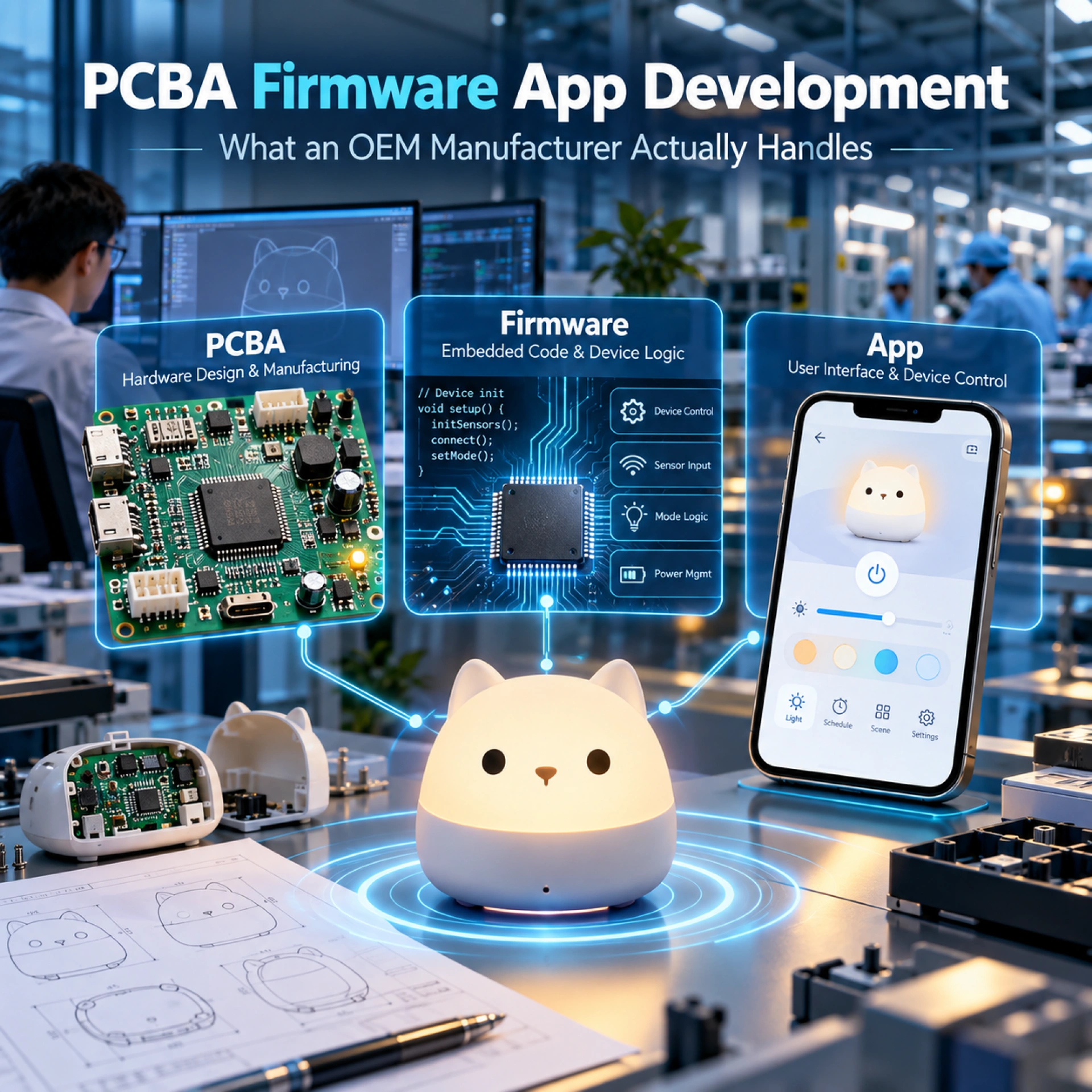
For character electronic products, additional development may include:
- Functional platform selection
- Industrial design
- Structural engineering
- PCBA
- LEDs
- Batteries
- Speakers
- Sensors
- Motors
- Charging
- Firmware
- Functional testing
- Aging testing
This makes it possible to plan Character Figure to Lifestyle Product development as one merchandise roadmap rather than seven unrelated sourcing projects.
If your brand is preparing a licensed character product line, you can share the character artwork, authorized categories, target markets, planned products, target quantities, retail price range, preferred functions, packaging direction, and launch schedule through our character product project inquiry.
Final Thoughts
Character Figure to Lifestyle Product is about giving one IP more than one role in the customer’s life.
A PVC figure lets customers collect the character.
A blind box lets them discover the character.
A bag charm lets them carry the character.
A night light or humidifier lets them live with the character.
A Bluetooth speaker lets them interact with the character.
A soap dispenser or water pump brings the character into daily routines.
A gift set turns the IP into a gifting experience.
A retail collaboration creates exclusivity.
As the IP moves across these categories, the manufacturing requirements change. Materials change. Structures change. Electronics may be added. Testing changes. Packaging changes. QC changes.
But the character should remain recognizable.
That is the central principle of Character Figure to Lifestyle Product development:
Preserve the IP identity, but re-engineer every product around how it will actually be used.
When brands follow this approach, PVC collectibles and character electronics stop being separate product clusters. They become parts of one coherent licensed merchandise ecosystem.
RFQ
1. What does Character Figure to Lifestyle Product mean?
Character Figure to Lifestyle Product means expanding one character or licensed IP from static collectibles such as PVC figures and blind boxes into functional merchandise such as bag charms, night lights, humidifiers, Bluetooth speakers, dispensers, and other lifestyle products.
2. What product should brands develop first?
Many brands begin with a PVC figure or blind box because these formats establish the character’s physical appearance, proportions, colors, and packaging language. Those approved assets can then support later product categories.
3. Can the same 3D model be used for every product?
The same master character asset can often be reused as a visual reference, but the engineering normally needs to change. A bag charm needs pull-resistant structure, a night light needs space for LEDs and batteries, and a speaker needs acoustic and electronic engineering.
4. Why are bag charms different from small PVC figures?
Bag charms are portable products. They experience pulling, swinging, rubbing, and dropping, so weight, metal attachments, PVC tearing, paint abrasion, chain strength, and small components need additional attention.
5. How can a character become a night light?
The character can become the lamp body, silicone diffuser, ABS housing, or decorative shell. The design must also provide space for LEDs, PCB, battery, controls, charging port, and internal assembly.
6. Can one licensed character become a Bluetooth speaker?
Yes. Character designs can be developed into Bluetooth speakers, but the shell must be engineered around the speaker driver, acoustic chamber, antenna, battery, PCBA, controls, and charging structure.
7. What daily-use products work well for licensed characters?
Common options include soap dispensers, water pumps, humidifiers, aroma diffusers, alarm clocks, night lights, speakers, and other desktop or home products where the character can naturally connect with the function.