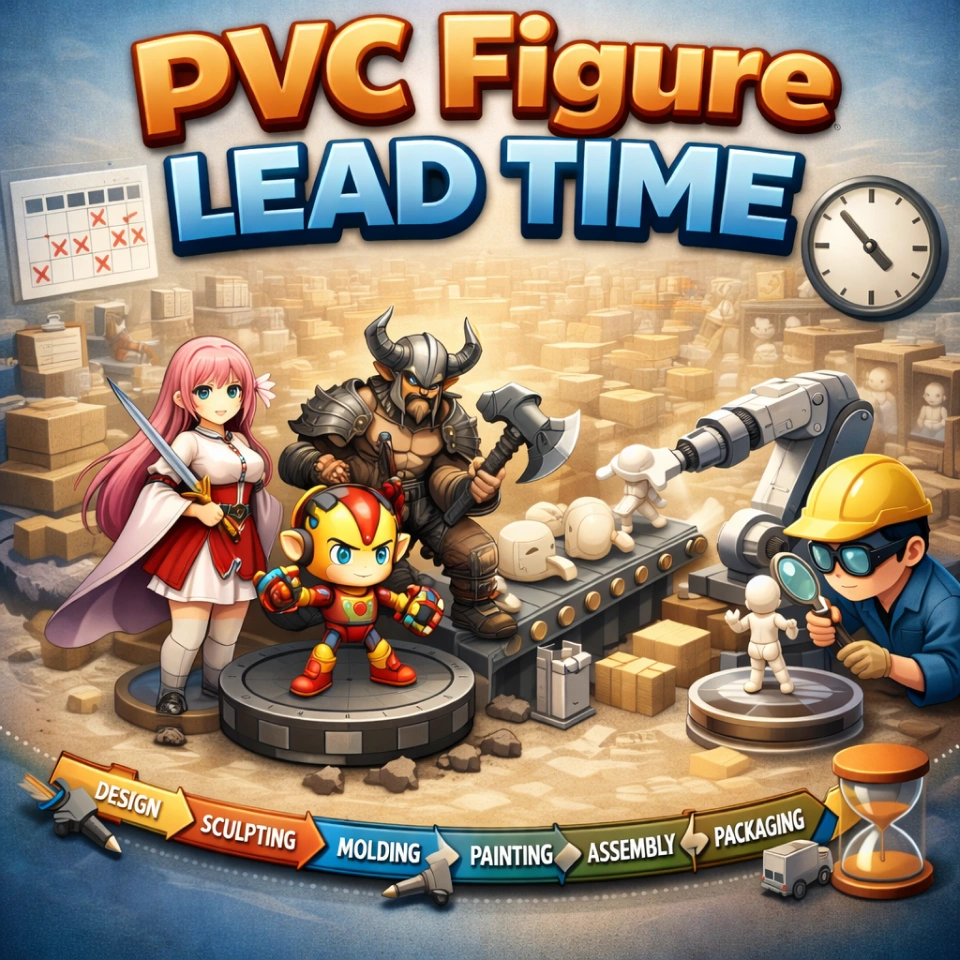

Introduction
For brands built around characters, mascots, animation, games, or licensed IP, choosing the right cartoon product OEM factory is a commercial decision, not just a sourcing task. The factory you choose affects development speed, tooling cost, quality consistency, packaging execution, and your ability to scale from samples to mass production.
Many buyers assume character merchandise is simply a matter of printing artwork onto an existing product. In reality, successful cartoon merchandise usually requires a deeper manufacturing process: product engineering, part breakdown, mold planning, surface finishing, assembly workflow, and quality control designed around the product’s structure and intended retail channel.
A capable cartoon product OEM factory does more than make products. It translates character concepts into manufacturable goods that can survive production, packing, shipping, retail display, and end-user handling. For B2B buyers, that distinction matters.
This guide explains how a cartoon product OEM factory works in practice, what processes are involved, and what buyers should evaluate before committing to production.
What a Cartoon Product OEM Factory Actually Does
A cartoon product OEM factory manufactures character-based products according to a buyer’s design brief, specifications, and brand requirements. Depending on the factory’s capabilities, this can include either OEM execution only or a mix of OEM and ODM support.
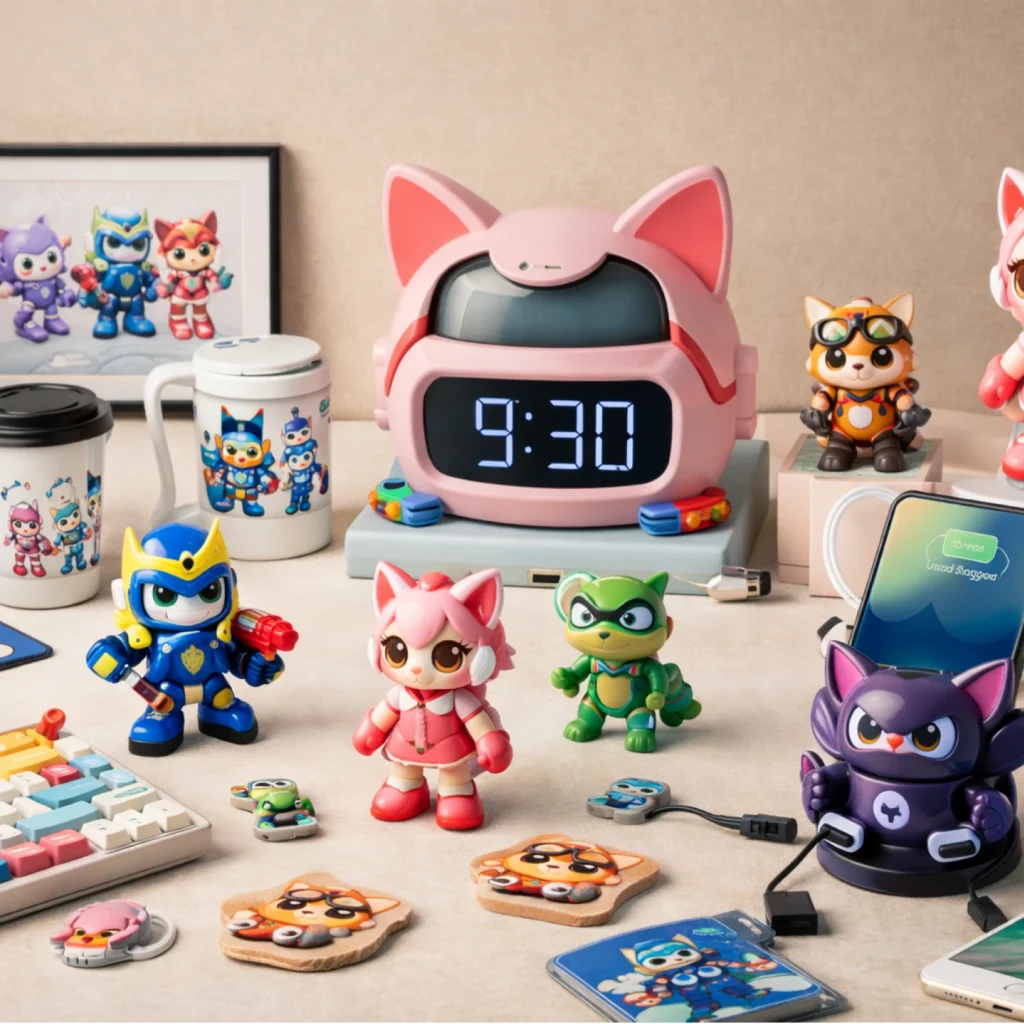
Typical product categories include:
- PVC figures and collectible toys
- Blind box products
- Character-themed homeware
- Promotional gifts
- Small electronic products with themed housings
- Licensed merchandise for retail programs
For B2B buyers, the main advantage of working with a specialized cartoon product OEM factory is manufacturing alignment. Character products are rarely generic. They usually involve distinctive shapes, paint zones, accessories, or packaging details that demand tighter process control than standard commodity goods.
Why Specialized Manufacturing Matters for Character Products
Not every factory can produce cartoon merchandise well. Character products often look simple from the outside, but they create specific manufacturing challenges:
Character Accuracy
Eyes, mouth shape, proportions, accessories, and color balance all affect whether the final product feels “on-model.” Small deviations can damage brand perception or fail licensor approval.
Tooling Complexity
Cartoon products often require unusual curves, undercuts, multiple parts, or decorative add-ons. That means tooling must be planned around manufacturability, assembly, and finishing.
Surface Finishing Requirements
Character products usually depend heavily on paint, pad printing, silk-screening, or texture treatments. If surface prep is poor, the product will not meet retail expectations.
Packaging Presentation
For many cartoon products, packaging is not secondary. It is part of the perceived value. A reliable cartoon product OEM factory must understand how packaging interacts with product protection, shelf display, and unboxing experience.
Product Development Workflow Inside a Cartoon Product OEM Factory
A professional cartoon product OEM factory typically follows a structured development sequence. Buyers who understand this process make better sourcing decisions.
Concept Review and Feasibility Analysis
The first stage is not production. It is evaluation.
The factory reviews:
- 2D artwork or style guides
- 3D files, if available
- Intended materials
- Product dimensions
- Target market and retail price
- Packaging requirements
- Compliance expectations
At this point, engineering teams identify manufacturing risks such as thin walls, unstable base design, excessive paint complexity, or part separation problems.
Why This Step Matters
A good factory will challenge the design when necessary. That is a positive sign. If a supplier approves everything instantly without discussing structure, mold parting, or finishing limitations, that often indicates weak engineering review.
3D Modeling, Structural Engineering, and Prototyping
After feasibility review, the product enters engineering.
3D Modeling
The factory converts concept art into production-ready 3D files. This stage defines:
- Wall thickness
- Part separation
- Snap-fit or glue points
- Draft angle
- Internal support structures
- Accessory fit
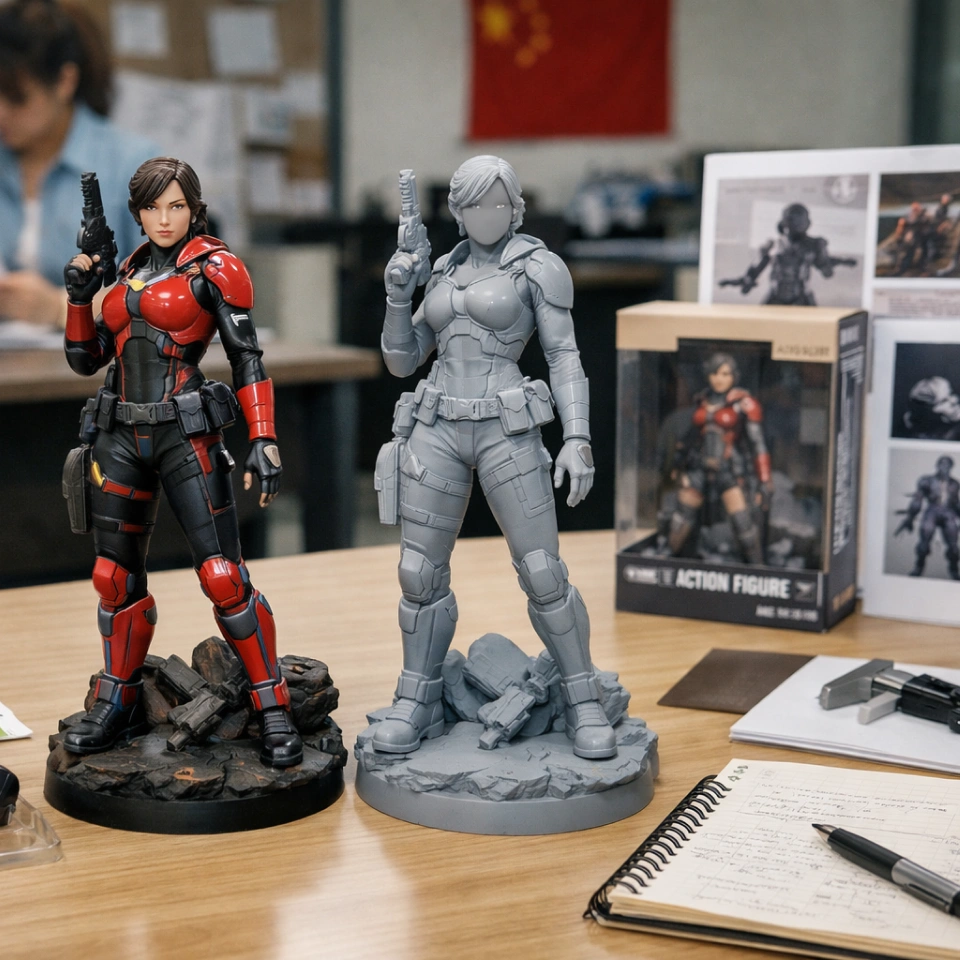
Prototype Development
A prototype is usually made by 3D printing, CNC, hand-finishing, or a combination. This allows the buyer to evaluate:
- Shape and proportions
- Balance and standing stability
- Detail sharpness
- Paint zones
- Accessory attachment
- User experience
For a cartoon product OEM factory, prototyping is where design intent meets manufacturing reality.
Tooling and Mold Making: The Real Backbone of Production
Once the prototype is approved, mold development begins.
A strong cartoon product OEM factory should either operate its own tooling department or maintain very tight control over tooling partners. Mold quality affects:
- Surface detail
- Flash control
- Fit between parts
- Production efficiency
- Reject rate
- Mold life
H3: What Buyers Should Ask About Tooling
Ask whether the factory can explain:
- Mold steel selection
- Number of cavities
- Expected mold life
- Trial sampling process
- Mold maintenance plan
- Revision workflow if product issues appear during trial production
This is also where your internal link should go if you have a tooling-focused page.
Anchor text: OEM homeware molding factory with in-house tooling
Core Production Processes in a Cartoon Product OEM Factory
Once tooling is ready, production begins. The exact process depends on the product type, but most character merchandise follows a sequence like this.
Injection Molding or Forming
For PVC, ABS, and many plastic parts, injection molding is the dominant method. It allows consistent reproduction at scale.
A factory with stable molding capability will control:
- Injection parameters
- Cycle consistency
- Dimensional stability
- Deformation risk
- Part uniformity across batches
For softer materials or certain themed homeware products, silicone compression molding or other forming methods may be used instead.
Trimming and Surface Preparation
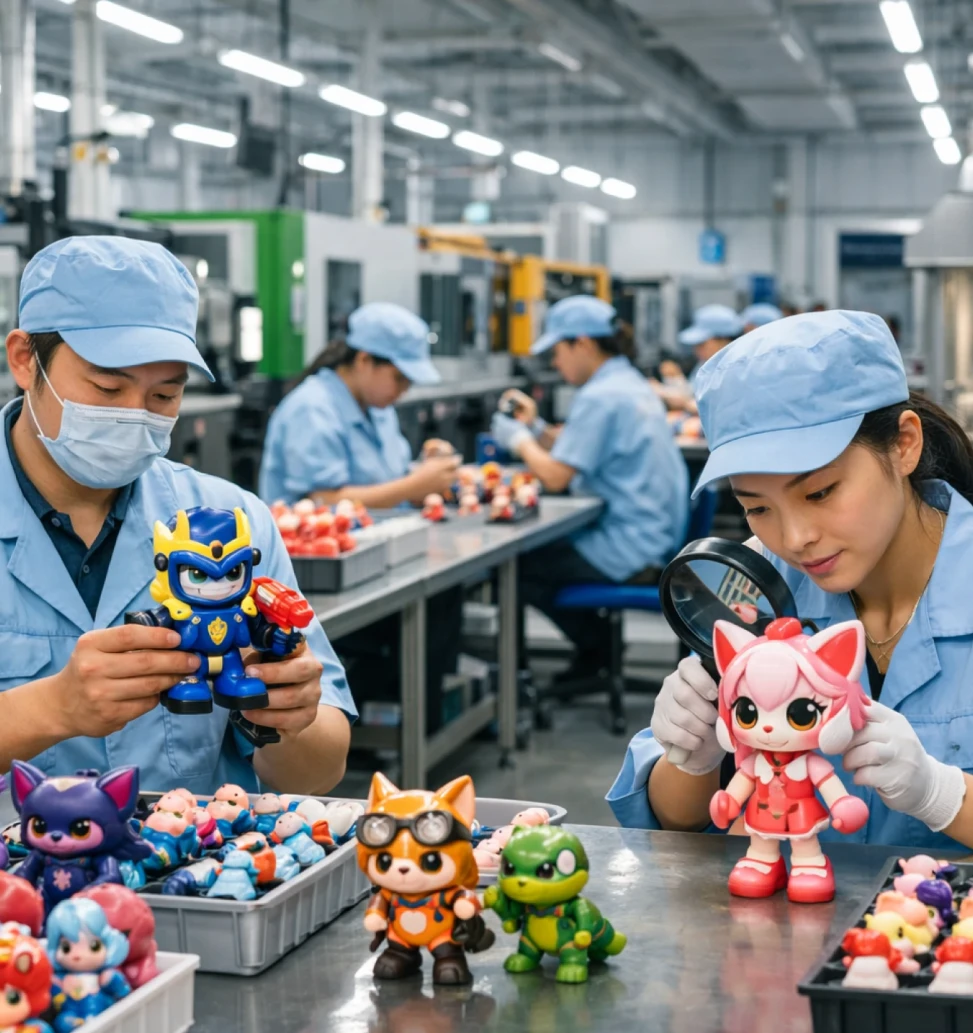
After molding, parts are trimmed and prepared for finishing. This stage affects paint adhesion, visual cleanliness, and final assembly fit.
Painting and Decoration
This is often the most quality-sensitive stage for character merchandise.
Processes may include:
- Spray painting
- Pad printing
- Silk-screen printing
- Heat transfer
- Hand-paint detailing
A good cartoon product OEM factory will separate paint operations based on detail level and production efficiency. High-volume products need stable repeatability; premium products may require more manual finishing.
Assembly
Character products often involve multiple parts, accessories, inserts, or electronics. Assembly planning should include:
- Workstation layout
- Fit verification
- Glue curing control
- Accessory count checks
- Cosmetic inspection after assembly
Packaging
Packaging must protect the product while meeting brand presentation standards. For blind box, giftable retail, or licensed merchandise, packaging accuracy is especially important.
Quality Control in Real Manufacturing
A professional cartoon product OEM factory should not treat QC as a final checkpoint only. Quality control should exist at multiple stages:
- Incoming material inspection
- First article confirmation
- In-process checks during molding
- Paint quality inspection
- Assembly checks
- Final packaging audit
For products entering the U.S. toy market, buyers should also consider formal safety and certification requirements. The U.S. Consumer Product Safety Commission states that toys intended for children 12 and under must be third-party tested and certified through a Children’s Product Certificate, with requirements tied to applicable toy safety regulations.
If your products are positioned as children’s toys rather than general collectibles, that changes the compliance workload substantially.
OEM vs ODM in Character Product Manufacturing
Many B2B buyers use OEM and ODM interchangeably, but the distinction matters.
OEM
You provide the product concept, design files, and core specifications. The factory executes manufacturing.
ODM
The factory contributes to design development, structural engineering, or product optimization in addition to production.
A capable cartoon product OEM factory often supports both models depending on the project. For buyers with strong in-house design teams, OEM may be enough. For brands that need help turning artwork into manufacturable goods, ODM support is often more valuable.
What B2B Buyers Should Evaluate Before Choosing a Cartoon Product OEM Factory
Before moving forward, evaluate the factory across five dimensions:
1. Engineering Depth
Can the factory discuss structure, materials, tolerance, tooling, and finishing in detail?
2. Product Category Match
Has the factory made similar products before: figures, themed homeware, collectible toys, or character electronics?
3. Tooling Control
Does the supplier control tooling quality and revisions properly?
4. Finishing Capability
Can it handle multi-color paint, printing, and cosmetic quality consistently?
5. Production Scalability
Can it support both sample development and larger repeat orders?
If the factory also operates a structured quality management system, that is another positive signal. ISO describes ISO 9001 as a globally recognized quality management standard used to help organizations improve consistency and meet customer expectations.
FAQ Section
What is a cartoon product OEM factory?
A cartoon product OEM factory manufactures character-based products according to a buyer’s design, specifications, and branding requirements, usually covering tooling, molding, finishing, assembly, and packaging.
What products can a cartoon product OEM factory make?
A cartoon product OEM factory can make PVC figures, blind box toys, licensed merchandise, themed homeware, promotional gifts, and some character-themed electronic products depending on its capabilities.
Why is in-house tooling important in a cartoon product OEM factory?
In-house tooling improves mold accuracy, shortens development timelines, allows faster revisions, and reduces communication errors during production.
Is a cartoon product OEM factory suitable for licensed merchandise?
Yes, provided the factory understands approval workflows, character accuracy, confidentiality, and the quality requirements tied to licensed product programs.
What should B2B buyers ask before placing an order?
Buyers should ask about tooling control, material selection, finishing capability, production capacity, quality systems, and experience with similar character products.
Conclusion
A strong cartoon product OEM factory is not defined by low pricing alone. It is defined by engineering capability, tooling control, finishing quality, production discipline, and the ability to turn a character concept into a stable commercial product.
For B2B buyers, the right partner is one that can bridge creativity and manufacturing reality. That means understanding product structure, managing real process risks, and delivering consistent quality at scale.
If your goal is to build character merchandise that performs well in retail, licensing, or promotional channels, choosing the right cartoon product OEM factory is one of the most important decisions in the entire project lifecycle.
If you wanna know more about our factory,you can visit our youtube to learn more. click here.