

For many brands, a mascot is more than a cute character. It represents brand personality, customer memory, emotional connection, and long-term marketing value. When a mascot becomes recognizable, the next step is often turning it into a physical product that customers, fans, employees, or retail buyers can hold, collect, display, or purchase.
That is where a custom mascot figure manufacturer becomes important.
A professional custom mascot figure manufacturer helps brands transform a 2D mascot, logo character, game avatar, animation figure, or campaign character into a production-ready physical product. This process may include concept review, 3D modeling, prototyping, tooling, PVC production, painting, assembly, packaging, quality control, and shipment planning.
For B2B buyers, mascot figure development is not only about making a cute model. It is about creating a product that looks accurate, feels valuable, can be produced consistently, and supports the brand’s commercial goals.
Whether the final product is a promotional gift, blind box collectible, retail figure, event giveaway, IP product, or brand merchandise item, choosing the right custom mascot figure manufacturer can directly affect product quality, launch timing, cost control, and customer response.
Why Brands Turn Mascots into Physical Figures
Mascots are powerful because they make a brand easier to remember. A mascot can communicate friendliness, fun, trust, creativity, or lifestyle positioning in a way that a logo alone often cannot.
That is why companies turn mascots into physical products for many reasons:
- Brand promotion
- Retail merchandise
- Customer loyalty gifts
- Event giveaways
- Blind box campaigns
- Employee welcome kits
- Fan collectibles
- Limited-edition product launches
- IP licensing programs
- Social media marketing assets
A physical mascot figure can become a brand touchpoint. It can sit on a desk, appear in unboxing content, be sold in stores, included in gift boxes, or used as part of a campaign.
For brands already planning character-based products, it may also be helpful to review how a broader character merchandise manufacturer supports toys, lifestyle products, promotional gifts, and licensed merchandise under one production strategy.
What Does a Custom Mascot Figure Manufacturer Do?
A custom mascot figure manufacturer develops and produces mascot-based figures according to a brand’s design files, character guidelines, product goals, and production requirements.
A qualified manufacturer may support:
- 2D mascot review
- 3D modeling
- Structural engineering
- Prototype sampling
- Mold development
- PVC injection molding
- Painting and pad printing
- Assembly
- Packaging
- Quality inspection
- Mass production
Some projects begin with a complete 3D file. Others begin only with a logo, illustration, or mascot artwork. In that case, the manufacturer needs to help convert the visual idea into a manufacturable 3D product.
If your team is still choosing the right factory type, our guide on custom PVC figure OEM ODM factory in China explains what buyers should evaluate before starting an OEM or ODM figure project.
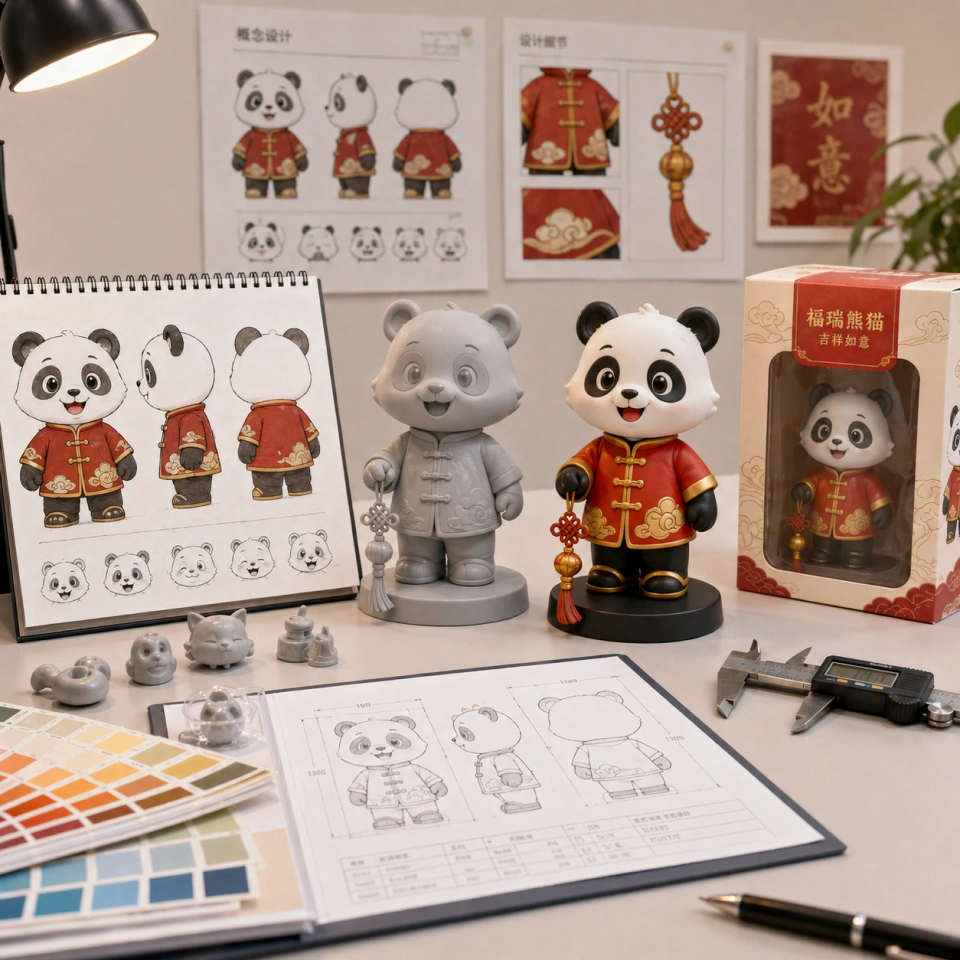
From Mascot Artwork to Product: The Development Map
Mascot figure production follows a clear development path. Buyers who understand this workflow can communicate better with the factory and avoid costly misunderstandings.
| Stage | What Happens | Why It Matters |
|---|---|---|
| Concept review | Factory checks artwork, size, purpose, and product type | Confirms whether the mascot can be made realistically |
| 3D modeling | 2D mascot becomes a 3D model | Defines shape, proportions, and product structure |
| Prototype sampling | A physical sample is produced | Helps buyers confirm appearance and details |
| Tooling | Molds are made for mass production | Determines repeatability and production stability |
| Painting | Colors, logos, and facial details are applied | Controls visual accuracy and brand consistency |
| Assembly | Parts and accessories are joined | Ensures structure and product completeness |
| Packaging | Product is packed for retail or promotion | Supports protection and brand presentation |
| QC | Finished products are inspected | Reduces defects before shipment |
This process is similar to many custom PVC figure projects. If you want to understand the full factory workflow in more detail, our article on How PVC Toys Are Manufactured explains the process from design review to mass production.
Step 1: Mascot Concept Review
The first job of a custom mascot figure manufacturer is not production. It is evaluation.
The factory should review:
- Mascot artwork
- Front, side, and back views if available
- Brand color requirements
- Target figure size
- Intended use
- Quantity range
- Packaging style
- Budget direction
- Timeline
- Target market
This step helps the manufacturer identify possible problems before the project becomes expensive.
For example, a mascot may look good in 2D artwork but become difficult to produce as a physical figure because of:
- Thin limbs
- Oversized head
- Small accessories
- Floating elements
- Fragile parts
- Complex color separation
- Unstable standing posture
- Difficult mold parting lines
A professional manufacturer should not simply say “yes” to everything. Good engineering feedback at the beginning can prevent tooling problems later.
Before contacting a factory, buyers can use our custom PVC figure RFQ checklist to prepare artwork, size, quantity, material expectations, finish requirements, packaging needs, and timeline information.
Step 2: 3D Modeling and Mascot Translation
Turning a mascot into a figure is not the same as copying a drawing.
A 2D mascot often needs visual translation before it becomes a good physical product. The 3D model must preserve the mascot’s identity while making the figure stable, moldable, paintable, and suitable for mass production.
A custom mascot figure manufacturer should consider:
- Character proportions
- Head and body balance
- Facial expression
- Standing stability
- Part separation
- Wall thickness
- Mold release direction
- Paint zones
- Accessory placement
- Packaging fit
This is especially important for mascots with simple flat designs. A logo mascot may not have side or back views, so the factory may need to create reasonable 3D interpretations while keeping the brand style intact.
For brands, this is where communication matters. The more clearly you define the mascot’s personality, key features, colors, and pose, the easier it is for the factory to build an accurate 3D version.
Step 3: Prototype Sampling Before Tooling
After 3D modeling, the next stage is prototype sampling.
A prototype helps buyers review:
- Overall mascot accuracy
- Product size
- Pose balance
- Surface details
- Facial expression
- Accessory fit
- Paint zone planning
- Packaging compatibility
Prototype samples are usually used for internal review, marketing approval, licensor approval, or buyer confirmation before tooling begins.
This stage is important because changes are much easier before mold development. Once tooling starts, structural changes may increase cost and delay the schedule.
If you want to understand early-stage sample expenses, our article on custom PVC figure sample cost explains what buyers should expect before moving into tooling and mass production.
Step 4: Tooling for Mascot Figure Production
Tooling is one of the biggest cost and quality factors in mascot figure manufacturing.
A mascot figure may require molds for:
- Head
- Body
- Arms
- Legs
- Accessories
- Base
- Logo parts
- Special decorative components
The mold plan depends on figure size, shape, undercuts, color separation, material, and production quantity.
A professional custom mascot figure manufacturer should explain tooling clearly before production begins. Buyers should understand whether the figure needs one mold, multiple molds, shared parts, separate accessories, or special tooling for complex shapes.
Tooling affects:
- Surface detail
- Part fit
- Seam line position
- Production efficiency
- Defect rate
- Long-term repeatability
- Unit cost
For a deeper explanation of mold investment, you can read our guide on PVC figure tooling cost. It explains how size, part separation, complexity, cavities, and production requirements affect mold cost.
Step 5: Choosing the Right Material for Mascot Figures
Most mascot figures are made with PVC, ABS, vinyl, or a mixed-material structure.
PVC
PVC is commonly used for mascot figures because it supports good detail, smooth painting, and stable mass production. It is suitable for many promotional figures, collectible figures, and character merchandise products.
ABS
ABS is harder and more rigid. It may be used for bases, internal support parts, accessories, or components that need extra strength.
Vinyl
Vinyl is suitable for some stylized designer toys or hollow character products. It gives a softer and more collectible feel, but it may not be suitable for every mascot figure.
For buyers still comparing materials, our article on PVC vs Vinyl vs ABS Figures explains how different materials affect structure, cost, detail, and production planning.
A strong custom mascot figure manufacturer should recommend materials based on your product goal, not only based on price.
Step 6: Painting, Logos, and Brand Color Control
Mascot figures often depend heavily on color accuracy.
A mascot may have specific brand colors, facial details, clothing elements, or logo areas that must stay consistent with the brand identity. This makes painting and printing especially important.
Common decoration processes include:
- Spray painting
- Pad printing
- Silk-screen printing
- Hand painting
- Mask painting
- Clear coating
- Logo printing
- Special finishes
For brand mascots, even small color differences can affect recognition. If the mascot’s eyes, mouth, logo, or signature color are wrong, the product may feel off-brand.
That is why buyers should confirm:
- Pantone references
- Approved color samples
- Paint masks
- Logo size
- Logo position
- Surface finish
- Inspection standards
A custom mascot figure manufacturer should control painting as part of the full production system, not as a last-minute decoration step.
Step 7: Packaging Strategy for Mascot Products
Packaging changes how customers experience the product.
A mascot figure may be packed as:
- Individual retail box
- Window box
- Blind box
- Polybag
In these cases, buyers often care about cost control, delivery timing, brand accuracy, and minimum order quantity.
A custom mascot figure manufacturer should help buyers balance design complexity with the campaign budget. For example, reducing unnecessary part separation, simplifying paint zones, or choosing practical packaging may help control cost without damaging the mascot’s visual value.
For early budget planning, our Custom PVC Figure Quotation Guide explains what information affects quotation accuracy.
Mascot Figures for Retail and Collectible Products
Mascot figures can also become long-term retail products.
This is common for:
- Brand mascots
- Game characters
- Animation characters
- Sports team mascots
- Museum mascots
- Theme park characters
- Food and beverage mascots
- Lifestyle brand characters
Retail mascot products usually require stronger attention to finish, packaging, quality control, and repeat production consistency.
A single mascot figure may also expand into a full product line, including:
- Standard figures
- Mini figures
- Blind box versions
- Keychains
- Display sets
- Limited editions
- Character-themed homeware
- Electronic gifts
For broader brand merchandise development, our guide on IP licensed product manufacturer explains how approval samples, confidentiality, character accuracy, and production consistency matter in licensed or brand-controlled projects.
Compliance and Market Readiness
Not every mascot figure is positioned the same way.
Some mascot figures are adult collectibles, promotional display items, or brand gifts. Others may be sold as children’s toys. The product’s intended use, age grading, packaging, and sales channel can affect compliance requirements.
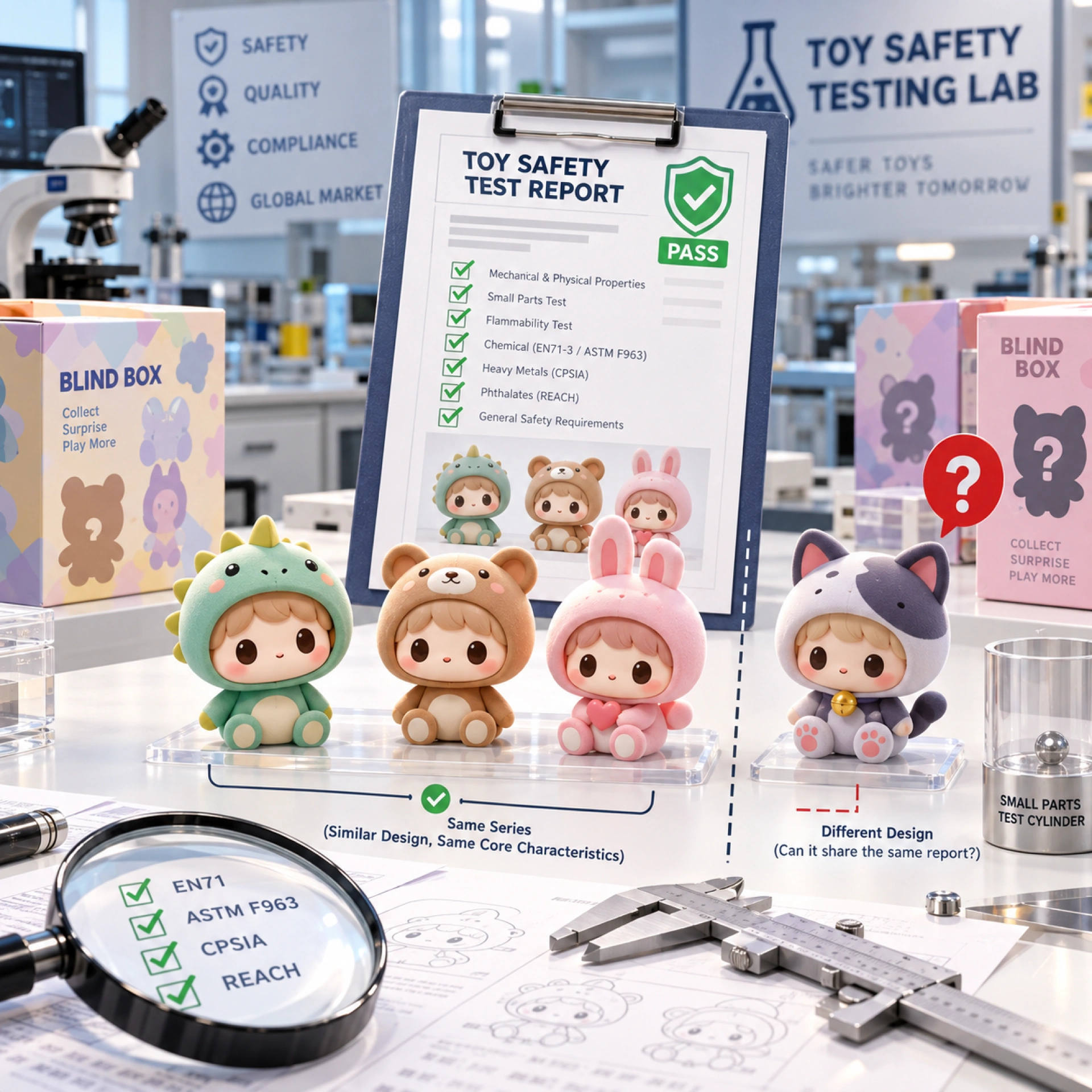
For products entering the U.S. toy market, buyers should review the CPSC toy safety business guidance and discuss testing requirements early with their supplier and testing partner.
This does not mean every mascot figure follows the same compliance path. A desk collectible, adult display figure, promotional item, and children’s toy may be treated differently depending on product positioning and market rules.
However, buyers should consider compliance early, not after mass production. Product classification, material selection, small parts, paint, packaging labels, and target age can all affect the project plan.
What Buyers Should Prepare Before Contacting a Custom Mascot Figure Manufacturer
To get a faster and more accurate response from a factory, buyers should prepare a clear project brief.
Useful information includes:
- Mascot artwork
- Brand guidelines
- Front, side, and back views if available
- 3D file if available
- Target size
- Quantity
- Material preference
- Surface finish requirements
- Packaging idea
- Target market
- Expected launch date
- Budget range if available
- Whether the product is a toy, collectible, gift, or retail item
The more complete your information is, the easier it is for the manufacturer to estimate cost, sample timeline, tooling requirements, MOQ, and mass production schedule.
If you do not have all details ready, that is still normal. A professional custom mascot figure manufacturer should be able to ask the right questions and help you clarify the project step by step.
How to Choose the Right Custom Mascot Figure Manufacturer
When choosing a custom mascot figure manufacturer, do not look only at price.
Evaluate the factory across these key areas:
1. Character Product Experience
Has the manufacturer produced mascot figures, PVC figures, blind box toys, character merchandise, or licensed products before?
2. Engineering Support
Can the factory convert 2D artwork into production-ready 3D files and explain structural limitations clearly?
3. Tooling Capability
Can the manufacturer manage mold development, trial samples, mold modifications, and long-term mold maintenance?
4. Painting and Finishing Control
Can the factory control brand colors, facial details, logos, and surface consistency across mass production?
5. Packaging Support
Can the factory support promotional, retail, gift, or blind box packaging?
6. Communication Quality
Does the supplier ask detailed questions before quoting, or does it provide a price without understanding the project?
7. Scalability
Can the factory support both sample development and larger repeat orders?
A reliable manufacturer should help reduce risk, not simply provide a low quotation.
If you are comparing suppliers in China, our guide on How to Compare Custom Figure Suppliers in China can help you evaluate factory capability, communication, tooling support, and production reliability more clearly.
Common Mistakes Buyers Should Avoid
Mascot figure projects often run into problems when buyers skip early planning.
Common mistakes include:
- Requesting a quote with only one image
- Not confirming target size
- Ignoring packaging requirements
- Choosing the lowest quote without checking factory capability
- Starting tooling before prototype approval
- Not defining color standards
- Forgetting target market compliance
- Underestimating lead time
- Treating mascot accuracy as optional
- Not preparing brand guidelines
These mistakes can lead to inaccurate quotations, sample revisions, tooling delays, quality problems, and higher total cost.
A better approach is to treat mascot figure development as a structured project. Clear design files, realistic expectations, and the right manufacturing partner will usually lead to a smoother result.
Why Work with Jiahong Creative for Custom Mascot Figures?
At Jiahong Creative, we support brands with custom PVC toy and character product development, including design review, 3D modeling coordination, mold making, injection molding, painting, assembly, packaging, and quality inspection.
Our factory system is designed to support projects from concept to mass production. For mascot figure projects, this means buyers can discuss artwork, product structure, tooling, finishing, packaging, MOQ, and delivery timeline within one manufacturing workflow.
Whether your mascot figure is used for brand promotion, retail sales, blind box collections, IP merchandise, or event campaigns, our goal is to help turn your character into a physical product that is manufacturable, consistent, and aligned with your brand.
You can learn more about our custom PVC toy manufacturing capability or contact Jiahong Creative to discuss your mascot figure project.
FAQ About Custom Mascot Figure Manufacturing
Q1:What is a custom mascot figure manufacturer?
A custom mascot figure manufacturer develops and produces physical figures based on a brand mascot, logo character, game avatar, animation character, or campaign character. The process may include 3D modeling, prototyping, tooling, PVC molding, painting, assembly, packaging, and quality control.
Q2:What materials are used for custom mascot figures?
Common materials include PVC, ABS, vinyl, or mixed-material structures. PVC is commonly used for detailed mascot figures because it supports stable molding, good surface quality, and flexible painting options.
Q3:Do I need a 3D file to make a mascot figure?
A 3D file is helpful but not always required. If you only have 2D artwork, a custom mascot figure manufacturer can usually help convert the mascot into a production-ready 3D model, depending on the design complexity and project requirements.
Q4:What affects the cost of a custom mascot figure?
Cost is affected by figure size, part count, material, tooling complexity, painting details, logo printing, packaging type, order quantity, sample requirements, and production timeline.
Q5:Can mascot figures be made for blind box collections?
Yes. Mascot figures can be developed as blind box products if the brand wants to create a collectible series with multiple poses, colors, characters, or secret versions
Q6:How long does it take to produce a custom mascot figure?
The timeline depends on design readiness, 3D modeling, sample approval, tooling, painting complexity, packaging, and mass production quantity. Projects with complete design files usually move faster than projects that require full concept-to-3D development.
Q7:What should I prepare before requesting a quote?
Prepare mascot artwork, size, quantity, material preference, finish requirements, packaging ideas, target market, launch timeline, and 3D files if available. A complete project brief helps the factory provide a more accurate quotation.
Conclusion
A mascot can become much more than a brand symbol. With the right product strategy, it can become a collectible figure, promotional gift, retail product, blind box series, or long-term character merchandise line.
However, successful mascot figure development requires more than a cute design. It depends on 3D translation, structural engineering, tooling, material selection, painting control, packaging planning, quality inspection, and stable mass production.
That is why choosing the right custom mascot figure manufacturer is so important. A qualified manufacturing partner can help brands turn mascot artwork into physical products that are accurate, scalable, and commercially useful.
If you are planning a custom mascot figure, PVC collectible, blind box mascot series, or brand character product, you can contact Jiahong Creative to discuss your design files, target size, quantity, tooling requirements, packaging needs, and production timeline.