

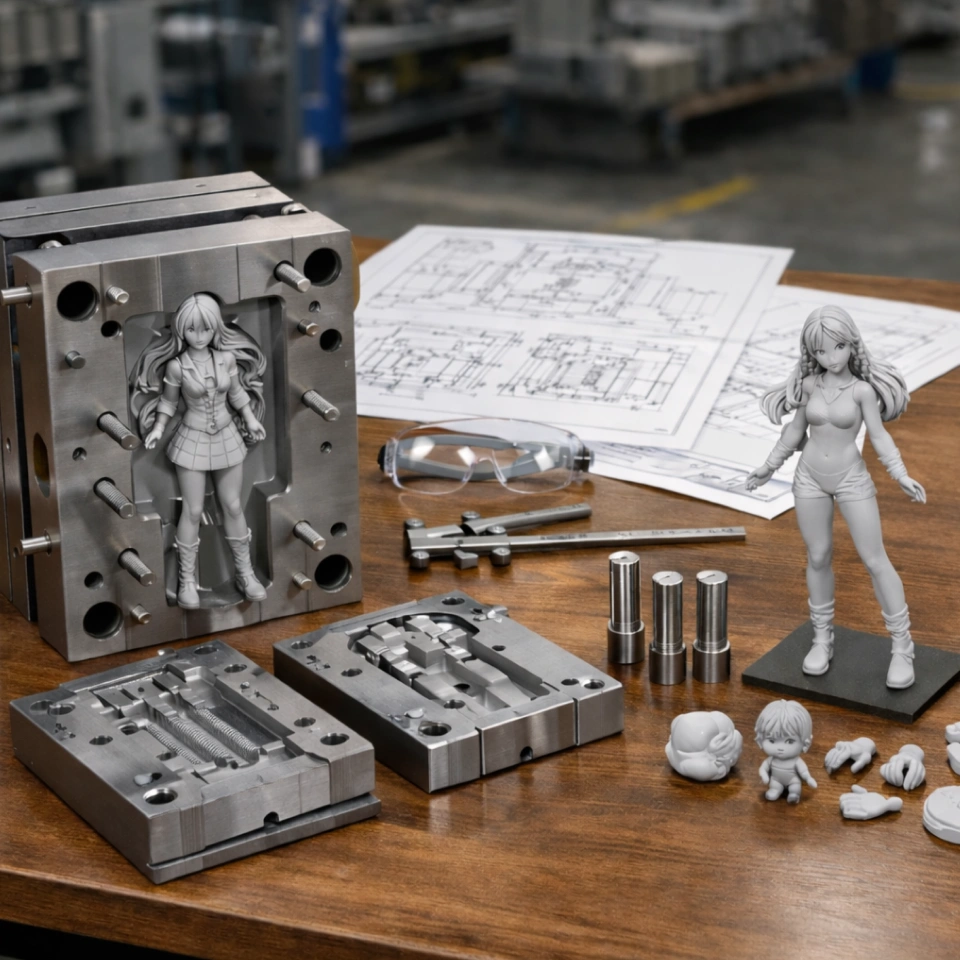
PVC figure tooling cost is one of the most important factors in any custom figure project. Before mass production starts, buyers usually need to understand not only the unit price, but also the full PVC figure mold cost behind the development process. For many brands, creators, and distributors, the tooling stage is where a project becomes either commercially realistic or unexpectedly expensive.
A custom PVC figure may look simple in artwork or 3D rendering, but the real tooling cost for PVC figures depends on much more than appearance. Product size, part count, undercuts, paint separation, structural complexity, and expected order quantity can all influence the final PVC figure tooling cost. This is why two figures of similar size can still have very different mold investment levels.
Understanding PVC figure tooling cost helps buyers make better decisions early. It can improve project planning, reduce revision risk, and make quotation comparisons more meaningful. Instead of asking only for a low mold price, buyers should understand what drives custom PVC figure mold cost and what kind of mold investment is suitable for their product goals.
If you are still learning about the full manufacturing process, you can also read our guide on How PVC Toys Are Manufactured.
Why PVC Figure Tooling Cost Matters So Much
For many first-time buyers, PVC figure tooling cost can feel like a one-time setup charge. In reality, it is much more important than that. The tooling stage creates the manufacturing foundation for the figure, which means the quality of the mold affects molding stability, assembly fit, surface consistency, and long-term production efficiency.
A weak mold solution may appear cheaper at the beginning, but it can create higher risk later through:
- repeated mold modification
- unstable dimensions
- poor part fit
- inconsistent surface quality
- slower production efficiency
- higher defect rates in mass production
That is why PVC figure tooling cost should not be judged only by the initial quotation number. Buyers should think of PVC figure mold cost as a strategic investment that affects the whole life of the project.
For collectible toys, licensed characters, and retail-ready products, the right custom PVC figure mold cost often supports better long-term output than the cheapest tooling option.
What Is Included in PVC Figure Tooling Cost?
In most custom projects, PVC figure tooling cost includes more than just cutting steel. Depending on the supplier, the quotation may cover several development steps related to custom figure tooling.
A typical PVC figure tooling cost may include:
- engineering review
- DFM adjustment
- mold structure planning
- cavity planning
- steel mold fabrication
- mold trial
- sample testing
- basic tooling correction after trial runs
This is why buyers should always ask what is included in the quoted PVC figure mold cost. One supplier may quote a lower number, but include fewer revisions or a narrower tooling scope. Another supplier may quote a higher custom PVC figure mold cost, but include more development support and better mold planning.
When comparing quotations, do not compare PVC figure tooling cost as a simple number alone. Compare the tooling scope, expected sample process, revision support, and mold strategy behind that number.
If you are also comparing materials, our article on PVC vs Vinyl vs ABS Figures can help explain why material and structure decisions can influence tooling cost for PVC figures as well.
The Biggest Factors That Affect PVC Figure Tooling Cost
1. Figure Size
Figure size is one of the most obvious factors that affects PVC figure tooling cost. A larger figure usually requires a larger mold base, more steel, and more machining time. However, size alone does not fully determine PVC figure mold cost.
A compact figure with a simple structure may have a lower tooling cost for PVC figures than a smaller figure with difficult geometry. What matters is not only height, but also the overall massing, balance, and space occupied by the sculpt.
Larger figures may affect custom figure tooling in these ways:
- larger mold dimensions
- more material flow considerations
- heavier part support requirements
- more challenging cooling and stability planning
This means PVC figure tooling cost is influenced by the real engineering size of the product, not just the display height seen by the buyer.
2. Part Count and Mold Splits
Part count is one of the strongest drivers of PVC figure tooling cost. A custom PVC figure is usually divided into multiple parts for molding, painting, and assembly. The more parts a figure needs, the more complex the custom PVC figure mold cost usually becomes.
Extra parts can increase PVC figure tooling cost because they often require:
- more mold sets or inserts
- more split-line planning
- more assembly points
- more tolerance control
- more production testing
In many projects, the biggest jump in PVC figure mold cost happens not because the figure is larger, but because the part breakdown becomes much more complicated. Hair pieces, accessories, costume layers, bases, and structural supports can all increase the tooling cost for PVC figures.
For this reason, buyers should understand that sculpt detail and part count are closely connected to custom figure tooling.
3. Undercuts and Structural Complexity
Undercuts are a classic reason why PVC figure tooling cost goes up. If a figure includes shapes that cannot release cleanly from a standard mold direction, the factory may need slides, lifters, or a more complicated split structure.
Common features that raise PVC figure mold cost include:
- crossed arms close to the body
- layered clothing with trapped geometry
- wrapped hair sections
- bent legs with tight interior space
- accessories that touch the body closely
- difficult base locking structures
These details can all increase custom PVC figure mold cost because they add difficulty to mold release, machining, maintenance, and trial adjustment.
A figure may look attractive in concept art, but if the geometry creates difficult undercuts, the PVC figure tooling cost can rise quickly. This is why early engineering review is one of the best ways to control tooling cost for PVC figures.
4. Sculpt Detail and Surface Precision
Another important factor behind PVC figure tooling cost is sculpt precision. Fine sculpt details may improve the product visually, but they also increase the precision required in the mold.
This can affect PVC figure mold cost in projects with:
- detailed facial expression work
- layered costume folds
- embossed logos or symbols
- fine hair texture
- accessory texture
- small but dense sculpted surfaces
The more refined the sculpt, the more precise the custom figure tooling has to be. That usually means more careful machining, more detailed mold finishing, and tighter quality expectations.
If your figure project starts from an original idea, you can also reference How to Create Your Own PVC Figures to help buyers understand how design development connects to PVC figure tooling cost later.
5. Paint Zones and Finish Requirements
Many buyers think painting affects only the decoration stage, but it can also influence PVC figure tooling cost. When a figure has many small paint zones, difficult masking areas, or strict color boundary requirements, the engineering team may need to adjust part splits to make painting possible.
This means paint logic can sometimes increase PVC figure mold cost through:
- additional part separation
- more complex assembly structure
- stricter fit requirements
- revised mold planning after design review
For collectible figures, licensed projects, and blind box toys, painting expectations often have a direct relationship with tooling cost for PVC figures. A figure with simple color blocking may need a more efficient tooling solution than one with many tiny character details and layered finish requirements.
So when evaluating PVC figure tooling cost, buyers should not separate mold structure from paint complexity. In real custom figure tooling, those two things often influence each other.
6. Production Volume and Cavity Planning
Expected quantity also plays a major role in PVC figure tooling cost. The right mold strategy depends on whether the project is a small test run, a medium-volume commercial order, or a long-term retail program.
A supplier may recommend different cavity planning depending on the target quantity. This changes the custom PVC figure mold cost because cavity planning affects:
- output efficiency
- cycle stability
- production speed
- long-term mold use
- cost balance between tooling and unit price
In some cases, a lower PVC figure tooling cost may reduce initial investment but lead to slower production and less efficient economics later. In other cases, a higher PVC figure mold cost may make sense because it improves long-term production performance.
That is why buyers should evaluate tooling cost for PVC figures together with quantity planning, not as an isolated setup fee.
7. Revisions After Prototype or Trial Stage
Revision risk is one of the most underestimated parts of PVC figure tooling cost. Even if the original quotation looks acceptable, late-stage changes can increase custom PVC figure mold cost significantly.
Revisions that often affect PVC figure tooling cost include:
- pose changes
- accessory adjustments
- changed balance requirements
- different paint separation decisions
- new assembly requests
- revised part splits after sample testing
Once the figure enters mold trial or physical sample review, structural changes can be far more expensive than they were during concept review. This is why good preparation reduces PVC figure mold cost in a very practical way.
The clearer the design, quantity, finish, and packaging requirements are before tooling starts, the easier it is to control overall tooling cost for PVC figures.
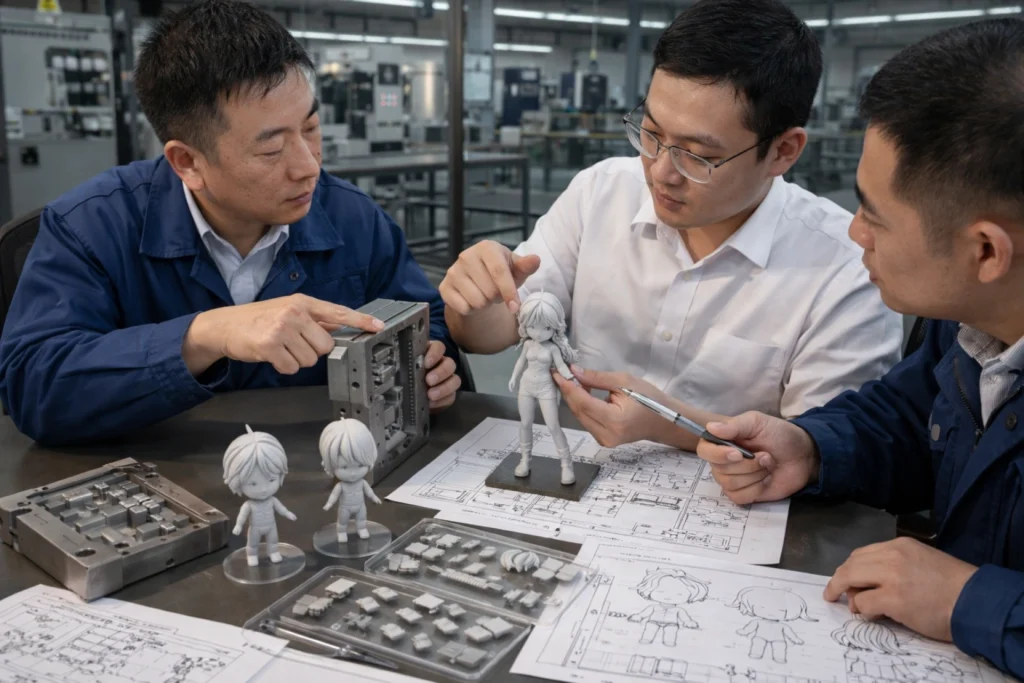
Why Cheap PVC Figure Tooling Cost Can Become Expensive Later
A very low PVC figure tooling cost can look attractive when buyers compare quotations, but cheap tooling is not always efficient tooling.
A weak mold solution can create future losses through:
- repeated mold modification
- unstable molding output
- fitting problems during assembly
- visible defects
- higher production waste
- longer production lead time
- more difficult sample approval
So when discussing PVC figure mold cost, the real goal should not be the cheapest number. The goal should be the most suitable mold investment for product quality, production stability, and business success.
A better custom PVC figure mold cost may actually reduce total project risk and improve long-term profitability.
How to Reduce PVC Figure Tooling Cost Without Ruining the Design
The best way to reduce PVC figure tooling cost is not to oversimplify the product blindly. Instead, buyers should improve manufacturability while protecting the key visual features of the figure.
Practical ways to reduce tooling cost for PVC figures include:
Simplify unnecessary hidden structure
Not every internal or overlapping detail needs to remain fully independent if it does not affect the visual result.
Reduce excessive part count
A better engineering review can often lower PVC figure mold cost by reducing avoidable mold splits.
Avoid difficult floating geometry
Unsupported or tightly trapped parts usually increase custom figure tooling complexity.
Clarify paint and finish early
Late changes to color separation can increase PVC figure tooling cost.
Provide realistic quantity targets
This helps the supplier recommend the right cavity plan and better custom PVC figure mold cost structure.
Align packaging direction earlier
Packaging and display needs can influence balance, bases, and structure.
The best cost control strategy is not just “make it cheaper.”
It is “make the PVC figure tooling cost match the real commercial logic of the project.”
PVC Figure Tooling Cost and Compliance Planning
For projects sold as children’s toys, compliance planning can also connect indirectly to PVC figure tooling cost. Product category, age grading, small parts, and structural decisions may influence how the project is engineered and tested later.
For U.S. market toy guidance, the CPSC toy safety guidance is a good authority reference, especially for buyers evaluating toy safety requirements, third-party testing, and Children’s Product Certificate expectations.
This does not mean every collectible figure follows the same path, but it does mean buyers should think about the final market early. In some cases, better planning at the design and tooling stage can reduce risk later in certification and market entry.
What Buyers Should Prepare Before Asking for PVC Figure Tooling Cost
If you want a realistic PVC figure tooling cost quotation, do not send only one reference image.
A stronger inquiry usually includes:
- concept art, sketches, or 3D files
- target figure size
- estimated quantity
- accessory and base details
- finish and paint references
- packaging requirements
- target market
- timeline expectations
When suppliers receive better information, they can evaluate PVC figure mold cost more accurately and reduce the chance of misquotation or later revision.
Conclusion
PVC figure tooling cost is one of the most important cost categories in custom figure development. It is shaped by design structure, part count, undercuts, sculpt detail, paint complexity, production volume, and revision risk.
Buyers should not look at PVC figure mold cost as a random setup charge. It is a core part of the manufacturing strategy. A well-planned mold investment can improve quality, reduce risk, and support more stable mass production. A poorly planned mold may look cheaper at first, but become much more expensive later.
If you want to evaluate tooling cost for PVC figures properly, the best approach is to prepare a clear project brief, understand the major cost drivers, and compare quotations based on tooling logic rather than price alone.
For serious custom figure projects, the smartest question is not just “How low can the mold cost be?”
It is: What level of PVC figure tooling cost makes the project stable, manufacturable, and commercially viable?
FAQ
1. What is PVC figure tooling cost?
PVC figure tooling cost refers to the mold investment required to develop a custom PVC figure for sampling and production. It may also include engineering review, cavity planning, mold trial, and basic tooling correction.
2. What affects PVC figure tooling cost the most?
The biggest factors affecting PVC figure tooling cost are usually figure size, part count, undercuts, sculpt detail, paint zone complexity, cavity planning, and revision risk.
3. Why can two figures of similar size have very different PVC figure mold cost?
Two figures may look similar in size, but one may require more mold splits, more difficult release structure, more detailed machining, or more complicated assembly logic. These factors can change PVC figure mold cost significantly.
4. Is lower PVC figure tooling cost always better?
No. A lower PVC figure tooling cost may mean fewer included revisions, weaker mold planning, or less stable long-term production support. Buyers should compare tooling scope, not only price.
5. Can I reduce custom PVC figure mold cost without changing the design too much?
Yes. A better engineering review, reduced unnecessary part count, earlier paint confirmation, and clearer quantity planning can all reduce custom PVC figure mold cost without hurting the product identity.
6. Does quantity affect tooling cost for PVC figures?
Yes. Production quantity influences cavity planning and mold strategy, which means it can affect the final tooling cost for PVC figures.
7. Is PVC figure tooling cost separate from unit price?
Usually yes, but PVC figure tooling cost and unit price are connected. The mold strategy affects production efficiency, which often affects the final unit cost in mass production.