
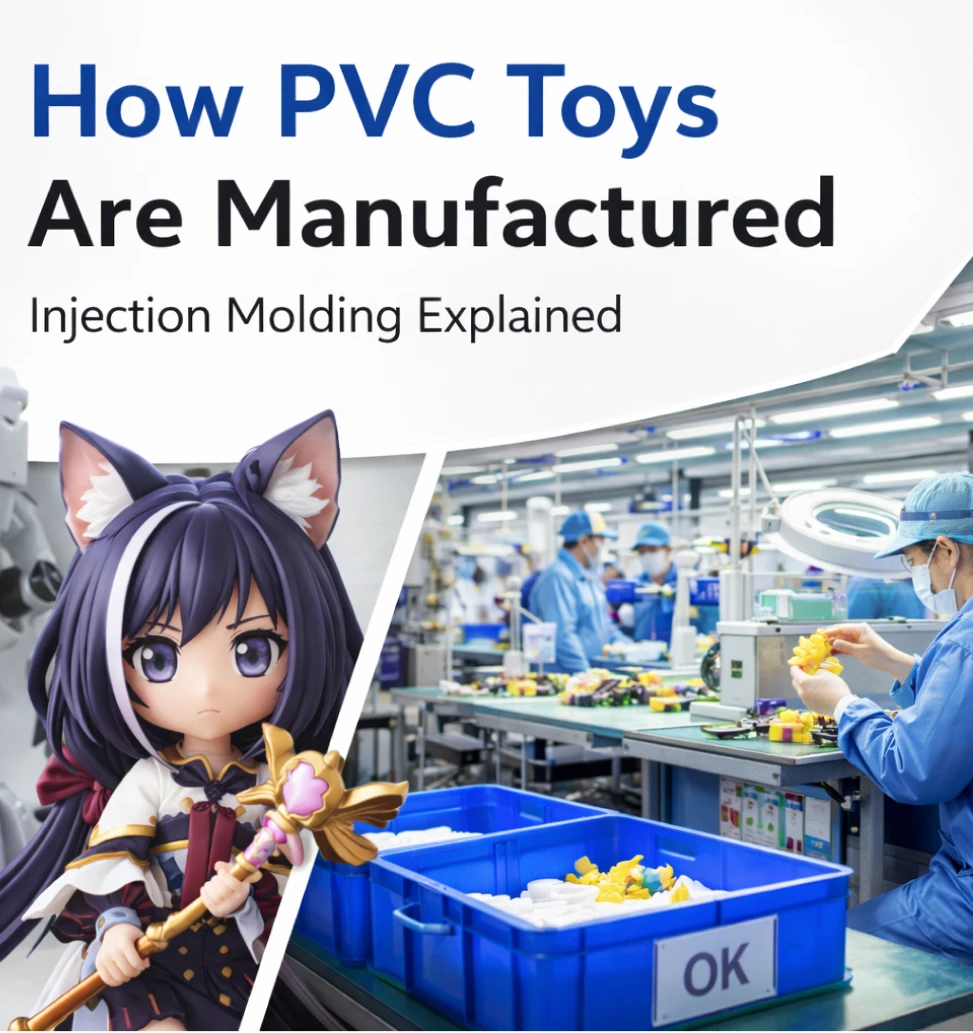
How PVC Toys Are Manufactured? PVC toys are among the most popular products in the global toy and collectible market, especially for anime figures, blind box toys, and designer collectibles.or those new to the category, understanding what a PVC toy is helps clarify why this material is widely used. While the final product may look simple, the manufacturing process behind a PVC toy is highly technical and requires coordination between design, engineering, mold making, and quality control.
This guide explains how PVC toys are manufactured, step by step, from the initial concept to mass production, helping brands and creators understand what happens behind the factory doors.
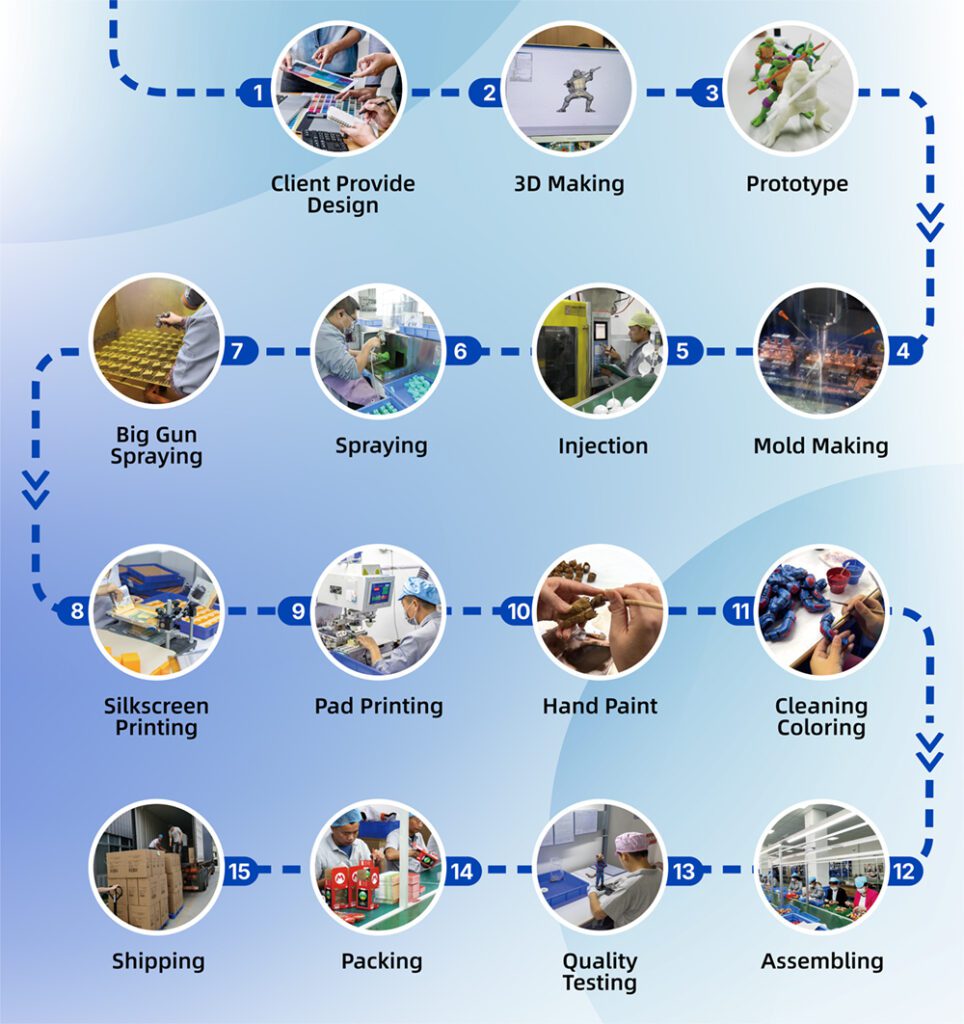
Step 1: Concept and Design Development
Every PVC toy project begins with a concept. This may come in the form of sketches, illustrations, reference images, or 3D files provided by the brand or creator.
At this stage, manufacturers evaluate:
- Character proportions and pose
- Feasibility of sculpted details
- Part separation and assembly logic
- Intended size and target market
For OEM projects, the client provides the design. For ODM projects, manufacturers may assist with 2D design and 3D modeling to ensure the concept can be produced efficiently.
Step 2: 3D Modeling and Engineering Review
Once the concept is confirmed, a detailed 3D model is created or refined. This is a critical step, as it determines both appearance and manufacturability. Material selection plays a key role during the engineering review stage, especially when comparing PVC vs vinyl vs ABS figures for different structural requirements.
Engineering teams review the model to:
- Optimize wall thickness
- Define parting lines
- Plan joint structures
- Avoid undercuts or deformation risks
A proper engineering review reduces mold revisions and prevents defects during mass production.
Step 3: Prototype and Sample Making
Before mass production, a physical prototype is produced. Prototypes are commonly made using 3D printing or CNC machining.
The prototype allows brands to evaluate:
- Overall shape and proportions
- Surface texture and details
- Assembly fit
- Visual appearance after painting
Feedback at this stage is crucial, as changes are far more cost-effective before mold making begins.
Step 4: Mold Making
After prototype approval, manufacturers proceed to steel mold fabrication. Mold making is one of the most important and cost-intensive steps in PVC toy manufacturing.
Key considerations during mold making include:
- Mold material and durability
- Number of cavities
- Expected production volume
- Precision of sculpted details
High-quality molds ensure consistent quality and long-term production stability.
Step 5: PVC Injection Molding
PVC toys are typically produced using injection molding. Molten PVC material is injected into the mold under controlled temperature and pressure.For a technical overview of injection molding principles, you can refer to industry resources such as the Plastics Industry Association. https://www.plasticsindustry.org/
This process allows:
- Accurate reproduction of fine details
- Consistent part dimensions
- Efficient large-scale production
After cooling, molded parts are removed and prepared for finishing.
Step 6: Painting and Surface Finishing
Painting is one of the most labor-intensive stages of PVC toy manufacturing. Depending on design complexity, painting may involve:
- Spray painting
- Hand painting
- Masking for multi-color designs
- Special finishes such as matte or gloss coatings
Quality control during painting ensures color accuracy and surface consistency.
Step 7: Assembly
Painted parts are assembled according to the design structure. Many PVC toys consist of multiple components, sometimes combined with ABS parts for added strength.
Assembly checks include:
- Proper fit and alignment
- Joint movement (if applicable)
- Structural stability
Step 8: Quality Control and Testing
Professional manufacturers implement strict quality control procedures throughout production.
QC inspections typically cover:
- Visual defects
- Paint consistency
- Structural integrity
- Safety and compliance standards
Consistent QC ensures that mass-produced PVC toys match the approved prototype.
Step 9: Packaging and Logistics
Once approved, PVC toys are packaged according to brand requirements. Packaging may include blister packs, color boxes, or custom-designed retail packaging.
Manufacturers then coordinate logistics, preparing products for domestic or international shipment.
How PVC Toys Are Manufactured?
PVC toy manufacturing is a complex, multi-step process that combines creativity with engineering precision. From concept design to quality-controlled mass production, each stage plays a critical role in delivering a high-quality product.
By understanding how PVC toys are manufactured, brands and creators can communicate more effectively with manufacturers and make better decisions throughout the development process.
FAQ: How PVC Toys Are Manufactured
1.What materials are used to manufacture PVC toys?
PVC toys are primarily made from polyvinyl chloride (PVC), a flexible thermoplastic that allows detailed sculpting and durable production. In many cases, manufacturers also combine PVC with ABS plastic for structural components such as joints, bases, or internal supports. The combination of these materials helps improve both durability and product stability.
2. How long does it take to manufacture a PVC toy?
The production timeline for PVC toys typically ranges from 30 to 90 days, depending on the complexity of the design and the number of molds required.
A typical timeline includes:
3D modeling and engineering review (5–10 days)
Prototype development (7–15 days)
Mold fabrication (20–35 days)
Mass production and painting (10–30 days)
Complex collectible figures with multiple parts may require a longer production cycle.3. How much does it cost to make a PVC toy mold?
The cost of a PVC toy mold depends on the size, complexity, and number of cavities.
Typical mold costs range from $2,000 to $10,000 or more for professional steel molds used in mass production.
Factors affecting mold cost include:
Number of parts in the figure
Level of sculpted detail
Mold material and lifespan
Expected production volume
High-quality molds ensure consistent results and long-term manufacturing stability.4. Are PVC toys made using injection molding?
Yes. Most PVC toys are manufactured using injection molding, a process where molten plastic is injected into a precision mold under controlled temperature and pressure.
Injection molding allows manufacturers to achieve:
High detail accuracy
Consistent part dimensions
Efficient large-scale production
This method is widely used in the production of anime figures, blind box toys, and collectible figurines.PVC vs Vinyl vs ABS figures toys.5. Can PVC toys include multiple materials?
Yes. Many PVC toys combine multiple materials to improve structural strength and functionality.
For example:
PVC for the main body and detailed surfaces
ABS for joints and internal supports
soft vinyl for larger hollow components
Using multiple materials helps balance appearance, durability, and manufacturing efficiency.6. What industries commonly use PVC toy manufacturing?
PVC toy manufacturing is widely used in several industries, including:
Anime and gaming collectibles
Blind box toys
Promotional merchandise
Designer toys and art collectibles
Licensed character products
Because PVC allows detailed sculpting and reliable mass production, it has become one of the most widely used materials in the collectible toy industry.