
For entertainment brands, retailers, licensors, and IP owners, physical merchandise is no longer a side business. It is a core revenue channel and a major extension of brand identity. That is why choosing the right character merchandise manufacturer matters so much. The manufacturing partner you select influences product quality, tooling cost, launch timing, compliance planning, packaging execution, and long-term supply stability.
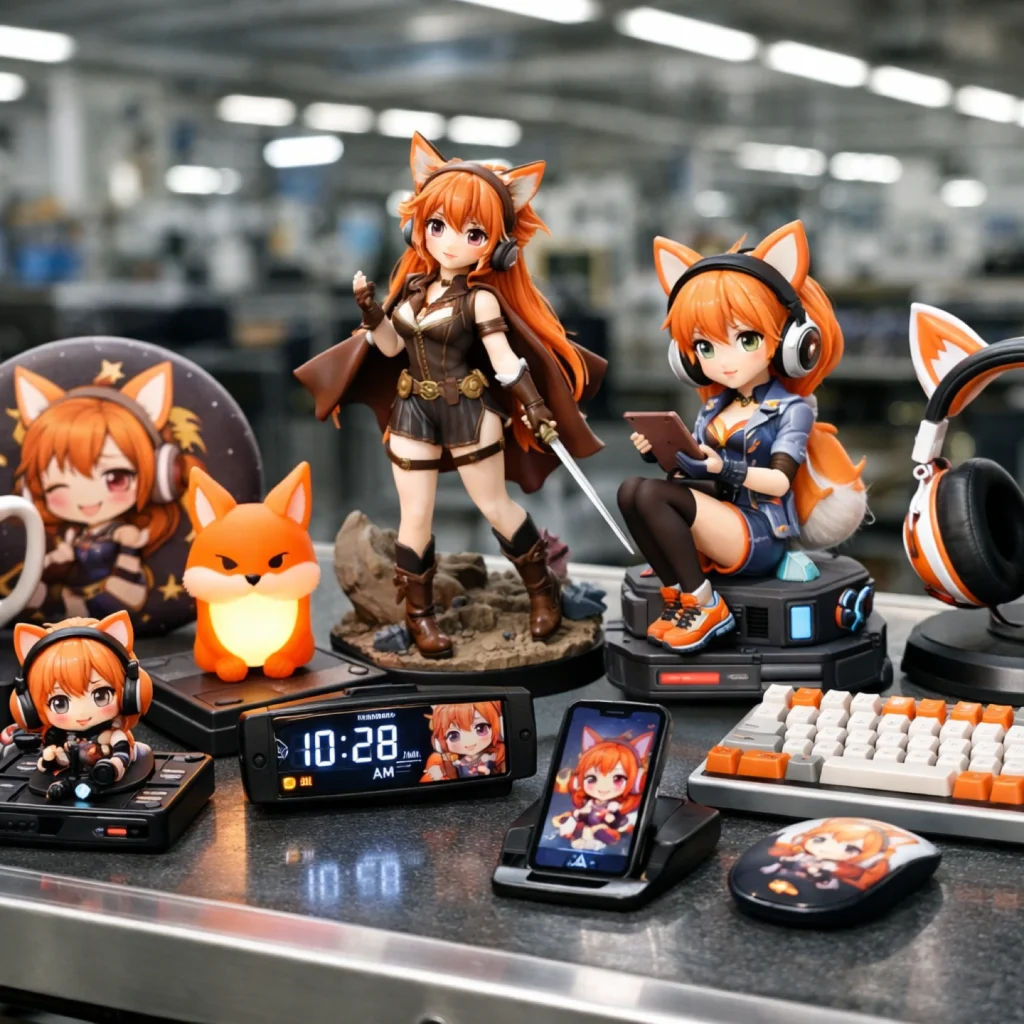
A professional character merchandise manufacturer does far more than assemble products. It helps transform characters, mascots, and branded visuals into commercially viable goods across multiple categories, including PVC collectibles, blind box toys, promotional gifts, themed homeware, and character-based electronic products. For B2B buyers, the challenge is not simply finding a factory. The challenge is finding a manufacturing partner that understands the full development path from concept approval to mass production.
This article explains how a character merchandise manufacturer works in real production environments, what capabilities buyers should evaluate, and how brands can reduce development risk when launching licensed or branded merchandise programs.
What a Character Merchandise Manufacturer Actually Does
A character merchandise manufacturer produces goods based on brand-owned or licensed characters according to a buyer’s design brief, specifications, and market goals. Depending on the factory’s capabilities, that may include pure OEM execution, ODM development support, or a hybrid of both.
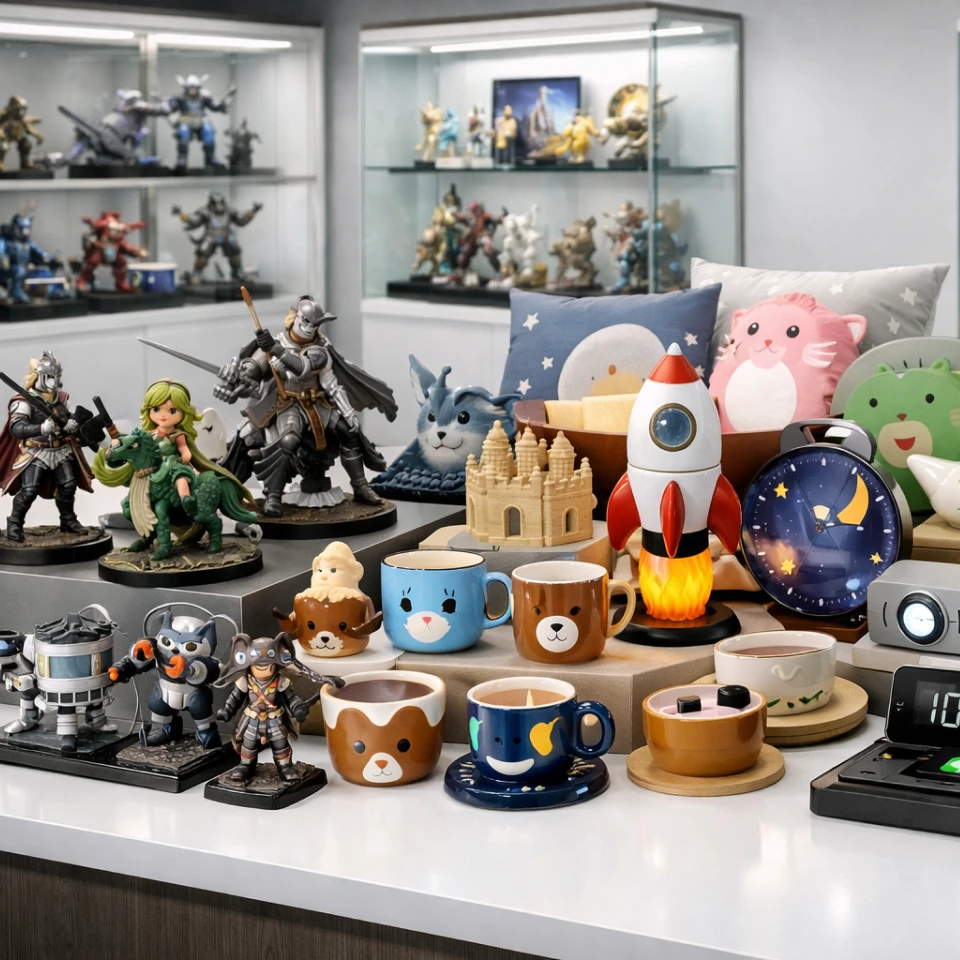
Typical product categories include:
- PVC figures and collectible toys
- Blind box products
- Character-themed homeware
- Desk accessories and lifestyle products
- Promotional merchandise
- Small appliances or electronics with character housings
- Licensed retail gift items
The key difference between a general factory and a specialized character merchandise manufacturer is process control around visual accuracy, branding, and finish quality. Character products are much more sensitive to shape, expression, decoration, and packaging detail than commodity consumer goods.
Why Specialized Character Product Manufacturing Matters
Many B2B buyers underestimate how technically demanding character merchandise can be. A finished product may look simple, but its development often involves multiple manufacturing risks.
Character Accuracy and Visual Consistency
Branded merchandise has to feel on-model. Facial expression, eye placement, color balance, gloss level, and even the feel of the surface all shape customer perception. If a factory cannot control these details, the final product may fail brand review or disappoint the market.
Product Structure and Tooling Feasibility
Characters often involve unusual shapes, exaggerated proportions, accessories, layered parts, or decorative inserts. These features affect mold structure, part separation, wall thickness, and assembly flow.
Retail Presentation and Packaging
For many licensed products, packaging is part of the product value. A good character merchandise manufacturer understands the connection between protective packaging, shelf impact, unboxing experience, and logistics efficiency.
Multi-Category Expansion
Many brands no longer stop at toys. They extend into homeware, desktop items, gifts, and smart lifestyle products. That means the factory needs broader engineering knowledge than a standard toy supplier.
Development Workflow Inside a Character Merchandise Manufacturer
A capable character merchandise manufacturer follows a disciplined product development process. Buyers who understand this workflow can better judge whether a factory is genuinely strong or simply good at sales presentations.
Concept Review and Manufacturing Feasibility
The first step is design analysis, not production. The factory reviews:
- Character artwork or style guide
- Product dimensions and target retail price
- Intended materials
- Structural requirements
- Paint complexity
- Packaging concept
- Compliance expectations for the destination market
At this stage, engineering teams identify issues such as unstable shapes, excessive undercuts, weak joints, impractical paint zones, or unrealistic cost assumptions. A serious character merchandise manufacturer will challenge the design where needed and recommend changes that preserve the concept while improving manufacturability.
Engineering Evaluation Questions Buyers Should Expect
A professional factory should ask about:
- Target market and age grading
- Expected order volume
- Desired product finish
- Packaging format
- Drop test and transport expectations
- Whether the product is collectible, decorative, or functional
If a supplier accepts everything immediately without discussing structure or tooling, that is usually a warning sign.
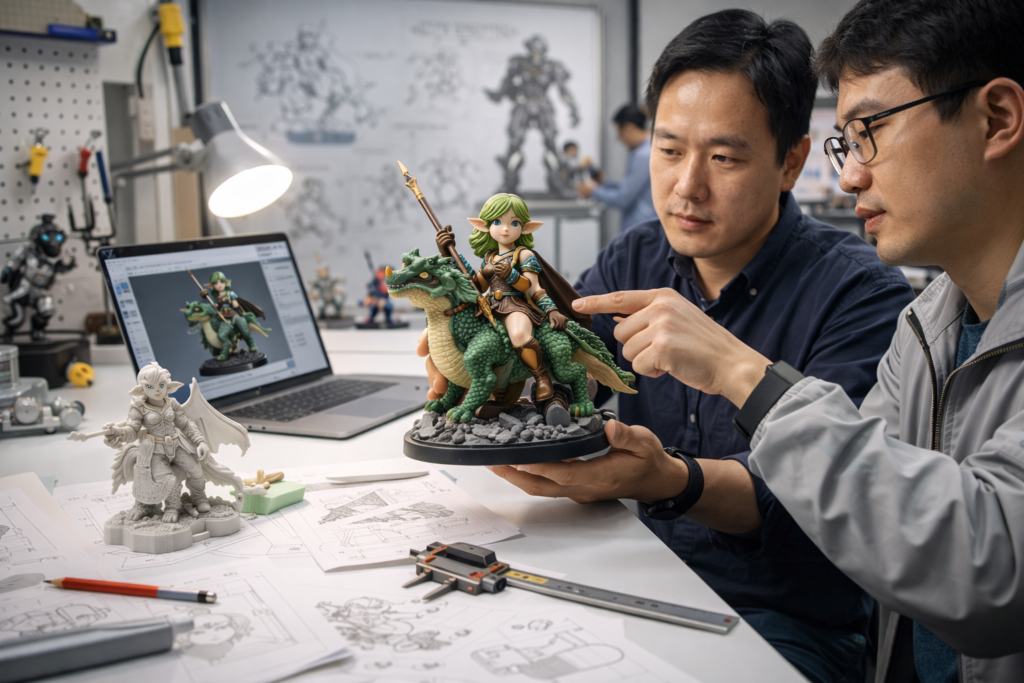
3D Modeling, Structural Design, and Prototype Development
After feasibility review, the project enters engineering and sample development.
3D Modeling
The factory converts 2D character art or concept references into production-ready 3D structure. This step defines:
- Wall thickness
- Part division
- Draft angle
- Internal support geometry
- Accessory fit
- Assembly method
A strong character merchandise manufacturer treats 3D development as a manufacturing exercise, not just a visual modeling task.
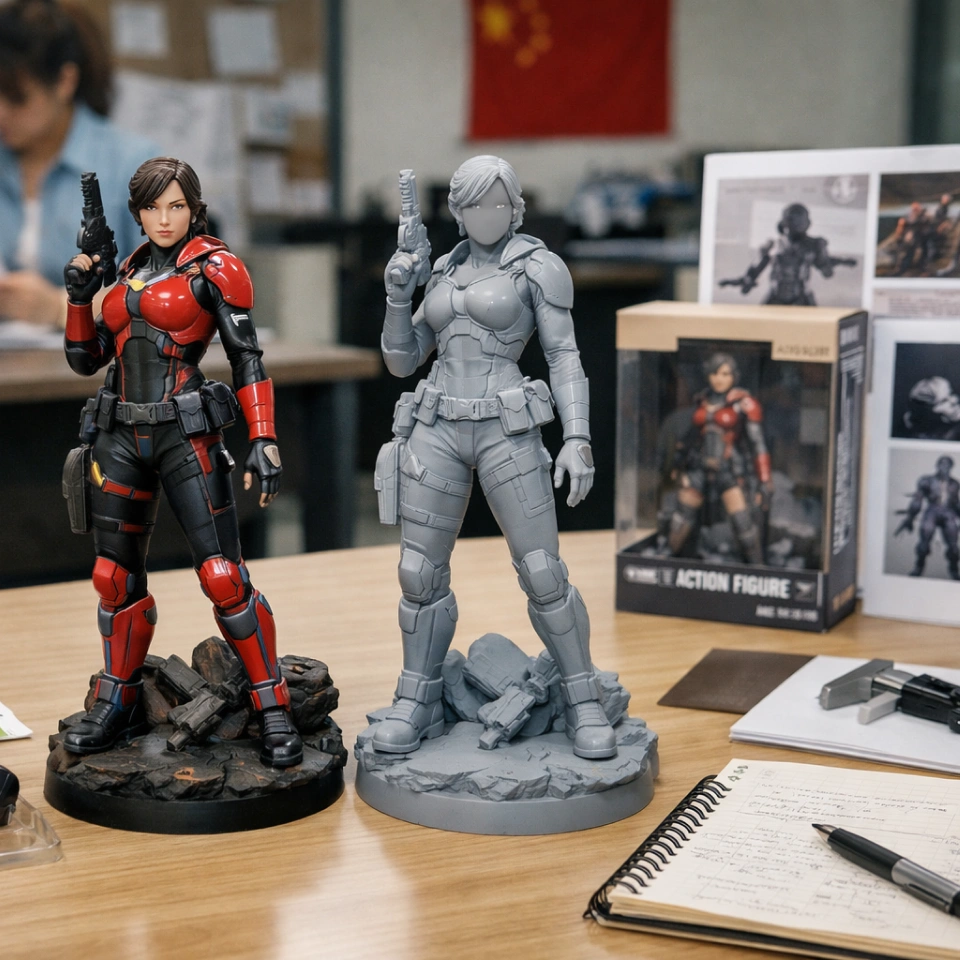
Prototype Sampling
The next step is prototype creation through 3D printing, CNC, hand-finishing, or a mixed approach. Prototypes help buyers assess:
- Shape and proportions
- Surface detail
- Stability and balance
- Paint area logic
- Assembly fit
- Overall product feel
This is where design intent is tested against real-world manufacturing constraints.
Tooling and Mold Development: The Core of Production Quality
For plastic and silicone-based character products, mold quality determines whether a product can be mass-produced consistently. A professional character merchandise manufacturer should have either strong in-house tooling or very tight mold management systems.
Mold development affects:
- Surface detail sharpness
- Flash and seam control
- Dimensional accuracy
- Production efficiency
- Mold life and maintenance
- Long-term repeat order stability
Factories that manage tooling well can also revise molds faster when trial samples reveal fit or cosmetic issues.
If you want to show buyers how mold capability supports product development, a natural internal link can be placed here to your tooling-related page using anchor text such as OEM homeware molding factory with in-house tooling.
Production Processes Used by a Character Merchandise Manufacturer
Once tooling is approved, the project moves into production. The exact process depends on material and product category, but a specialized character merchandise manufacturer usually manages several key operations.
Injection Molding and Forming
PVC, ABS, and many plastic character products are typically produced by injection molding. This process supports:
- High repeatability
- Fine detail reproduction
- Scalable output
- Better part consistency across production runs
For silicone parts, compression molding may be used instead. For certain art toy formats, alternative forming methods may apply. The best material and process depend on the product’s structure, function, and target market.
A natural internal link can also be embedded here to your materials article using anchor text like PVC vs vinyl vs ABS figures if you want readers to understand material selection in more detail.
Painting, Printing, and Surface Finishing
This is one of the most quality-sensitive stages in character product manufacturing. Character products often rely heavily on decoration, and poor finishing can destroy perceived value even if the mold is good.
A character merchandise manufacturer may use:
- Spray painting
- Pad printing
- Silk-screen printing
- Heat transfer
- Hand paint detailing
- Matte or gloss coating
The finishing process must be planned together with mold structure. Paint lines, masking areas, printing alignment, and cosmetic tolerance all need to be engineered in advance.
Assembly and Packaging
Many character products include multiple parts, accessories, inserts, electronics, or display stands. Assembly planning should address:
- Workstation sequence
- Glue control
- Fit verification
- Cosmetic inspection
- Accessory count
- Packaging protection
For themed homeware or electronic gifts, assembly may also involve PCBA installation, battery fit, switch testing, or lighting checks. A broader-capability character merchandise manufacturer is especially useful when brands want to extend character IP into lifestyle products rather than toys alone.
A natural internal link here could point to your service page using anchor text such as custom homeware manufacturing for brands or IP licensed product manufacturer, depending on the product category being discussed.
Quality Control and Compliance for Licensed Character Products
A good character merchandise manufacturer does not treat quality control as a final step only. Quality should be built into the process from incoming material inspection through final packing.
Quality systems should include:
- Incoming raw material checks
- First article approval
- In-process molding checks
- Paint and print inspection
- Assembly verification
- Final carton audit
If products are intended for children, buyers must also think about safety and compliance. For U.S.-bound toy products, the U.S. Consumer Product Safety Commission provides useful guidance on toy safety and regulatory obligations.
External authority link: U.S. toy safety guidance from the CPSC
https://www.cpsc.gov/Business–Manufacturing/Business-Education/Toy-Safety
This external reference helps B2B buyers understand that compliance obligations depend on the product category and market, not just factory output.
OEM vs ODM: What B2B Buyers Should Decide Early
A character merchandise manufacturer may support OEM, ODM, or both.
OEM Manufacturing
The buyer provides finalized product design, dimensions, specifications, and brand assets. The factory manufactures according to those instructions.
ODM Development
The factory contributes to product engineering, structure optimization, functional design, prototype iteration, and production planning.
For brands with strong internal design teams, OEM may be sufficient. For buyers who have artwork but need help turning it into real products, ODM capability is often more valuable.
How to Evaluate a Character Merchandise Manufacturer
Before selecting a long-term manufacturing partner, B2B buyers should assess five areas:
1. Engineering Depth
Can the factory explain tooling, materials, wall thickness, parting lines, paint tolerances, and assembly structure clearly?
2. Product Category Match
Has the supplier made similar products before, such as figures, themed homeware, collectibles, or branded gifts?
3. Tooling Control
Does the factory manage mold development, revisions, and maintenance properly?
4. Finishing Capability
Can it maintain paint and print consistency at production scale?
5. Supply Stability
Can the factory support repeat orders, packaging changes, and future product line expansion?
A reliable character merchandise manufacturer should be able to support not just one SKU, but an ongoing merchandise program.
FAQ Section
What does a character merchandise manufacturer do?
A character merchandise manufacturer develops and produces branded or licensed products based on character artwork, design specifications, and market requirements, usually covering tooling, molding, finishing, assembly, and packaging.
What products can a character merchandise manufacturer make?
A character merchandise manufacturer can produce PVC figures, blind box toys, themed homeware, promotional items, licensed gifts, and some character-based electronic products depending on its capabilities.
Why is tooling important in character merchandise manufacturing?
Tooling affects surface detail, fit, production consistency, mold life, and the ability to scale manufacturing efficiently.
Is a character merchandise manufacturer suitable for licensed projects?
Yes. A specialized character merchandise manufacturer is often better suited to licensed programs because it understands brand guidelines, approval workflows, and visual consistency requirements.
What should B2B buyers ask before choosing a factory?
Yes. A specialized character merchandise manufacturer is often better suited to licensed programs because it understands brand guidelines, approval workflows, and visual consistency requirements.
What should B2B buyers ask before choosing a factory?
Buyers should ask about product category experience, engineering support, mold control, quality systems, finishing capability, compliance awareness, and repeat-order stability.
Conclusion
Choosing the right character merchandise manufacturer is one of the most important decisions in any licensed or branded product program. The right factory does not simply make products. It manages engineering, mold quality, finishing, assembly, and packaging in a way that protects brand value and supports scalable commercial growth.
For B2B buyers, the ideal manufacturing partner is one that can bridge design intent and production reality. That means strong technical evaluation, disciplined process control, and the ability to support multiple product categories as your merchandise line grows.
When character products are developed correctly, they do more than extend IP. They become durable, scalable revenue assets. And that is exactly where the right character merchandise manufacturer makes the difference.