

Introduction
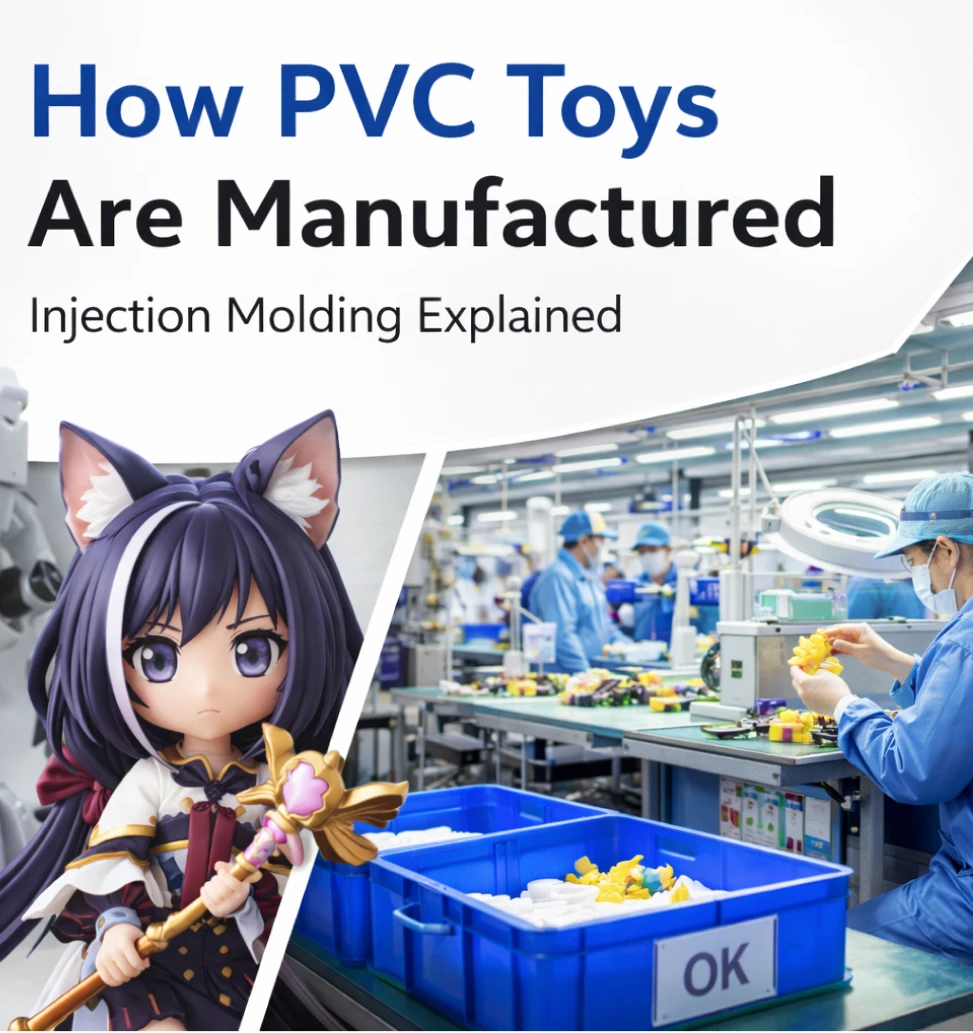
How PVC toys are manufactured is one of the most common questions buyers ask when developing custom figures, blind box toys, or licensed character products. While the finished toy may look simple, the actual factory process involves multiple stages, including design review, 3D engineering, sample making, mold development, injection molding, painting, assembly, and quality control.
For brands, understanding this process is important not only for product quality, but also for planning tooling cost, lead time, and production risks. In this guide, we explain the real factory workflow behind PVC toy manufacturing and highlight what buyers should pay attention to at each stage.
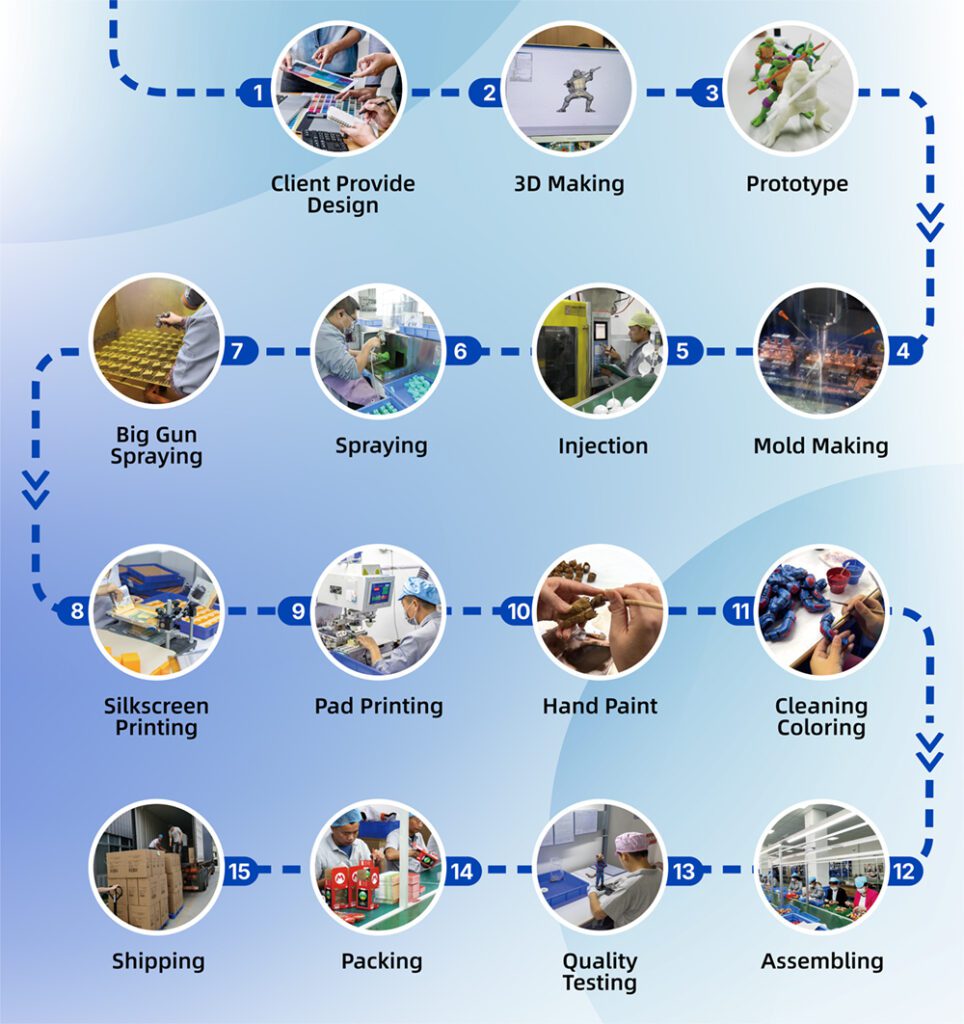
PVC Toy Manufacturing Process at a Glance
Before going into each production stage in detail, here is a quick overview of how PVC toys are manufactured and what buyers should confirm at each step. This summary is useful for brands that want to understand the full process before requesting a quotation, approving a sample, or starting mass production.
| Production Step | What Happens | Buyer Should Confirm |
|---|---|---|
| Concept and artwork review | The manufacturer reviews sketches, reference images, 2D artwork, or existing 3D files to evaluate whether the toy design can be produced efficiently. | Confirm the character design, target size, pose, intended market, and whether the project is for a PVC figure, blind box toy, mascot figure, or licensed character product. |
| 3D modeling and engineering review | The concept is converted into a production-ready 3D model. The engineering team checks wall thickness, part separation, balance, undercuts, and assembly logic. | Confirm the final 3D model, part breakdown, material direction, stability, and detail priority before sample making. If your project starts from flat artwork, read our guide on how to turn 2D character art into a custom toy figure. |
| Prototype and sample making | A physical prototype is made to check the shape, proportions, details, assembly fit, and visual appearance before mold making. | Confirm the sample size, character accuracy, surface details, balance, accessory position, and any changes needed before tooling. |
| Mold making | Steel molds are produced based on the approved 3D model and sample. Mold structure affects long-term production stability and part consistency. | Confirm mold cost, number of parts, expected production volume, lead time, and whether the mold structure supports future reorders. For cost planning, review custom PVC figure quotation guide. |
| PVC injection molding | PVC material is injected into molds under controlled temperature and pressure to produce toy parts with consistent shape and detail. | Confirm material choice, production quantity, part quality, surface finish, and whether PVC should be combined with ABS or other materials. |
| Painting and surface finishing | Molded parts are painted, printed, coated, or hand-finished based on the approved color sample and design requirements. | Confirm Pantone colors, paint position, facial details, logo printing, matte or gloss finish, and acceptable color tolerance. |
| Assembly | Painted parts are assembled according to the approved structure. Multi-part figures may require fitting, gluing, or component alignment. | Confirm assembly strength, visible gaps, alignment, stability, and whether the finished toy matches the approved sample. |
| Quality control and testing | The factory checks appearance, painting, structure, assembly, packaging, and safety-related details before shipment. | Confirm inspection standards, acceptable defect level, sample reference, testing needs, and final approval process. |
| Packaging and shipment | Finished toys are packed in blind boxes, color boxes, blister packs, gift boxes, or export cartons based on buyer requirements. | Confirm box structure, inner tray, product protection, barcode, warning labels, carton packing, and shipping method. For packaging planning, read our guide on working with a custom toy packaging manufacturer. |
A professional custom PVC toy manufacturer should help buyers review these steps before mass production begins. The earlier the buyer confirms artwork, structure, material, painting, packaging, and quality standards, the easier it is to reduce production risks and control the final result.
Step 1: Concept and Design Development
Every PVC toy project begins with a concept. This may come in the form of sketches, illustrations, reference images, or 3D files provided by the brand or creator.
At this stage, manufacturers evaluate:
- Character proportions and pose
- Feasibility of sculpted details
- Part separation and assembly logic
- Intended size and target market
For OEM projects, the client provides the design. For ODM projects, manufacturers may assist with 2D design and 3D modeling to ensure the concept can be produced efficiently. And at this stage, one of the most common problems is that a concept looks attractive in 2D but is not efficient for mold making or stable assembly. Complex poses, floating parts, thin accessories, or too many color separations can all increase tooling difficulty and production cost. A proper early design review helps avoid expensive revisions later.
Step 2: 3D Modeling and Engineering Review
Once the concept is confirmed, a detailed 3D model is created or refined. This is a critical step, as it determines both appearance and manufacturability. Material selection plays a key role during the engineering review stage, especially when comparing PVC vs vinyl vs ABS figures for different structural requirements.
Engineering teams review the model to:
- Optimize wall thickness
- Define parting lines
- Plan joint structures
- Avoid undercuts or deformation risks
A proper engineering review reduces mold revisions and prevents defects during mass production.
What buyers should confirm during engineering review
- final size
- part breakdown
- material combination
- standing stability
- detail priority vs cost
Step 3: Prototype and Sample Making
Before steel tooling begins, a prototype is usually made to verify the design in physical form. This step allows both the factory and the buyer to check whether proportions, sculpted details, assembly fit, and paint separation work as expected in reality.
For many projects, this is the stage where important revisions happen. Compared with changing a finished mold, modifying a prototype is much faster and more cost-effective.
The prototype allows brands to evaluate:
- Overall shape and proportions
- Surface texture and details
- Assembly fit
- Visual appearance after painting
Feedback at this stage is crucial, as changes are far more cost-effective before mold making begins.
Step 4: Mold Making
After prototype approval, manufacturers proceed to steel mold fabrication. Mold making is one of the most important and cost-intensive steps in PVC toy manufacturing.
Key considerations during mold making include:
- Mold material and durability
- Number of cavities
- Expected production volume
- Precision of sculpted details
Mold making is often the stage that determines whether a project can move into mass production smoothly. The mold structure must match the product design, part separation, and expected output. If the mold design is not properly planned, the project may face flashing, poor part fit, unstable dimensions, or repeated revisions during trial production.
For buyers, mold cost is usually affected by product size, number of parts, surface detail, undercuts, cavity planning, and expected order volume. This is why two figures of similar size can still have very different tooling costs.High-quality molds ensure consistent quality and long-term production stability.
Step 5: PVC Injection Molding
PVC toys are typically produced using injection molding. Molten PVC material is injected into the mold under controlled temperature and pressure.For a technical overview of injection molding principles, you can refer to industry resources such as the Plastics Industry Association. https://www.plasticsindustry.org/
This process allows:
- Accurate reproduction of fine details
- Consistent part dimensions
- Efficient large-scale production
After the mold is completed and tested, PVC material is processed through injection molding to produce the toy parts. This step must be controlled carefully in terms of temperature, pressure, and cooling conditions to maintain dimensional consistency and reduce molding defects.
At the production level, stable molding conditions are critical because even small variations can affect part fit, surface quality, and downstream painting and assembly. For multi-part figures, consistency between batches is especially important.
Step 6: Painting and Surface Finishing
Painting is one of the most labor-intensive stages of PVC toy manufacturing. Depending on design complexity, painting may involve:
- Spray painting
- Hand painting
- Masking for multi-color designs
- Special finishes such as matte or gloss coatings
Quality control during painting ensures color accuracy and surface consistency.
Step 7: Assembly
Painted parts are assembled according to the design structure. Many PVC toys consist of multiple components, sometimes combined with ABS parts for added strength.
Assembly checks include:
- Proper fit and alignment
- Joint movement (if applicable)
- Structural stability
Step 8: Quality Control and Testing
Professional manufacturers implement strict quality control procedures throughout production.
QC inspections typically cover:
- Visual defects
- Paint consistency
- Structural integrity
- Safety and compliance standards
Consistent QC ensures that mass-produced PVC toys match the approved prototype.
Step 9: Packaging and Logistics
Once approved, PVC toys are packaged according to brand requirements. Packaging may include blister packs, color boxes, or custom-designed retail packaging.
Manufacturers then coordinate logistics, preparing products for domestic or international shipment.
How PVC Toys Are Manufactured?
PVC toy manufacturing is a complex, multi-step process that combines creativity with engineering precision. From concept design to quality-controlled mass production, each stage plays a critical role in delivering a high-quality product.
By understanding how PVC toys are manufactured, brands and creators can communicate more effectively with manufacturers and make better decisions throughout the development process.
Typical Lead Time for PVC Toy Manufacturing
Although timelines vary by project complexity, a typical PVC toy development schedule may look like this:
- Concept review and engineering discussion: 3–7 days
- 3D modeling and engineering adjustment: 7–14 days
- Prototype making and revision: 7–14 days
- Mold making: 20–35 days
- Sample confirmation and paint approval: 7–14 days
- Mass production, assembly, and packaging: 25–40 days
For buyers, the actual lead time depends on product size, number of parts, paint complexity, packaging requirements, and revision rounds during sampling.
Common Production Risks in PVC Toy Projects
Some of the most common risks in PVC toy manufacturing include:
- design details that are difficult to mold
- too many small paint separations
- unstable standing balance
- thin parts that deform easily
- unclear sample approval standards
- packaging that does not protect the product well during shipment
Most of these problems can be reduced through early engineering review, sample testing, and clear mass production standards.
FAQ: How PVC Toys Are Manufactured
1.What materials are used to manufacture PVC toys?
PVC toys are primarily made from polyvinyl chloride (PVC), a flexible thermoplastic that allows detailed sculpting and durable production. In many cases, manufacturers also combine PVC with ABS plastic for structural components such as joints, bases, or internal supports. The combination of these materials helps improve both durability and product stability.
2. How long does it take to manufacture a PVC toy?
The production timeline for PVC toys typically ranges from 30 to 90 days, depending on the complexity of the design and the number of molds required.
A typical timeline includes:
3D modeling and engineering review (5–10 days)
Prototype development (7–15 days)
Mold fabrication (20–35 days)
Mass production and painting (10–30 days)
Complex collectible figures with multiple parts may require a longer production cycle.3. How much does it cost to make a PVC toy mold?
The cost of a PVC toy mold depends on the size, complexity, and number of cavities.
Typical mold costs range from $2,000 to $10,000 or more for professional steel molds used in mass production.
Factors affecting mold cost include:
Number of parts in the figure
Level of sculpted detail
Mold material and lifespan
Expected production volume
High-quality molds ensure consistent results and long-term manufacturing stability.4. Are PVC toys made using injection molding?
Yes. Most PVC toys are manufactured using injection molding, a process where molten plastic is injected into a precision mold under controlled temperature and pressure.
Injection molding allows manufacturers to achieve:
High detail accuracy
Consistent part dimensions
Efficient large-scale production
This method is widely used in the production of anime figures, blind box toys, and collectible figurines.PVC vs Vinyl vs ABS figures toys.5. Can PVC toys include multiple materials?
Yes. Many PVC toys combine multiple materials to improve structural strength and functionality.
For example:
PVC for the main body and detailed surfaces
ABS for joints and internal supports
soft vinyl for larger hollow components
Using multiple materials helps balance appearance, durability, and manufacturing efficiency.6. What industries commonly use PVC toy manufacturing?
PVC toy manufacturing is widely used in several industries, including:
Anime and gaming collectibles
Blind box toys
Promotional merchandise
Designer toys and art collectibles
Licensed character products
Because PVC allows detailed sculpting and reliable mass production, it has become one of the most widely used materials in the collectible toy industry.
Conclusion
PVC toy manufacturing is not a single production step, but a coordinated process that combines design development, engineering review, tooling, molding, painting, assembly, and quality control. Each stage affects the final result in terms of appearance, production cost, and delivery stability.
For brands and creators, understanding how PVC toys are manufactured makes it easier to prepare for quotation, reduce development risk, and communicate more effectively with the factory. If you are planning a custom PVC toy project, reviewing the process early can save both time and cost during production.
If you are planning a custom PVC toy, blind box figure, or licensed character product, Jiahong Creative can help review your artwork, target size, material, packaging, and production timeline before quotation.